
When to Replace vs Repair Your Windshield: The 2026 Ottawa Driver’s Guide
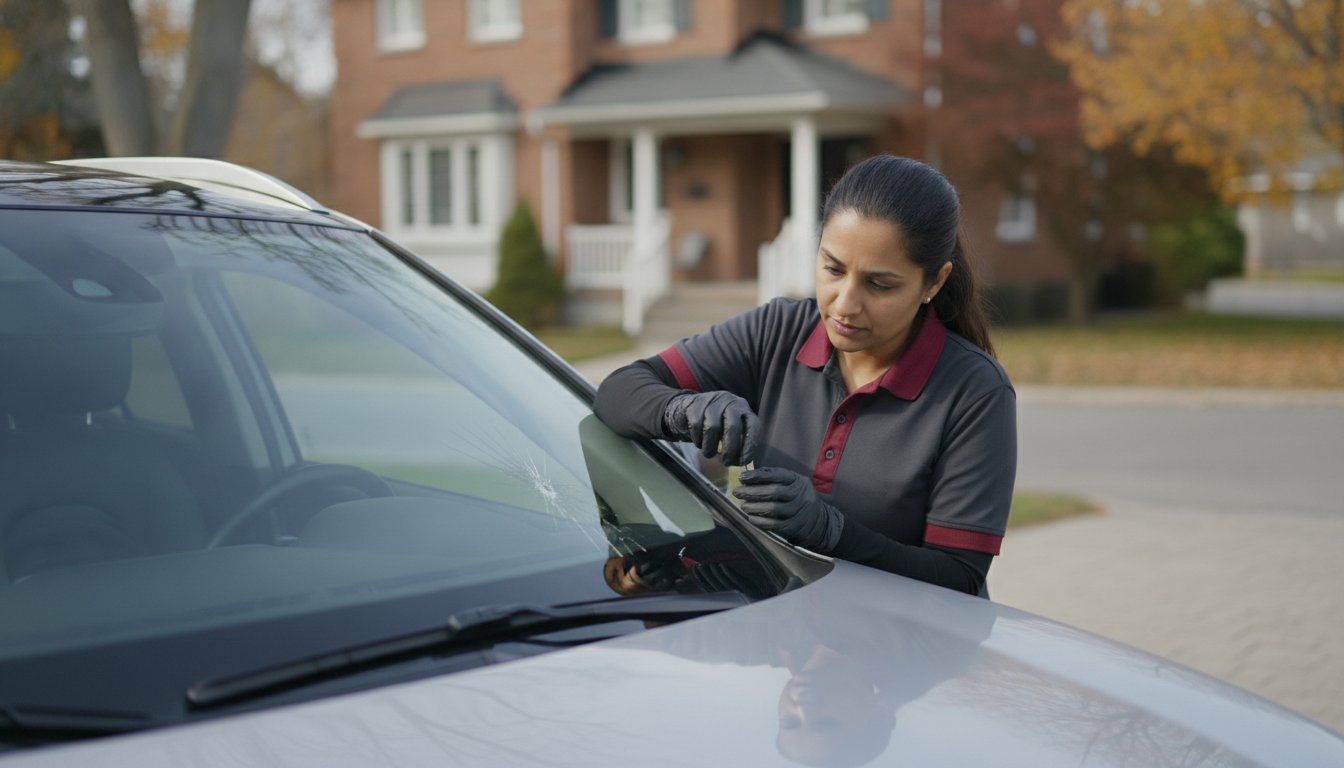
Did you know that your windshield provides up to 60% of your vehicle’s structural strength during a rollover accident? It is far more than just a clear view of the road; it is a vital safety shield that supports your roof and protects your car’s sensitive camera sensors. When you spot a fresh stone chip while driving down the 417, it is natural to feel a surge of stress. You need to know when to replace vs repair windshield damage before the first deep freeze of an Ottawa winter turns that minor nick into a dangerous, spiderwebbed mess that compromises your family’s safety.
It is frustrating to deal with unexpected vehicle issues, especially when you are worried about rising costs or finding time for a shop visit. We believe maintaining your car should be straightforward and stress-free. This guide gives you a professional framework to assess damage instantly so you can choose the most cost-effective path forward. You will discover which cracks require a full replacement under Ontario law, how to handle insurance claims with no deductible, and how mobile service can calibrate your safety systems right in your own driveway. By the end, you will have the confidence to make the right call for your vehicle and your budget.
Key Takeaways
- Learn how to evaluate damage using the “Four Pillars” of size, depth, location, and technology to determine if your glass is still structurally sound.
- Identify the specific legal and safety thresholds for when to replace vs repair windshield damage, including the critical “Edge Crack Rule.”
- Discover how to leverage your insurance coverage to have chip repairs completed with no out-of-pocket deductible.
- Understand why modern Advanced Driver Assistance Systems (ADAS) make professional camera recalibration a non-negotiable step for your safety.
- Explore how mobile service and direct insurance billing can handle the entire restoration process while your car remains parked at home or work.
The Four Pillars of Windshield Assessment: Size, Depth, Location, and Tech
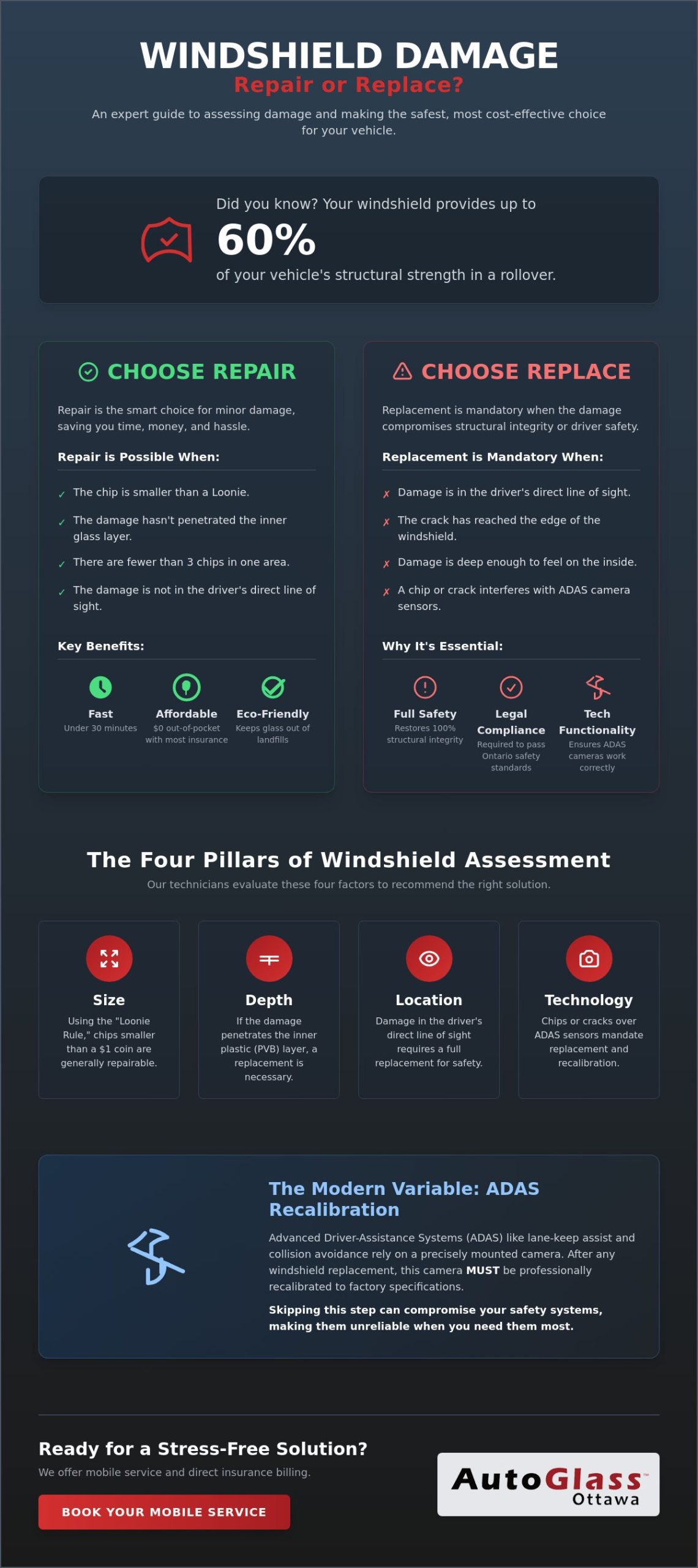
Understanding exactly when to replace vs repair windshield damage involves more than just glancing at a crack. It requires a professional assessment of four specific pillars: size, depth, location, and the technology embedded in your glass. Your windshield is a sophisticated piece of laminated safety glass designed to protect you during a collision and provide structural support for your vehicle’s roof. A repairable chip is defined as one that has not penetrated the inner layer of Polyvinyl Butyral (PVB). If the damage reaches this middle plastic layer, the structural bond is broken; a replacement becomes the only safe option.
We often find that where the damage sits matters more than how big it is. A tiny nick directly over a sensor can be more problematic than a larger chip near the passenger-side pillar. In 2026, your vehicle’s “digital eyes,” such as lane-keep assist cameras and collision avoidance sensors, now dictate repairability. If a chip interferes with the field of view for these sensors, the glass must be replaced to ensure your safety systems function correctly. This balance of safety, visibility, and structural law is what guides every recommendation we make.
Size and Depth: The Loonie Rule
The “Loonie Rule” is a reliable Canadian standard for deciding when to replace vs repair windshield damage. Generally, if a stone chip is smaller than a $1 coin, our technicians can successfully inject resin to restore its strength. However, depth is a non-negotiable factor. If you can feel the crack on the inside of the glass with your fingernail, the damage is too deep for a simple fix and requires a full replacement. We also apply a “Three-Chip Limit.” Multiple repairs in a concentrated area compromise the overall tension of the glass, making it prone to spreading or failing under the pressure of an Ottawa winter.
The Critical Visibility Zone
The “acute area” is the critical visibility zone directly in front of the steering wheel. Ontario safety standards are clear: any damage in the driver’s direct line of sight requires a full replacement to pass inspection and ensure road safety. Even the highest-quality resin repairs can occasionally leave behind “ghosting” or slight distortions. While these might seem minor during a sunny afternoon, they can create dangerous glares or halos during night driving on poorly lit suburban streets. If your vision is impaired even slightly, we always recommend a new windshield to protect you and your family.
When Windshield Repair is the Smart (and Green) Choice
Choosing to repair a stone chip rather than waiting for a full replacement is a victory for your wallet, your schedule, and the environment. The process is remarkably efficient when handled by a professional. We use a specialized vacuum sealing tool to remove air and moisture from the damaged area, then inject a high-grade, clear structural resin. This resin is cured under UV light, effectively bonding the layers of glass back together and restoring the structural integrity of your vehicle. Most of these professional repairs take less than 30 minutes to complete at your home or office, meaning you don’t have to lose your afternoon sitting in a waiting room.
Cost is often the biggest motivator when deciding when to replace vs repair windshield damage. If you carry comprehensive auto insurance in Ontario, most providers will waive your deductible entirely for a repair. This allows you to restore your safety shield with zero out-of-pocket cost. Beyond the financial savings, opting for a repair is the “green” choice. Laminated glass is notoriously difficult to recycle because of the internal plastic layer; by choosing a repair, you keep several kilograms of glass and plastic out of Ontario landfills. If you’ve just spotted a new nick, you can book a mobile repair to stop the damage before it requires a total overhaul.
Common Repairable Damage Types
- Bullseyes and Half-Moons: These circular breaks are the most successful repairs because the resin can easily fill the clean, defined impact point.
- Star Breaks: These have small “legs” radiating from the centre. They are urgent because those legs act as stress points that can snap across the glass at any moment. If you notice these legs growing longer, learn exactly what to do when you see a windshield crack spreading to stabilize the damage before it becomes irreparable.
- Surface Pits: Often caused by road salt and sand during Ottawa winters, these are usually cosmetic. However, if they are deep enough to catch your fingernail, they should be sealed to prevent moisture from seeping into the laminate.
To better understand which specific damage shapes and sizes qualify as repairable windshield chips before moisture and road salt settle into the glass, our visual guide for Ottawa drivers walks you through each type with clear examples.
The “Ottawa Factor”: Temperature and Timing
When Replacement is Mandatory for Ontario Safety
Safety is the primary filter when deciding when to replace vs repair windshield damage. While a small chip is often fixable, a windshield’s role in your vehicle’s structural safety cannot be overstated. In the event of a rollover accident, the windshield provides up to 60% of the cabin’s structural strength. If the glass is compromised by a large crack, it may fail to support the roof, significantly increasing the risk of injury. Any crack exceeding 15cm, which is roughly the length of a credit card, is considered unstable. These long cracks have already compromised the tension of the glass, making a resin repair insufficient to restore the original safety rating.
Location also plays a decisive role through the “Edge Crack Rule.” If a crack is located within two inches of the outer frame, a full replacement is mandatory. The edges of the windshield are under the most pressure from the vehicle’s frame; damage here spreads faster and weakens the seal that holds the glass in place. Additionally, contamination often dictates the outcome. If dirt, road salt, or washer fluid has seeped deep into a crack, the resin cannot bond properly. This leaves a visible scar and a structural weak point that will eventually fail under the stress of Ottawa’s changing seasons. Understanding the immediate steps to take when you notice a windshield crack spreading — what to do right away — can mean the difference between a simple repair and a mandatory full replacement.
Ontario MTO and Safety Inspections
Driving with a compromised windshield isn’t just a safety risk; it’s a legal one. Under the Ontario Highway Traffic Act, you can face fines ranging from $110 to $500 if an officer deems your vehicle unsafe. A windshield will fail an Ontario safety inspection if it has a crack in the driver’s direct line of sight or any damage larger than a loonie in the critical view zone. To avoid these penalties and ensure your car remains road-legal, you should seek an Expert Windshield Repair in Ottawa for a professional assessment before your next safety inspection or vehicle sale.
Internal vs. External Damage
Windshields are made of two layers of glass with a plastic interlayer. If you can feel the damage on the inside of the car, the structural bond is broken beyond repair. This often leads to delamination, where the layers of glass begin to separate and turn a milky white colour. While “DIY kits” from big-box stores claim to fix these issues, they often fail to reach the necessary pressure to seal the break. Using these kits frequently results in a failed repair that makes a future professional fix impossible, forcing you into a mandatory replacement that could have been avoided with a proper initial assessment. If you are unsure whether your damage still qualifies as one of the repairable windshield chips that can be professionally restored, a certified technician can assess the depth and contamination level before it is too late.
The Modern Variable: ADAS and Camera Recalibration
Advanced Driver Assistance Systems (ADAS) have fundamentally changed how we evaluate when to replace vs repair windshield damage. These systems rely on a suite of sensors and cameras, often mounted directly behind the top-centre of your windshield, to manage features like Lane Keep Assist and Automatic Emergency Braking. If a stone chip or crack appears within the camera’s field of vision, a simple resin repair is no longer an option. Even a microscopic distortion from the repair resin can “blind” the camera, causing your safety systems to malfunction or shut down entirely. This is why damage near the camera housing usually results in a mandatory replacement.
Why Sensors Require Perfect Clarity
The Insurance Connection for Modern Tech
Many drivers worry that the added complexity of sensors will lead to massive out-of-pocket expenses. However, most comprehensive insurance policies in Ontario cover the cost of ADAS recalibration as part of a windshield replacement claim. It is vital to choose a shop that specializes in these systems to protect your vehicle’s warranty and ensure the work meets Canadian Motor Vehicle Safety Standards. If you are unsure how to start the process, you can consult our guide on Insurance Windshield Replacement in Ottawa to help navigate the paperwork and ensure your claim is handled correctly.
Don’t risk your safety with uncalibrated sensors; schedule your ADAS-certified replacement today and get back on the road with total peace of mind.
Taking Action: Mobile Service and Insurance Assistance
Managing the administrative side of a glass claim can be the most stressful part of the process. We alleviate this burden through our direct-billing insurance assistance. We work with all major Ontario providers to handle the paperwork on your behalf. Before you call for a quote, have a final checklist of information ready. You will need your vehicle’s year, make, and model, as well as a quick confirmation of any advanced features like rain sensors or a heads-up display. This data allows us to provide an accurate assessment and ensures we bring the correct glass and calibration equipment to your location.
Hassle-Free Mobile Repairs in Ottawa & Gatineau
Navigating Your Deductible
It is helpful to understand that glass damage typically falls under your comprehensive coverage rather than collision. While a collision claim often impacts your premiums, a comprehensive claim for a stone chip usually does not. Insurance companies prefer to pay for a repair immediately because it is significantly more cost-effective than a full replacement later. By acting fast, you can often have your deductible waived entirely for repairs. If a replacement is mandatory, we assist in managing the process to ensure your out-of-pocket costs are kept to a minimum while maintaining your vehicle’s safety standards. Taking action today prevents a small chip from becoming a major safety hazard during the next Ottawa temperature swing.
Restore Your Peace of Mind on the Road
With 15+ years of local Ottawa experience, we provide a Lifetime Warranty on all workmanship and leakage to ensure your vehicle remains a safe sanctuary for your family. You don’t have to sacrifice your afternoon at a shop to get expert care. Get a Free Mobile Quote for Your Windshield Today and experience the convenience of 100% free mobile service at your home or office. We are ready to help you get back on the road with a clear view and total confidence.
Frequently Asked Questions
Is it safe to drive with a small chip in my windshield?
It is physically possible to drive with a small chip, but it is not recommended for long. In Ottawa, rapid temperature changes can cause a tiny nick to expand into a massive crack in seconds. Repairing it immediately ensures your vehicle remains structurally sound and prevents the damage from becoming a safety hazard.
How long does a windshield repair take in Ottawa?
A professional windshield repair typically takes less than 30 minutes to complete. Our mobile technicians can perform the service while your car is parked at home or work. This efficiency means you don’t have to disrupt your daily schedule or lose time at a repair shop.
Will my insurance go up if I claim a windshield replacement?
Most insurance providers do not increase premiums for glass claims because they fall under comprehensive coverage rather than collision. Insurance companies actually prefer that you fix a chip early. They often waive the deductible for repairs to avoid the higher cost of a full replacement later.
Can a cracked windshield fail an Ontario safety inspection?
Yes, a cracked windshield can cause your vehicle to fail an Ontario safety inspection. If the damage is in the driver’s direct line of sight or exceeds the size of a loonie in the critical view zone, it must be replaced to meet provincial safety standards and avoid potential fines.
What is the “loonie test” for windshield damage?
The “loonie test” is a simple way to help decide when to replace vs repair windshield damage. If a one-dollar coin completely covers the chip, a professional repair is usually possible. If the damage is larger or has long legs extending outward, the structural integrity is likely compromised, requiring a replacement.
Does Auto Glass Ottawa offer mobile service in Gatineau?
Yes, we provide full mobile service across the bridge to Gatineau and throughout the greater Ottawa area. Our certified technicians can reach you in Kanata, Orleans, or downtown to perform repairs or replacements on-site. This service includes insurance assistance and ADAS recalibration where necessary.
Can you repair a crack that is longer than 6 inches?
No, cracks longer than 6 inches, or approximately 15cm, generally cannot be safely repaired. At this length, the tension in the laminated glass is too damaged for resin to provide a permanent fix. Replacing the windshield is the only way to ensure your vehicle provides 60% of the cabin’s structural strength in a rollover.
Why do I need ADAS recalibration after a windshield replacement?
ADAS recalibration is essential because your safety cameras are mounted directly to the glass. Even a tiny misalignment during a replacement can cause lane-keep assist or collision avoidance systems to fail. Recalibrating ensures these sensors are perfectly aligned with the road to keep your family safe.