
When Can You Wash Your Car After a Windshield Replacement?
Could a simple trip to the local car wash actually compromise your vehicle’s structural integrity? You’ve just invested in a new windshield, and the last thing you want is a leak or a shifted seal. If you manage a commercial fleet, the pressure to keep vehicles looking professional is real, but rushing into a car wash after a windshield replacement can lead to costly setbacks. It’s a common concern that requires a precise answer to ensure your vehicle remains safe on the road.
We realize that conflicting advice from different shops makes it hard to know which path to take. You want peace of mind that your safety systems and adhesives are fully cured before they’re exposed to high pressure or chemicals. This guide provides a clear timeline for your next wash and explains the vital difference between touchless and friction methods. We also look at how to protect your ADAS sensors to ensure your lane departure and emergency braking features remain perfectly calibrated and ready for use.
Key Takeaways
- Distinguish between Safe Drive Away Time (SDAT) and a full cure to maintain your vehicle’s structural safety and seal integrity.
- Adhere to a strict 24-hour ban on any Car Wash After a Windshield Replacement to allow the high-viscosity urethane to set without interference.
- Evaluate the risks of friction-based washes versus touchless options to prevent shifting the glass or damaging the fresh adhesive bond.
- Consider how Ottawa’s unique humidity and seasonal temperatures can significantly accelerate or delay the adhesive’s chemical bonding process.
- Ensure your ADAS sensors remain calibrated by preventing high-pressure water and chemicals from compromising sensitive camera housings.
Understanding the Curing Process: Why You Cannot Wash Immediately
When you receive a windshield replacement, the technician uses a high-viscosity urethane adhesive to bond the glass to your vehicle’s frame. This isn’t just a simple sealant; it’s a critical structural component that helps maintain the roof’s strength during a rollover. For this bond to reach its full strength, it must undergo a chemical reaction called polymerization. Scheduling a Car Wash After a Windshield Replacement too soon can disrupt this delicate windshield adhesive curing process, leading to potential leaks or structural failure.
Water pressure from commercial jets or even a heavy garden hose can physically interfere with the urethane before it has hardened. If you hit the fresh seal with high-pressure water, you risk causing the glass to “shift” within the frame. Even a millimetre of movement can compromise the airtight seal, creating annoying wind whistles or, more seriously, allowing water to seep into the dashboard electronics. Because the adhesive is still pliable during the early stages, mechanical force is its greatest enemy.
What is Safe Drive Away Time (SDAT)?
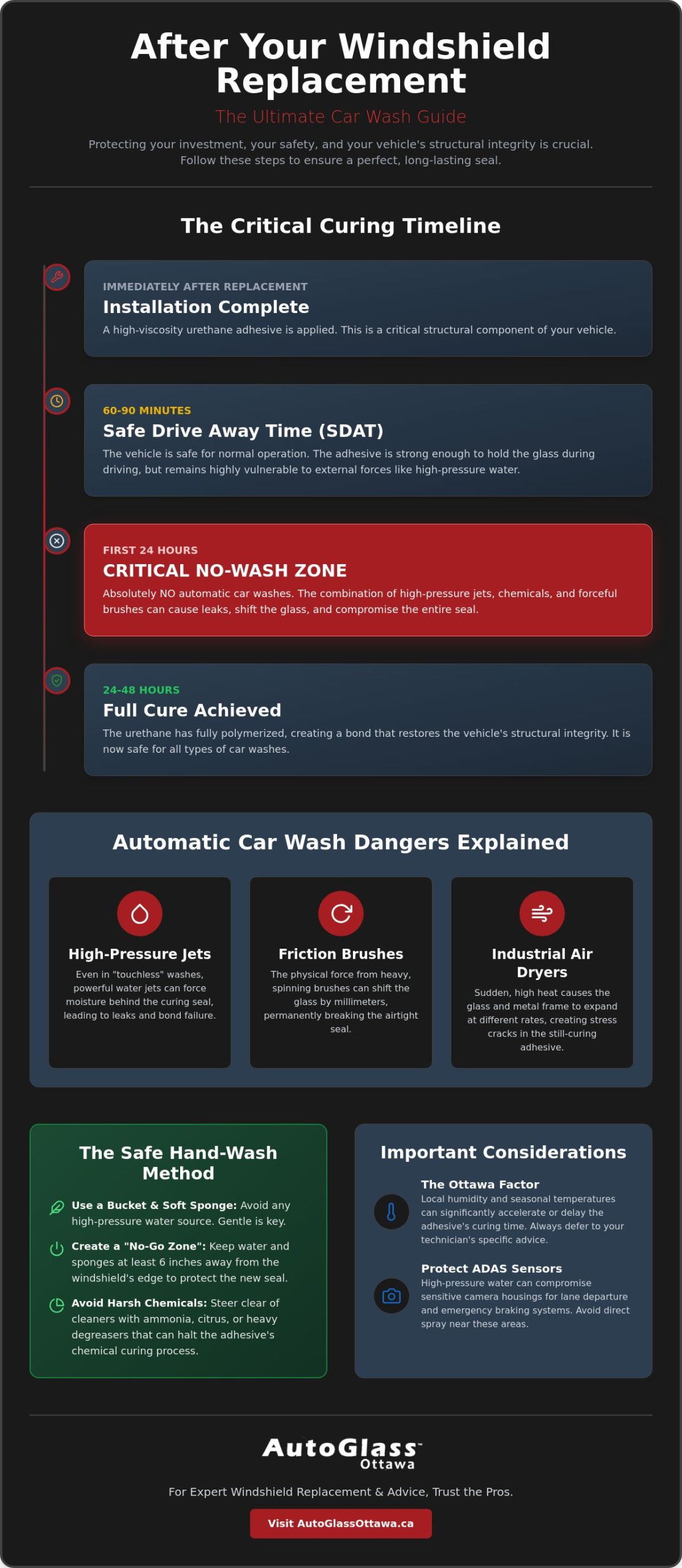
Safe Drive Away Time, or SDAT, refers to the minimum duration required for the adhesive to bond sufficiently so the vehicle can be safely operated. In the Ottawa area, our technicians typically specify an SDAT of 60 to 90 minutes. It’s vital to realize that reaching this milestone only means your car is safe to drive in a controlled manner; it does not mean the seal is ready for the rigours of a car wash. The bond is strong enough to hold the glass in place during a stop, but it remains vulnerable to external pressure and chemicals.
The Difference Between Surface Dry and Fully Cured
Many drivers fall into a “false security” trap when they touch the edge of the seal and find it feels hard. This is known as “skinning,” where the outer layer of the urethane hardens first upon contact with air. While the surface appears dry, the inner core of the seal often remains soft and curing for up to 48 hours. If you take your vehicle for a Car Wash After a Windshield Replacement while the core is still curing, the chemicals in the soap can actually halt the chemical reaction. Always wait for a full cure to ensure the structural integrity of your vehicle remains intact.
The 24-Hour Rule: Navigating Different Types of Car Washes
Wait at least 24 hours before you even consider an automatic wash. This isn’t a suggestion; it’s a requirement for the safety of your vehicle. While your car is safe to drive shortly after the technician finishes, the adhesive needs a full day of undisturbed rest to resist high-pressure environments. Taking a Car Wash After a Windshield Replacement too early is the most common cause of post-installation leaks and wind noise. We want your vehicle to remain as quiet and dry as the day it left the factory.
Why Automatic Car Washes are the Biggest Threat
Automatic systems are designed for speed and efficiency, not for the delicacy of a fresh seal. The high-pressure water jets used in touchless washes can easily force moisture behind the urethane bead before it has fully polymerized. If you choose a friction wash, the heavy, spinning brushes apply significant lateral pressure. This physical force can shift the glass, even by a fraction of a millimetre, which ruins the airtight seal and compromises structural safety.
The air-dry cycle is perhaps the most overlooked danger. These industrial blowers use high-velocity, heated air to strip water off the surface. This sudden temperature spike causes the glass and the vehicle’s metal frame to expand at different rates. Since the bond is still curing, this thermal expansion can create gaps or stress cracks in the adhesive. These safety requirements are part of the Federal Motor Vehicle Safety Standards, which ensure your windshield acts as a safety barrier during an accident. Disrupting the bond compromises this protection.
The Safest Way to Clean Your Car Manually
If you find a Car Wash After a Windshield Replacement is urgent due to salt, sap, or bird droppings, perform a gentle hand wash instead. Use a simple bucket and a soft sponge. Don’t use a hose with a high-pressure nozzle; the focused stream is too risky for the new seal. We recommend keeping the water and sponge at least six inches away from the edge of the glass. This no-go zone ensures you don’t accidentally push the curing urethane or introduce moisture into the gap.
Avoid using any cleaning agents containing ammonia, citrus, or heavy degreasers. These substances can chemically interfere with the urethane, potentially softening the bond. Stick to plain water or a very mild, pH-neutral car soap. If you aren’t sure about the state of your seal, contact a professional for a windshield replacement check-up to ensure everything is curing as expected. This cautious approach protects your investment and your safety on the road.
The Ottawa Factor: Humidity, Temperature, and Curing Times
Ottawa’s climate presents unique challenges for automotive glass that generic online guides often overlook. Whether you’re dealing with a humid July afternoon or a frigid January morning, the environment directly dictates your waiting period for a Car Wash After a Windshield Replacement. Environmental variables like moisture and temperature aren’t just background details; they are the primary drivers of the chemical reaction that secures your glass.
Humidity: The Hidden Catalyst for Urethane
High-viscosity urethane is a moisture-cured adhesive, meaning it literally pulls water molecules from the air to harden and bond.
In the humid height of an Ottawa summer, the adhesive often “skins over” and reaches its initial strength faster than in the bone-dry air of mid-winter. While a light rain shower might actually assist the chemical bonding process, you must still avoid a Car Wash After a Windshield Replacement for the first 24 to 48 hours. The uncontrolled, high-velocity pressure of a commercial wash is vastly different from natural atmospheric moisture. Even if the humidity is high, the mechanical force of a water jet can still displace the curing bead before it reaches a full cure.
Winter Precautions for Ottawa Drivers
Winter installations in the National Capital Region require extra vigilance because cold temperatures significantly slow down the polymerization process. If your replacement was performed via mobile service in a cold driveway, the cure time will be longer than an installation completed in a climate-controlled facility. Following Auto Glass Safety Council™ (AGSC) safety standards, technicians must provide a specific drive-away time based on the adhesive manufacturer’s specifications and the current weather. This ensures your vehicle’s structural integrity isn’t compromised by premature use.
Salt and slush buildup is a major annoyance during our winters, but you must resist the urge to wash it off immediately. You should also avoid using heavy ice scrapers on the new glass for at least the first 48 hours. The physical pressure of aggressive scraping can shift the glass while the urethane remains pliable in the cold. Additionally, be mindful of temperature shock. Moving your vehicle from a +20°C heated garage directly into a -20°C Ottawa night creates intense thermal stress on the fresh seal. Give the adhesive ample time to stabilize before exposing it to these extreme temperature swings.
Commercial and Fleet Considerations: Getting Back to Work
Commercial fleet managers in the National Capital Region know that a clean vehicle is a mobile billboard for their brand. However, rushing into a Car Wash After a Windshield Replacement to maintain that image can lead to expensive downtime. Unlike personal cars, commercial vehicle windshield repair Ottawa requires a more disciplined approach to aftercare. The larger glass surfaces of delivery vans and heavy trucks are subject to more vibration and wind resistance, making a secure bond even more critical for driver safety.
Liability is a major concern for fleet operations. If a windshield isn’t allowed to cure properly and fails during a highway haul or a collision, the manager could face significant legal and safety repercussions. It’s a risk that isn’t worth the reward of a shiny cab. We realize that every hour a vehicle is off the road costs your business money, but a failed seal costs much more in the long run. Professional installation is only half the battle; the curing period is where the safety is finalized.
Managing Downtime for Ottawa Fleets
Effective scheduling is the key to balancing safety with productivity. We recommend timing replacements just before a vehicle’s scheduled rest day or at the end of a Friday shift. This allows the 24-hour “no-wash” window to pass without disrupting the standard cleaning cycle. Use bright steering wheel tags to alert drivers that the vehicle is in a curing period. Since we provide mobile service, we can perform the installation on-site while the vehicle is parked, maximizing your uptime and ensuring the glass stays undisturbed while the urethane sets. For a comprehensive approach to managing glass repairs across your entire operation, review our fleet windshield replacement Ottawa checklist to streamline your maintenance process and keep your drivers compliant and safe.
Power Washing Risks for Heavy Equipment
Fleet maintenance bays often utilize industrial-grade power washers that far exceed the pressure of a standard car wash. These units can blast water at over 3,000 PSI, which is more than enough to strip away fresh urethane before it has polymerized. A curing windshield seal should never be exposed to these high-pressure jets. Even after the initial 24 hours, the nozzle must stay at least 12 inches away from the glass perimeter to avoid forcing moisture into the bond.
For drivers heading across the bridge into Gatineau or navigating the 417, a quick checklist is essential before leaving the yard. Check for any visible displacement of the adhesive and ensure the retention tape is still firmly in place. Most importantly, confirm the vehicle hasn’t been through the wash bay since the glass was replaced. If you need to get your trucks back on the road safely, book our commercial auto glass service today to ensure professional installation and expert guidance on fleet aftercare.
Long-Term Care: Protecting Your Investment and ADAS Sensors
Modern vehicles are essentially sophisticated computers on wheels. Because nearly 9 out of 10 model year 2023 vehicles require ADAS recalibration after windshield replacement, your maintenance routine must protect these sensitive electronics. Your first Car Wash After a Windshield Replacement involves more than just the glass surface; it’s about safeguarding the cameras and sensors that power your emergency braking and lane-keep assist features. We want to ensure that your investment in safety remains functional for years to come.
The blue retention tape applied by our technicians serves a vital purpose. It holds the perimeter moldings in place while the urethane reaches its peak strength. You should leave this tape undisturbed for at least 24 hours. Removing it prematurely can cause the molding to shift, which creates a channel for water to enter during future cleanings. When you do remove it, pull it back slowly at a 45-degree angle to avoid leaving adhesive residue on your vehicle’s paint. This simple step ensures the finish stays clean and the seal stays airtight.
The Role of ADAS in Your Cleaning Routine
The area around your rearview mirror is the command centre for your vehicle’s safety systems. This camera housing is sealed against the glass, but it isn’t designed to withstand direct, high-pressure industrial jets. When cleaning your car, follow these safety guidelines:
- Avoid spraying high-pressure water directly at the top-centre of the windshield where sensors are located.
- Don’t use harsh degreasers or acidic cleaners near the camera mount, as these can degrade the housing seals.
- Keep the glass in front of the lens crystal clear; even a small smudge can cause your ADAS to throw an error code or deactivate.
Maintaining a Leak-Free Seal for Years
Choosing a windshield repair Ottawa specialist who offers a lifetime warranty on workmanship and leakage provides the ultimate peace of mind. We stand by our installations because we use premium materials and follow strict curing protocols. By following these aftercare steps, you ensure that your new glass remains a reliable safety barrier and that your vehicle’s technology continues to protect you and your family on every journey.
Secure Your Safety and Your Seal
Protecting your new glass requires a blend of patience and the right cleaning strategy. It’s vital to remember that while your vehicle is safe to drive shortly after installation, the high-viscosity adhesive needs a full 24 to 48 hours to resist the intense pressures of commercial cleaning. Adhering to the strict 24-hour rule for a Car Wash After a Windshield Replacement ensures your structural bond remains intact and your sensitive ADAS sensors stay protected from high-pressure water and harsh chemicals. Taking these small precautions today prevents leaks and recalibration issues tomorrow.
Our certified technicians bring over 15 years of experience to every job, providing a lifetime warranty on both workmanship and leakage for your total peace of mind. We take the stress out of glass damage by coming directly to your home or workplace. Book your free mobile windshield replacement in Ottawa today and benefit from our 100% free mobile service across Ottawa and Gatineau. We are here to help you get back on the road with a crystal-clear view and a professional bond you can trust.
Frequently Asked Questions
Can I wash my car 24 hours after a windshield replacement?
Yes, you can perform a gentle hand wash 24 hours after your service. However, you must avoid all automatic or high-pressure washes for at least 48 to 72 hours to allow the adhesive to reach a full cure. Scheduling a Car Wash After a Windshield Replacement too early is a leading cause of seal failure. Stick to a bucket and sponge for the first few days to keep the glass undisturbed.
What happens if it rains right after my windshield is replaced?
Rain is generally helpful because the urethane adhesive used in modern replacements is moisture-cured. Atmospheric moisture actually accelerates the polymerization process. If a light rain begins shortly after your appointment, don’t panic. You should still avoid driving in a heavy torrential downpour immediately after installation, as the physical force of the water hitting the glass at highway speeds could potentially shift the seal.
Is a touchless car wash safe for a new windshield?
A touchless wash is not safe during the initial 48-hour curing window. While it lacks the physical brushes of a friction wash, it relies on extremely high-pressure water jets and harsh detergents. These jets can force water into the fresh urethane bead before it has fully hardened. We recommend waiting at least two full days before using any automated system, even those marketed as touch-free or laser washes.
When can I remove the yellow tape from my new windshield?
You should wait at least 24 hours before removing the retention tape. This tape is essential for holding the exterior moldings and trim in place while the adhesive sets. Removing it too soon can cause the trim to shift or lift. When you do take it off, pull it slowly and carefully at a 45-degree angle to prevent any adhesive residue from sticking to your vehicle’s paint.
Can I use a pressure washer to clean my car after glass replacement?
You should never use a pressure washer near the new glass for at least 72 hours. The concentrated PSI from a home or commercial power washer is much higher than natural rain or a garden hose. If the stream hits the edge of the glass, it can blast through the curing urethane and create a permanent leak. If you must clean your vehicle, keep the nozzle at least 30 centimetres away from all glass edges.
Will a car wash affect my ADAS camera calibration?
A car wash can potentially compromise your ADAS sensors if the seal isn’t fully set. High-pressure water or chemical soaps can seep into the camera housing behind the rearview mirror if the urethane hasn’t polymerized. This moisture can fog the lens or damage the electronics, leading to sensor errors. Ensuring a proper cure time is a critical part of maintaining the accuracy of your vehicle’s safety technology.
Can I use a glass cleaner with ammonia on my new windshield?
You must avoid glass cleaners containing ammonia on a newly replaced windshield. Ammonia is a harsh chemical that can prematurely dry out or degrade the urethane seal. It can also damage aftermarket window tints and the specialized coatings on some modern glass. Always opt for a mild, ammonia-free glass cleaner or a simple mixture of water and a drop of pH-neutral dish soap to keep your view clear.
What should I do if I see a leak after washing my car?
Contact your auto glass technician immediately if you detect any moisture or wind noise after a wash. Do not attempt to fix the leak yourself with household silicone or sealants, as these can interfere with the professional adhesive. A leak usually indicates a gap in the structural bond that needs professional attention. Most reputable shops provide a lifetime warranty on leakage, so the correction should be handled as a priority safety matter. If the damage to your glass originated from a road hazard, you may also want to learn about stone chip windshield repair Ottawa options to address minor chips before they spread into cracks requiring a full replacement.