
Cracked Windshield Safety Risk: Why Ottawa Drivers Shouldn’t Wait
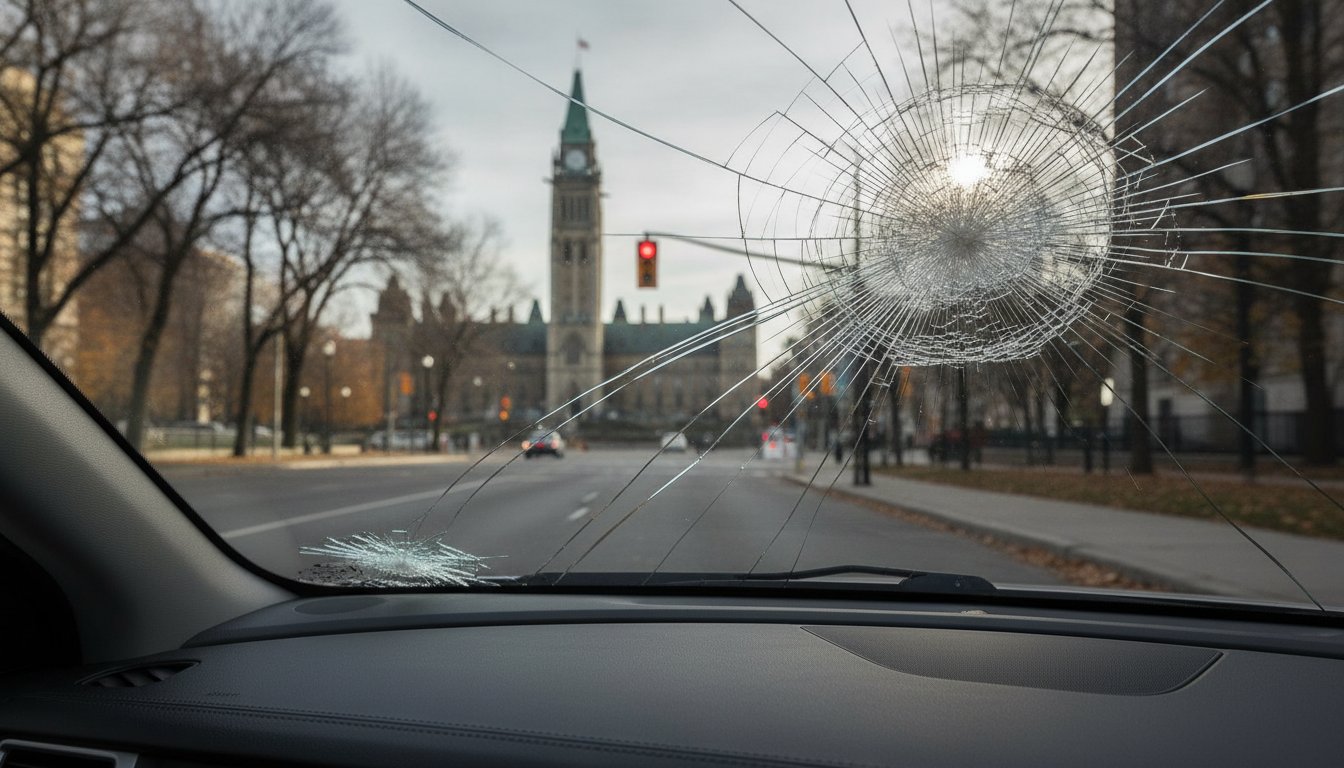
Did you know that your windshield provides up to 30% of your vehicle’s structural strength during a rollover? It’s easy to look at a small chip and assume it’s just a cosmetic nuisance that can wait until your next service appointment. You’re likely worried about that tiny mark suddenly spiderwebbing across your vision while you’re driving down the 417, and that’s a completely valid concern. In the Ottawa-Gatineau region, our extreme temperature fluctuations turn minor chips into a serious cracked windshield safety risk faster than in almost any other climate.
We understand the stress of wondering if your car is still legal to drive or if your Advanced Driver-Assistance Systems (ADAS) sensors are still calibrated correctly. This article helps you discover the hidden structural and technological dangers of driving with damaged glass. You will learn about the specific legal limits and potential $1,000 fines under the Ontario Highway Traffic Act, how your glass ensures proper airbag deployment, and how to access a convenient repair solution that prioritizes your safety and peace of mind.
Key Takeaways
- Realize that your windshield is a critical safety component that provides essential structural support for your vehicle’s roof during a rollover.
- Identify how a cracked windshield safety risk can interfere with the proper deployment of passenger-side airbags during a collision.
- Understand how Ottawa’s harsh climate and the “ice wedge” effect can cause a small chip to fail suddenly due to thermal shock.
- Navigate the specific legal standards for windshield obstructions in both Ontario and Quebec to avoid costly fines while driving across the region.
- Use the “Quarter Rule” to self-diagnose whether your glass damage requires a quick repair or a complete replacement.
More Than Just Glass: The Structural Role of Your Windshield
Many drivers view their windshield as a simple window designed to keep the wind and rain out of their faces. While it certainly provides protection from the elements, its engineering purpose is far more complex. In modern vehicle design, the glass is a vital load-bearing component. When you ignore a chip or a minor fracture, you aren’t just living with a cosmetic blemish; you’re accepting a cracked windshield safety risk that affects the entire frame of your car. If the glass is compromised, the vehicle’s ability to protect you during a collision is significantly reduced.
The “Safety Cage” Concept
The safety cage is a reinforced structure designed to keep the passenger cabin intact during an accident. Your windshield is bonded to the vehicle frame with high-strength adhesives, which allows it to transfer the force of an impact directly down to the chassis. This distribution of energy helps prevent the cabin from crumpling inward. In a rollover accident, the glass is even more critical. Research indicates that a vehicle’s windshield provides up to 30% of its structural strength during a rollover, acting as a pillar to keep the roof from crushing the occupants. Structural integrity in automotive glass refers to the ability of the windshield to maintain its rigid shape and bond under extreme pressure to preserve the internal volume of the cabin.
A compromised windshield can lead to a chain reaction of failures in this safety cage:
- The roof may lose its primary support during a rollover.
- The force of a front-end collision may not be properly diverted to the chassis.
- The structural bond between the glass and the frame may fail under stress.
Laminated Glass vs. Tempered Glass
There is a fundamental difference between the glass in your windshield and the glass used for your side and rear windows. Windshields are manufactured using laminated safety glass, which consists of two layers of glass with a Polyvinyl Butyral (PVB) interlayer sandwiched between them. Most side windows use tempered glass, which is designed to shatter into thousands of tiny, blunt pieces when it breaks. While tempered glass is strong, it cannot provide the same structural support as a laminated unit.
The PVB layer in your windshield serves as a sticky, flexible membrane. If the glass breaks, this layer holds the shards in place, preventing sharp fragments from entering the cabin and injuring passengers. Because laminated glass is designed to absorb energy and flex slightly, it is particularly susceptible to spreading damage. A small chip allows moisture and dirt to seep into the laminate; this weakens the bond and increases the cracked windshield safety risk. Once that bond is compromised, the glass can no longer effectively support the roof or transfer impact forces as it was originally engineered to do.
The 3 Primary Cracked Windshield Safety Risks You Can’t See
Beyond the obvious visual distraction, a cracked windshield safety risk often involves critical safety systems that remain invisible to the driver. Most people assume that as long as they can see the road, they are safe. However, modern automotive engineering treats the glass as a component that is integral to the structural integrity of the entire vehicle. When that integrity is compromised, several life-saving features may fail to perform when you need them most.
Airbag Deployment and the Windshield
The physics of a passenger-side airbag deployment are surprising to many drivers. Unlike the driver’s side airbag, which deploys from the steering wheel, the passenger-side airbag is designed to strike the windshield first. The glass acts as a vital backstop, redirecting the force of the inflating bag toward the passenger. Airbags deploy at incredibly high speeds, often exceeding 300 km/h. If your windshield has an existing crack, it may not be able to withstand this sudden, violent pressure. The glass can shatter or even pop out of its frame entirely. If the windshield fails, the airbag deploys out the window gap instead of protecting the person in the seat.
ADAS and Safety Sensor Interference
If you drive a vehicle manufactured within the last decade, your windshield is likely much more than just glass. It’s a mounting point for Advanced Driver-Assistance Systems (ADAS). These systems use cameras and sensors to monitor lane markings and detect obstacles. Even micro-cracks or small chips in the camera’s field of vision can distort the data the car receives. This distortion can lead to the failure of Automatic Emergency Braking or Lane Keep Assist. Because these systems are so precise, ADAS recalibration after windshield replacement is a mandatory safety step. If you’ve noticed a crack near the top centre of your glass, you will likely require windshield camera recalibration in Ottawa to ensure your car’s “eyes” are seeing the road accurately.
Finally, we must consider the danger of light refraction. At night, a crack acts like a prism. When the headlights of oncoming traffic hit the jagged edges of a fracture, the light scatters in multiple directions. This creates a blinding glare that can temporarily obscure your view of pedestrians or cyclists. If you’re concerned about how a small chip might be affecting your vehicle’s tech, a quick professional assessment can help you identify these hidden risks before they lead to an accident.
The Ottawa Factor: Why Our Climate Accelerates Glass Failure
Ottawa’s climate is uniquely hostile to automotive glass. While a small stone chip might remain stable in a milder environment, the extreme temperature swings in the National Capital Region turn minor damage into a major cracked windshield safety risk within days or even hours. Our winters don’t just test your battery and tires; they actively work to tear your windshield apart through a process known as the “ice wedge” effect.
When daytime temperatures hover near zero, melting snow and slush seep into the microscopic crevices of a chip. As the sun sets and temperatures plummet, that water freezes and expands. Since ice occupies about 9% more volume than liquid water, it exerts tremendous internal pressure on the glass layers. This cycle repeats daily, relentlessly pushing the crack further across your field of vision until the structural integrity of the unit is gone.
Thermal Stress and Defrosting
The most common cause of sudden glass failure in Ottawa is thermal shock. Imagine your vehicle has been parked outside overnight in -20°C weather. When you start the car and blast the defroster at maximum heat, the glass undergoes rapid, uneven expansion. The inner layer of glass warms and expands while the outer layer remains frozen. Because the glass and the PVB interlayer have different expansion rates, the stress concentrates at the weakest point: the existing chip.
To protect your glass, avoid the temptation to use boiling water to clear ice. The sudden temperature delta will almost certainly snap the glass instantly. Instead, allow the cabin to warm gradually. Start with a medium heat setting and increase it slowly as the engine warms up. This measured approach reduces the immediate strain on the laminate and can prevent a small chip from spiderwebbing across the entire surface.
Ottawa Road Conditions
Our local infrastructure also plays a significant role in accelerating glass damage. During winter, maintenance crews spread massive amounts of salt and abrasive stone dust on the 417 and local arterial roads like Hunt Club or Carling. This debris is constantly kicked up by tires, creating new “micro-pits” that weaken the glass surface. You also need to watch for “flying ice” shedding from the roofs of uncleaned trucks on the highway; a single impact from a frozen slab can turn a repairable chip into a total replacement job in a split second.
Once spring arrives, pothole season introduces a new physical threat. Hitting a deep pothole at 80 km/h sends a violent vibration through the entire vehicle frame. If your windshield is already compromised, this jarring impact can cause a “stress crack” to jump several inches instantly. Regular driving on Ottawa’s uneven spring roads effectively acts as a stress test that a damaged windshield will eventually fail. Addressing a cracked windshield safety risk early is the only way to avoid these environmental triggers.

Legal Consequences: Driving with a Cracked Windshield in Ontario and Quebec
While the structural and technological dangers are paramount, you also need to consider the legal implications of a damaged windshield. In the National Capital Region, drivers frequently move between Ontario and Quebec, each with its own set of regulations and enforcement standards. Law enforcement officers in both provinces view a compromised windshield not just as a nuisance, but as a legitimate cracked windshield safety risk that can result in significant financial penalties.
Fines and Citations in Ontario
Under Section 74 of the Ontario Highway Traffic Act, every motor vehicle must be equipped with a windshield that affords the driver a clear view of the highway. If a police officer determines that a crack or chip obstructs your vision, they have the discretion to issue a citation. Fines for driving with an obstructed view can reach up to $1,000. Beyond the initial ticket, an officer can deem the vehicle “unfit” for the road, which may lead to your plates being removed until the glass is replaced.
It’s also important to consider your long-term liability. If you are involved in a collision while driving with pre-existing glass damage, insurance adjusters may argue that your visibility was compromised. This could lead to a reduction in your claim payout or even a finding of partial fault in the accident. A crack will also prevent you from obtaining an Ontario Safety Standards Certificate, which is a mandatory requirement if you plan to sell or register your vehicle.
Crossing the Bridge: Gatineau Regulations
Ottawa commuters heading across the Portage or Macdonald-Cartier bridges into Gatineau face even stricter scrutiny under the Quebec Highway Safety Code. Article 265 of the Code states that the windshield must be free of any damage that could interfere with the driver’s vision. Quebec law is often interpreted more strictly than in Ontario; a crack or chip in the driver’s direct line of sight is almost always grounds for a fine, which typically ranges from $90 to $175 plus costs.
When is it officially illegal to drive? While there is no single “size rule” that applies to every situation, you should use the following checklist to determine if you are at risk of a ticket:
- Is the crack or chip larger than 3 cm in diameter?
- Does the damage sit directly in the “wiper sweep” area on the driver’s side?
- Does the crack extend from one edge of the glass to another?
- Are there multiple chips that create a “star” pattern in your line of sight?
If you checked yes to any of these points, you are likely operating an unsafe vehicle. To avoid a costly roadside stop and ensure your vehicle remains compliant on both sides of the river, you should book a professional glass inspection as soon as you notice damage. Addressing the issue early often allows for a simple repair rather than a full replacement.
Mitigating Risk: When to Repair vs. Replace
Once you recognize the structural and legal dangers, the next step is deciding on the most effective course of action. Not every chip requires a total glass swap, but every minute you wait increases the cracked windshield safety risk to you and your passengers. Understanding the “Quarter Rule” is the simplest way to self-diagnose your situation. If the impact point is smaller than a Canadian 25-cent coin, a technician can likely perform a professional resin injection to restore the glass’s integrity.
However, location is just as important as size. If you have a crack that touches the outer frame of the glass, it is considered an “edge crack.” These are particularly dangerous because they compromise the primary adhesive bond that holds the windshield to the vehicle’s safety cage. Even if the crack is short, any damage touching the perimeter requires an immediate full replacement. You should also avoid the temptation of retail DIY kits. These generic resins are rarely formulated to withstand the -30°C nights and +30°C days we experience in the National Capital Region. A failed DIY attempt often prevents a professional from being able to fix the glass later, forcing a more expensive replacement.
The Repairability Checklist
To determine if your glass can be saved, we look at three main factors: size, location, and depth. A safe repair is usually only possible if the damage hasn’t penetrated the inner layer of glass or the PVB interlayer. You must also consider contamination. If you’ve been driving for weeks with an open chip, road salt, dirt, and washer fluid will have seeped into the fracture. This debris prevents the repair resin from bonding correctly, which can leave the cracked windshield safety risk unresolved. Utilizing windshield repair in Ottawa as your first line of defence is only effective if the damage is clean and fresh.
Safety at Your Doorstep
If your windshield is severely damaged, the safest choice is to avoid driving the vehicle entirely. Driving to a service centre with a compromised windshield puts you at risk of a sudden failure or a police citation. We eliminate this friction by providing 100% free mobile service across the region. A technician can come directly to your home or office to perform the work on-site, ensuring you never have to navigate Ottawa traffic with unsafe glass.
We also simplify the administrative burden by offering direct insurance billing. Navigating the paperwork is straightforward when you use our guide to insurance windshield replacement in Ottawa. Don’t leave your safety to chance; contact Auto Glass Ottawa for a free mobile safety assessment today and restore your peace of mind.
Secure Your Vehicle for the Road Ahead
A small chip might seem like a minor inconvenience, but it represents a significant cracked windshield safety risk that compromises your vehicle’s structural integrity and modern safety sensors. Ottawa’s extreme temperature swings mean that delay isn’t just a risk; it’s a guarantee that the damage will spread. You now understand how a compromised windshield affects everything from airbag deployment to legal compliance in both Ontario and Quebec. Taking action now prevents a small repair from turning into a costly emergency later.
Don’t let a busy schedule prevent you from protecting your family. We bring 15+ years of local expertise directly to your driveway with our 100% Free Mobile Service across Ottawa and Gatineau. Every job we perform is backed by a lifetime warranty on workmanship and leakage, giving you the peace of mind you deserve. Our team handles the technical details and insurance coordination so you don’t have to.
Get a Free Quote for Mobile Windshield Repair in Ottawa
Our professional technicians are ready to help you navigate the repair process and get you back on the road with a clear, safe view of the world.
Frequently Asked Questions
How long can I safely drive with a cracked windshield in Ottawa?
You should address glass damage as soon as you notice it; there is no “safe” window for driving with a compromised windshield. In our local climate, a small chip can turn into a major cracked windshield safety risk in less than an hour due to road vibrations or temperature changes. Waiting even a day increases the likelihood that the glass will fail completely while you’re in motion, potentially causing a dangerous distraction for the driver.
Will a cracked windshield fail an Ontario vehicle safety inspection?
Yes, a cracked windshield will result in a failed Ontario Safety Standards Certificate inspection. Regulations state that the glass must not have any cracks that penetrate both layers of the laminate or any damage in the driver’s forward-facing vision area. If you’re planning to sell or register a vehicle, you must replace the glass to meet provincial safety requirements. An inspector will look for any chips or cracks larger than 3 cm.
Can a cracked windshield really cause my airbags to fail?
Yes, the windshield is a critical component for the proper deployment of the passenger-side airbag. The airbag is designed to bounce off the glass to position itself correctly in front of the passenger. If the glass is cracked, the force of the airbag deployment can cause the windshield to shatter or detach entirely. This leaves the passenger without the necessary protection during a front-end collision, significantly increasing the risk of injury.
Is it illegal to drive with a crack in the driver’s line of sight in Ontario?
Yes, driving with an obstructed view is a violation of the Ontario Highway Traffic Act. Police officers have the authority to pull you over and issue a fine if they believe a crack interferes with your ability to see the road clearly. These fines can be as high as $1,000 depending on the severity of the obstruction and the officer’s assessment of the vehicle’s condition. It’s always safer to repair the damage before a roadside stop occurs.
What happens if a crack spreads while I am driving on the highway?
If a crack spreads suddenly while you’re on the highway, it can cause immediate driver distraction or even obscure your view of traffic. The wind pressure at 100 km/h exerts significant force on the glass, which can lead to a “spiderweb” effect across the entire surface. This is a primary cracked windshield safety risk that often leads to secondary accidents due to driver panic or a sudden loss of visibility in high-speed traffic.
Does insurance cover a cracked windshield in Ottawa without a deductible?
Most comprehensive insurance policies in Ontario cover the full cost of a windshield chip repair without requiring you to pay a deductible. However, if the damage has spread and requires a full replacement, you will typically be responsible for the deductible amount specified in your policy. We provide professional assistance with the insurance claim process to help you understand your coverage and minimize your out-of-pocket expenses for both repairs and replacements.
Why do cracks spread faster during the winter in Canada?
Cracks spread faster in Canadian winters because of the extreme temperature difference between the freezing outside air and your vehicle’s hot defroster. This thermal stress causes the glass layers to expand and contract at different rates. Additionally, moisture that enters the crack freezes and expands, acting like a wedge that forces the glass apart from the inside. This cycle repeats every time you park and restart your car during a typical Ottawa winter.
Can I get a ticket in Gatineau for an Ottawa-plated car with a cracked windshield?
Yes, you can be ticketed in Gatineau even if your car is registered in Ontario. Quebec’s Highway Safety Code applies to all drivers operating vehicles on Quebec roads. If a Gatineau police officer determines that your windshield damage violates Article 265, they can issue a fine regardless of your home province’s regulations or your vehicle’s plate origin. Crossing the bridge into Gatineau doesn’t exempt you from local safety standards and enforcement.