
When Your Honda Needs Sensing Camera Recalibration
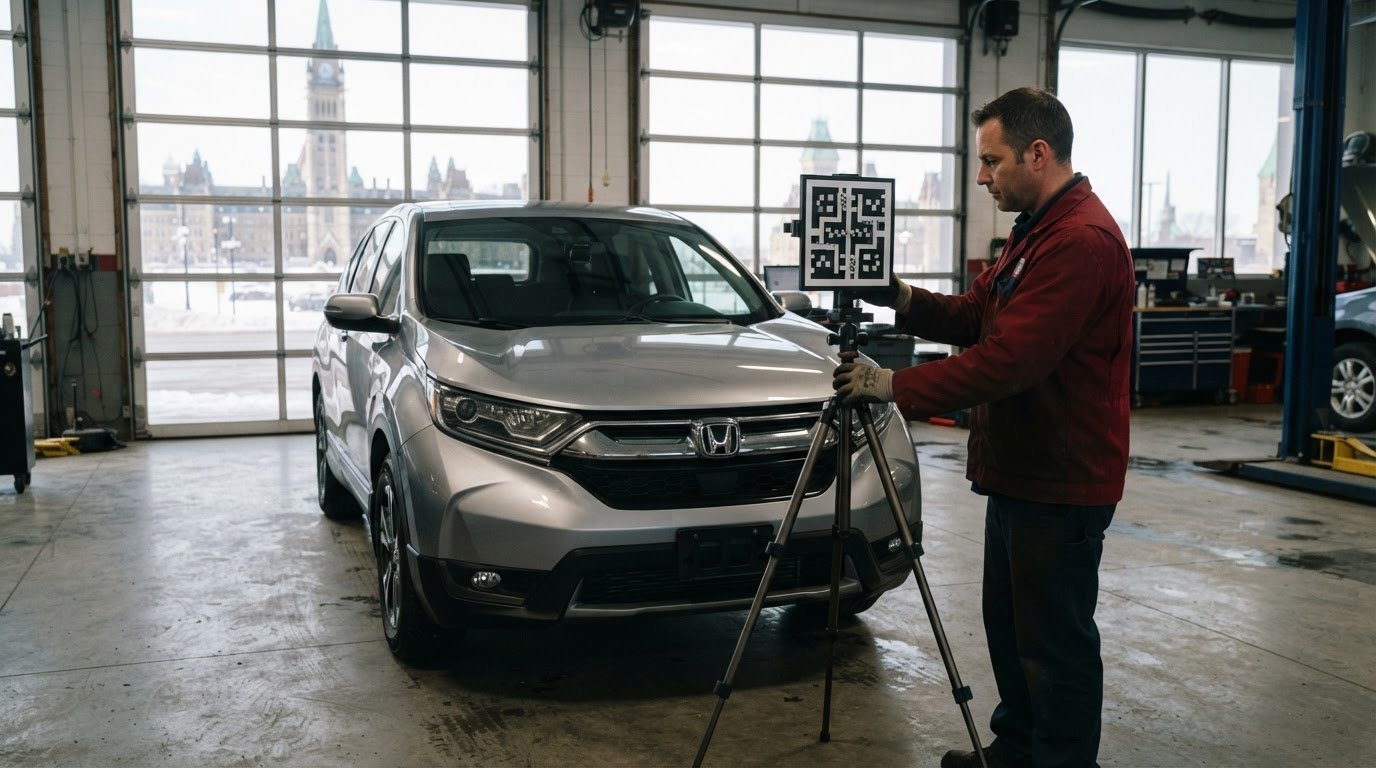
After a Honda windshield is replaced, the front sensor camera needs to be aimed again. Honda service procedures call for this step, and Honda’s job aid specifies a genuine Honda replacement windshield for camera aiming. Honda Sensing camera recalibration restores the camera’s alignment after the glass is changed.
It’s understandable to wonder how replacement glass, insurance, or the calibration method affects the next steps. This guide explains when recalibration is needed, how static and dynamic methods work, and how glass choice and insurance can factor into the service. You’ll also learn what to expect so you can make an informed decision about your Honda’s safety systems.
Key Takeaways
- After windshield replacement, plan for the front camera to be aimed again; Honda’s job aid specifies a genuine Honda replacement windshield for this procedure.
- Calibration can use targets in a controlled bay, a road drive, or both, depending on the Honda model.
- Learn how calibration fits into a windshield insurance claim and what glass choice means for the process.
- Check whether your Civic, Accord, CR-V, Pilot, Odyssey, or Ridgeline has a windshield-mounted camera, especially on models from roughly 2015 onward.
Does my Honda need calibration after a new windshield?
Yes. Honda service procedures call for aiming the front sensor camera after windshield replacement. The camera’s position matters because it reads lane markings and road conditions through the glass.
Recalibration Costs and Repair Providers
A Honda dealer isn’t the only option. An independent repair shop can recalibrate the camera if it has suitable equipment and follows the procedure for your Honda model. When arranging glass work, provide your model and year, and ask that camera aiming be included in the repair plan. This keeps windshield installation and camera alignment connected.
A repairable windshield chip may be fixed without replacing the glass. Whether repair is suitable depends on the damage and its location. If replacement is necessary, Honda’s job aid specifies a genuine Honda replacement windshield for camera aiming.
Recalibration Triggers and Warning Signs
Windshield replacement is a key trigger because changing the glass can affect the camera’s view. A dashboard warning or a Honda Sensing feature that stops working as expected can also signal a problem. Honda identifies B2A60-52 and B2A60-54 as codes indicating camera aiming is not finished.
Write down the exact warning or code instead of relying on memory. Share it with the technician, along with details of any recent windshield work. A warning-free display alone doesn’t confirm that aiming was completed after replacement.
Risks of Driving Without Calibration
If the camera’s aim is off, it may not read lane markings from the intended position. Honda’s Lane Keeping Assist System uses camera input to monitor markings and can provide steering inputs. If calibration is incomplete, don’t rely on the system to keep the vehicle centred.
Road Departure Mitigation also uses a camera and radar to detect lane markings, and may alert you or assist with steering and braking. Until the warning is addressed, stay attentive and drive without relying on those features. Proper camera aiming supports their intended operation, but it doesn’t replace the driver’s attention.
Static and dynamic calibration options
Honda’s procedure may be static, dynamic, or both, depending on the model. These methods check camera alignment under different conditions, so a scan tool alone may not complete the required process.
Calibration Time and Procedure
The time required depends on the Honda model and its procedure. Static calibration involves positioning the vehicle and targets before aiming; a dynamic step adds a road drive. If both are required, the process includes each stage, not just a scan.
Target-based aiming can’t be completed with a scan tool alone. A scan tool can read system information, but it doesn’t replace the equipment setup or road procedure. Static calibration requires a suitable setup, and a dynamic step requires appropriate driving conditions.
Required Conditions and Equipment
Static calibration requires a level floor in a controlled bay. The technician positions targets at manufacturer-specified distances and heights, then aims the camera using the vehicle’s system. Accurate vehicle positioning and target placement are essential parts of the setup.
Dynamic calibration involves driving at a set speed on clearly marked lanes. Some Honda models require this road step, while others may use static calibration alone or both methods. The model determines the sequence, so identify the exact Honda before planning the procedure. A road drive can’t replace the controlled target setup when static aiming is required.
To plan the work, share your Honda’s model and year, along with the reason calibration is needed. That information helps identify whether the procedure calls for a controlled bay, a road drive, or both. If you need help arranging the work, professional camera calibration support can guide the next step.
Insurance coverage for calibration
After a Honda windshield replacement, camera calibration is covered as part of a windshield claim with carriers. Treat the aiming procedure as part of restoring the vehicle after glass work, rather than as unrelated service. Coverage details still depend on your policy and claim circumstances, so keep the windshield and calibration information together when discussing the repair.
For a clear claim record, connect the calibration to the windshield replacement. Keep the vehicle details and repair documents handy, including the model, work performed, and calibration result. This information shows how the camera procedure relates to the glass service if the insurer requests more details.
What to include in a windshield claim
Organize your Honda claim information before submitting the repair paperwork:
- Provide the insurer with your vehicle’s make, model, and year.
- Describe the windshield damage and replacement in the claim information.
- Include the calibration procedure in the repair documentation.
- Keep the completed invoice and calibration record with your claim papers.
These records show how the glass work and camera service fit together. Keep copies together rather than submitting separate documents without context. If the insurer asks why calibration was performed, the repair record can link the procedure to the windshield replacement.
Understand your policy and claim record
Coverage of calibration within a windshield claim doesn’t explain every detail of your policy. Review the insurer’s claim instructions, including how your deductible applies and what documentation is needed. Make sure the invoice clearly identifies both the windshield work and the camera procedure.
If the claim is already open, add the calibration details to that claim record. If you’re arranging a replacement, tell the insurer that the Honda’s windshield-mounted camera needs aiming after glass work. Connecting the replacement and calibration helps explain the purpose of each repair step.
Which Honda models use a windshield-mounted Honda Sensing camera?
Honda Sensing is available on most Honda Civics, Accords, CR-Vs, Pilots, Odysseys, and Ridgelines from roughly the 2015 model year onward. That range is a useful starting point, not a guarantee that every vehicle in those model lines has the same equipment. Model year and specific vehicle configuration matter.
The windshield-mounted camera is part of the driver-assistance system, but Honda Sensing features can also use radar. A vehicle may have several driver-assistance functions without every function relying on the windshield camera. After glass work, identify the vehicle and camera-related system so the correct procedure is selected.
- Note the Honda model, such as Civic, CR-V, or Pilot.
- Record the model year, especially for vehicles near the roughly 2015 starting point.
- Check the owner’s manual or vehicle information for Honda Sensing equipment.
- Tell the glass technician if the windshield has been replaced or damaged.
For example, a CR-V and an Accord may both have Honda Sensing, yet their calibration requirements can differ by model. The vehicle’s exact year and equipment determine which aiming procedure applies. Don’t assume the model name alone identifies the camera setup or required calibration method.
If your Honda is outside the listed model lines or predates roughly the 2015 model year, use its owner’s manual and vehicle equipment information to identify its safety features. If it has a windshield-mounted camera, windshield replacement can affect the camera’s view and may call for aiming. A warning light or incomplete-aiming code can also help identify a calibration issue.
Once you’ve identified your Honda’s model and year, arrange service that accounts for its camera system. Book Honda camera recalibration after windshield replacement to have the procedure matched to the vehicle’s requirements.
Auto Glass Ottawa: Windshield Repair
Auto Glass Ottawa can help when a stone chip or crack affects your Honda’s windshield. If the damage is repairable, windshield repair may preserve the existing glass. If replacement is needed, the windshield-mounted camera must be included in the repair plan.
For a Honda with Honda Sensing, tell the team about any camera warning or recent windshield work when arranging service. Auto Glass Ottawa provides windshield replacement and mobile windshield repair, bringing the work to your home or workplace in Ottawa. Insurance Claim Assistance can also help you navigate the paperwork for a windshield claim.
Choose repair or replacement based on the glass damage, and include the camera system in the conversation so the right work is addressed together. Contact Auto Glass Ottawa to discuss your Honda’s windshield, or visit autoglassottawa.ca.
Make camera alignment part of your next step
After windshield work, include the camera system in the repair plan. Honda Sensing camera recalibration restores the camera’s intended position so its view of the road matches the vehicle’s setup. Keep any warning messages and repair records handy when arranging service.
Auto Glass Ottawa provides windshield repair when the damage is suitable for repair, or windshield replacement when the glass needs to be changed. Free mobile service is available, and Insurance Claim Assistance can help with the paperwork for a windshield claim. Sharing your Honda’s model, year, and recent glass work helps clarify the service needed.
Take the next step with your Honda’s glass and camera concerns. Contact Auto Glass Ottawa to discuss your windshield service and move forward with a clear plan.
Frequently Asked Questions
What if the warning stays on after calibration?
If the warning remains, the vehicle needs further diagnosis rather than repeated resets. Note the exact dashboard message and any diagnostic code, then have the camera system and related components assessed. A persistent alert may indicate an unfinished aiming procedure or another system fault. Until the warning is resolved, drive attentively and don’t rely on the affected Honda Sensing feature.
What is Honda Sensing camera recalibration and when is it needed?
Honda Sensing camera recalibration restores the windshield-mounted camera’s aim so it can interpret the road from the correct position. It’s needed after windshield replacement because changing the glass can affect the camera’s view. If a damaged windshield is replaced, include camera aiming in the repair plan rather than treating the glass and driver-assistance system as separate concerns.
How is Honda Sensing camera recalibration performed?
A technician follows the procedure for the specific Honda model, using a controlled target setup, a road drive, or both. The target-based step depends on accurate vehicle and target positioning; the road-based step requires suitable lane markings. A diagnostic scan can show system status, but reading codes alone doesn’t complete the physical aiming procedure the vehicle requires.
How much does Honda Sensing camera recalibration cost in Canada?
The work involved depends on the Honda model, its camera system, the required calibration method, and service location. Static calibration, a dynamic road procedure, or both may be required. For an accurate quote, provide the vehicle’s model and year, explain whether the windshield was replaced, and mention any warning messages. No single amount applies to every Honda.
Does Honda warranty or insurance cover camera recalibration in Canada?
Warranty and insurance are separate forms of coverage. Calibration may be covered as part of a windshield claim, while Honda warranty eligibility depends on the applicable warranty terms and why calibration is needed. Keep the windshield replacement and calibration documents together, and describe the work accurately in the claim so the insurer can assess it under your policy.