
Audi Windshield Camera Calibration: Guide for Drivers
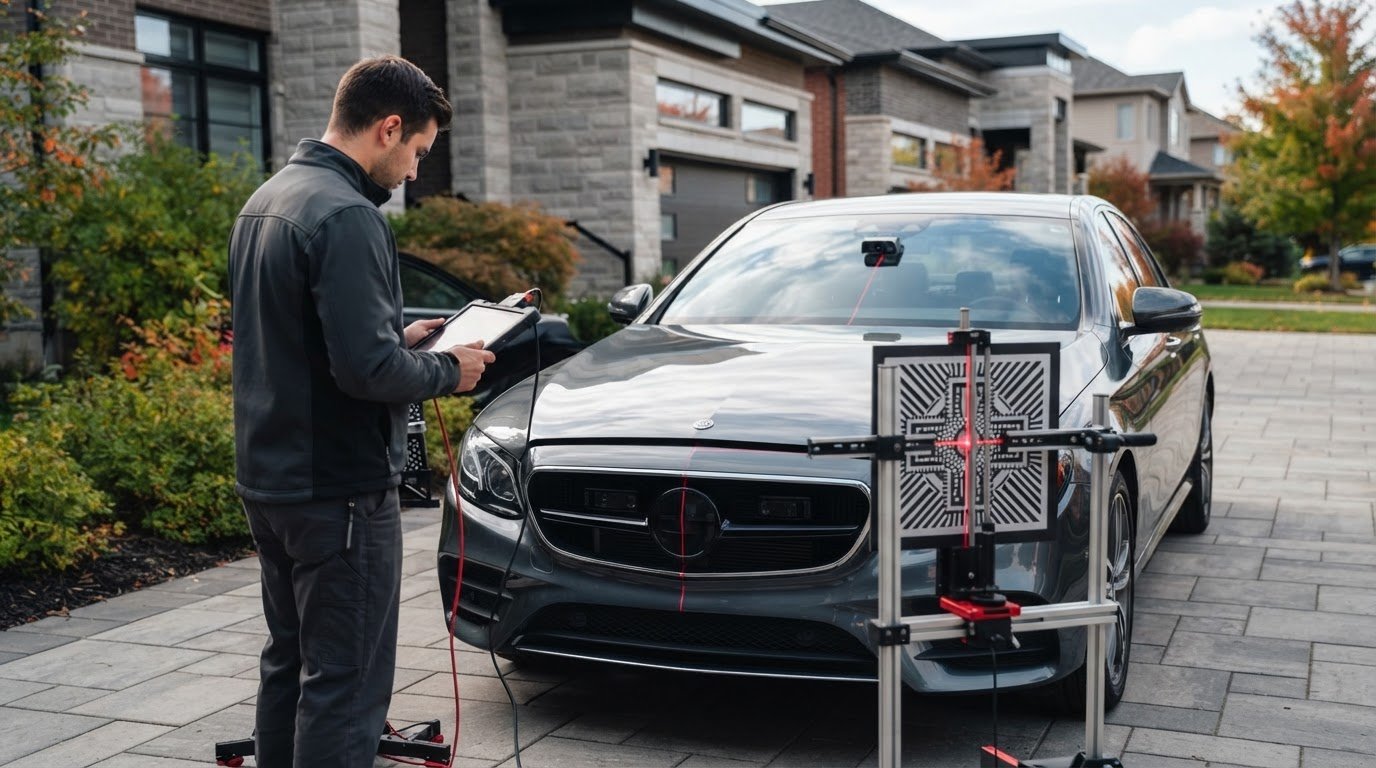
A camera misalignment of just one degree can reduce the effectiveness of your vehicle’s automatic emergency braking by as much as 50 to 60 percent at highway speeds. Following a glass replacement, precise Audi windshield camera calibration is not an optional service; it is an essential safety requirement that ensures systems like Audi pre sense and active lane assist read the road accurately.
Seeing persistent warning messages illuminate across your Audi Virtual Cockpit is unsettling, especially when faced with extended dealership wait times just to secure an appointment. You shouldn’t have to second-guess whether your safety sensors will silently fail when you need them most. In this guide, you’ll learn how static and dynamic calibration works to protect vital safety systems, why optical alignment must meet factory specifications, and how to verify precise recalibration without dealer delays or unnecessary friction.
From millimetre-accurate workshop target boards to real-world road testing, here is what every Audi driver needs to know to keep their vehicle performing safely.
Key Takeaways
- Understand why glass replacement directly impacts forward camera alignment and alters the precision of safety systems like Audi pre sense.
- Discover the operational differences between static workshop target boards and dynamic on-road camera testing.
- Identify subtle Virtual Cockpit alerts and glass damage that indicate your vehicle requires an immediate ADAS health check.
- Learn how completing your Audi windshield camera calibration with an independent specialist eliminates dealership subletting delays.
- Review the full diagnostic and recalibration sequence that protects your vehicle’s factory seal, structural support, and active safety systems.
Why Audi Windshield Camera Calibration Is Essential After Glass Replacement
Audi forward-facing cameras, including the R242 driver-assistance camera module, mount directly against the inside surface of your front windshield behind the rearview mirror. Because the camera lens looks directly through the glass, its optical calculation depends on the exact angle established at the factory. Even a microscopic variation in glass thickness, curvature, or urethane adhesive depth alters where the camera aims. A deviation of just one single millimetre at the bracket changes road tracking angles drastically over highway distances. Completing certified Audi windshield camera calibration aligns these optical angles, restores proper structural support metrics, and ensures full adherence to Federal Motor Vehicle Safety Standards.
How Audi Pre Sense Relies on Windshield Optical Alignment
Audi safety networks rely on modern Advanced Driver-Assistance Systems (ADAS) to calculate real-time driving risks. The front windshield camera scans lane boundaries, cyclists, and moving vehicles ahead, feeding live visual information directly to the central driver assistance controller. This optical data fuses with bumper-mounted radar sensors to establish emergency braking windows. When a windshield is replaced, slight changes in glass refraction alter how light enters the camera sensor. Scheduling an immediate ADAS health check verifies that the camera calculates stopping distances accurately rather than relying on skewed focal points.
The Safety Hazards of Operating an Unaligned Camera
Driving with an unaligned forward camera compromises your active safety systems. When optical sensors cannot confirm exact distances, the vehicle reacts unpredictably:
- Phantom braking episodes: A skewed camera pitch can misinterpret overhead bridges, shadows, or metal expansion joints on 400-series highways as stationary hazards, triggering unexpected emergency braking.
- Erratic lane guidance: Audi active lane assist struggles to distinguish road edges during winter slush or heavy rain, leading to sudden steering wheel tugs or improper lane drift.
- Incorrect road sign recognition: Misaligned optical sensors scan adjacent off-ramp signs or miss overhead markers, displaying incorrect speed limits across your digital instrument cluster.
Carrying out an Audi windshield camera calibration immediately after glass installation eliminates these errors, keeping your safety features dependable in every driving condition.
Static vs Dynamic Calibration: How Audi Safety Cameras Are Reset
Calibrating an Audi camera module is not a simple plug-and-play task. Depending on your vehicle’s equipment package and model year, resetting the system requires static calibration, dynamic calibration, or a dual-phase procedure. Modern driver assistance platforms offer an enormous potential for improving safety, but their performance depends on exacting digital and optical synchronization. Before clearing stored fault codes, technicians use dedicated diagnostic software to verify two-way communication between the camera and the vehicle’s central assistance control unit.
Static Calibration with Audi Optical Target Boards
Static calibration occurs inside a controlled workshop bay where technicians eliminate environmental variables. Specialized geometric target boards are placed at exact, laser-measured distances and angles relative to the vehicle’s centreline and front axle. Level flooring and consistent indoor lighting are critical, since slight shadows or uneven floor pitch can skew optical readings. Once targets are positioned, diagnostic software prompts the vehicle to lock its camera field of view onto these reference points, establishing precise factory zero positions.
Dynamic Calibration on Public Roadways
Dynamic calibration takes place on public roadways while the vehicle is in motion. A technician connects a handheld diagnostic tool and drives the Audi at designated cruising speeds along roads with clear, visible lane markings. During the drive, onboard computers process roadside objects, lane boundaries, and traffic flow to establish real-world depth perception. In Canadian winters, salt accumulation, slush, and covered road lines can prolong this process, making clear conditions necessary for optical sensors to complete their learning cycle.
Audi Vehicle Requirements by Model Generation
Calibration requirements vary significantly across different Audi platforms:
- A4, A6, and Q5 platforms: These models typically demand a static setup first, followed by dynamic validation if equipped with dual Adaptive Cruise Control radar sensors.
- Electric e-tron models: Audi e-tron architectures integrate forward cameras with surround-view sensors, requiring specialized software routines to coordinate multiple assistance systems.
- Chassis prep: Technicians must verify tire pressures, cargo load, and suspension ride height before starting any Audi windshield camera calibration. Any uncorrected chassis lean throws off the camera’s baseline pitch.
If your dashboard indicates an assistance system fault, scheduling an inspection with certified auto glass recalibration specialists ensures your cameras are aligned properly using factory-grade equipment.
Warning Signs That Require an Audi ADAS Health Check
Windshield replacement isn’t the only trigger that throws optical sensors out of true. Yellow dashboard alerts, minor front-end bumps, and uneven road surfaces can disrupt your driver-assist systems without warning. If an alert appears on your dash, clearing the diagnostic code with a generic OBD scanner won’t fix the underlying problem; it simply leaves the vehicle operating with misaligned sensors. Following guidelines like Standard ADAS sensor calibration ensures these complex optical units are physically and digitally verified, restoring critical road tracking accuracy.
Instrument Cluster and Virtual Cockpit Alerts
Your Audi Virtual Cockpit delivers clear notifications when camera data becomes unreliable. Pay attention to these primary alerts:
- “Audi pre sense: restricted”: This yellow warning indicates the forward camera cannot reliably calculate distances to vehicles or pedestrians ahead.
- Adaptive Cruise Control unavailable: When the central driver-assistance controller detects a mismatch between optical camera input and bumper radar, cruise control features shut down automatically.
- Flashing camera indicator: A flashing or persistent camera icon warns of an optical blind spot, dirty lens, or complete sensor alignment failure.
These safety codes stay active in your Audi gateway modules until technicians perform an ADAS health check and clear them through official alignment procedures.
Physical Factors and Environmental Wear
Mechanical changes and tough Canadian driving conditions also alter camera geometry. Suspension modifications, such as replacing worn control arms, shock absorbers, or coil springs, change vehicle rake and level pitch. Even a routine four-wheel alignment that adjusts rear-axle toe or camber alters your Audi’s thrust angle. Because the camera aligns relative to this rear thrust line, chassis work often requires a fresh calibration.
Environmental stressors play a role too. Harsh Ottawa winters bring severe freeze-thaw cycles that challenge windshield adhesive curing, while varying glass expansion coefficients cause micro-shifts around the rear-view mirror bracket. Hard impacts from deep potholes or minor parking-lot fender benders can easily dislodge these precision-mounted brackets. Even a small stone chip that lands in the camera’s optical sweep path can refract incoming light, making an Audi windshield camera calibration necessary to restore dependable detection.

Dealership vs Independent Auto Glass Specialist for Audi Calibration
Facing a cracked windshield on a German luxury vehicle often leads drivers straight to the local dealership. However, many car dealerships do not actually replace automotive glass on site. Instead, they frequently sublet the vehicle to an outside glass installer, transport the car between lots, and then perform the sensor diagnostics days later. Partnering directly with an independent auto glass facility that handles installation and optical alignment under one roof eliminates unnecessary downtime while ensuring strict adherence to the Automotive Glass Replacement Safety Standard.
In-House Technology vs Sublet Dealership Appointments
Opting for a dedicated facility means your vehicle remains in controlled hands throughout the entire repair. The differences between service routes directly impact turnaround times:
- Streamlined single appointments: When glass specialists perform in-house Audi windshield camera calibration, they verify camera bracket positioning, urethane curing, and optical targeting during the same service visit.
- Zero third-party shuttling: Subletting models involve driving your Audi between external glass workshops and dealer service bays, which increases the risk of transit chips and schedule miscommunications.
- Specialized focus: Independent auto glass shops dedicate their bays entirely to glass structural support, correct adhesive bonding times, and exact ADAS target placement.
Insurance Coverage and Deductible Handling
A frequent concern for Audi owners is whether their insurance policy accommodates certified independent specialists. In Ontario, drivers maintain the legal right to select their preferred repair centre. Most standard auto insurance policies with glass protection cover both glass replacement and manufacturer-required camera recalibration, as insurers recognize recalibration as an essential step to restore a vehicle to its pre-loss condition.
To navigate the claims process smoothly, learn more about insurance windshield replacement in Ottawa for policy details. Auto glass specialists often coordinate directly with major Canadian insurance companies to confirm coverage details. Depending on your specific policy terms and auto insurance endorsements, you may also qualify for a deductible waiver, which helps eliminate out-of-pocket expenses while preserving your vehicle’s safety standards.
If your Audi requires new glass, book your windshield replacement and calibration with certified local technicians to restore your vehicle without dealership delays.
The Certified Audi Calibration Process at Auto Glass Ottawa
Restoring your vehicle’s safety network requires a methodical workflow that balances physical glass installation with precise Audi windshield camera calibration. Our certified technicians execute every repair through a standardized, multi-step sequence designed to return your vehicle to strict factory operating specifications.
Pre-Scan Inspection and Glass Preparation
Every repair begins with a thorough pre-scan diagnostic check. Technicians interface directly with your Audi gateway module to catalog existing fault codes across safety systems like pre sense and adaptive cruise control. Documenting these initial parameters ensures pre-existing issues are identified before mechanical work begins.
Technicians then remove the damaged windshield, taking care to protect the pinchweld coating from scratches to prevent corrosion. The replacement glass is bonded using high-modulus automotive urethane. This high-grade adhesive preserves the factory seal, maintains thermal stability across severe Canadian temperature swings, and restores necessary structural support to the roof and cabin pillars.
Sensor Setup and Precision Recalibration Protocol
Once the adhesive curing window allows safe handling, attention shifts to optical alignment:
- Mounting verification: Technicians inspect the interior camera bracket to confirm rigid, vibration-free placement against the new glass.
- Target positioning: Using laser-guided measuring fixtures, technicians place model-specific geometric target boards at exact millimetre distances from the front axle.
- System execution: Diagnostic tools command the camera to lock onto target reference markers, completing the static alignment sequence.
- Dynamic verification: When specified by Audi repair standards, technicians take the vehicle on a prescribed test drive to validate optical tracking at highway speeds.
Quality Assurance and Lifetime Protection
A final post-scan diagnostic verifies that all safety modules communicate cleanly and that zero fault codes remain active. Technicians provide a signed calibration report documenting successful completion for your maintenance files and insurance records. Best of all, every installation comes backed by a lifetime warranty covering workmanship and leakage for as long as you own the vehicle. Contact Auto Glass Ottawa today to schedule certified Audi windshield camera calibration with experienced local specialists.
Restore Your Audi’s Driving Safety with Precision Recalibration
Driving an advanced vehicle requires total confidence that onboard assistance systems respond properly when sudden hazards appear. When replacing your windshield alters optical angles by even a fraction of a millimetre, professional Audi windshield camera calibration ensures systems like Audi pre sense and active lane assist read the road cleanly. Skipping this service puts your vehicle at risk of erratic warnings, phantom braking, or outright sensor failure.
You don’t need to endure extended dealership delays or outsourced subletting to restore factory performance. Backed by over 15 years of experience across Ottawa and Gatineau, our in-house certified ADAS camera recalibration specialists service your glass and sensors during a single visit. Every installation is backed by a lifetime warranty on all glass workmanship and leakage, keeping your vehicle safe in every season. Book your Audi windshield replacement and calibration with Auto Glass Ottawa today to drive with complete peace of mind.
Frequently Asked Questions
Can I drive my Audi if the windshield camera is not calibrated?
You can physically drive your vehicle, but your active safety systems will be unreliable or disabled. Operating without a completed calibration increases collision risks because critical features like Audi pre sense and active lane assist cannot judge vehicle distances accurately. In emergency scenarios, unaligned optical sensors may fail to trigger braking or cause unexpected phantom stops. It’s always best to keep trips limited until technicians align the camera.
How long does an Audi windshield camera calibration take to complete?
A standard Audi windshield camera calibration typically takes between one and two hours. Static setups require precise laser targeting inside a controlled workshop bay, which takes roughly an hour. If your model also requires a dynamic road test, expect an additional 30 to 45 minutes of driving along marked roadways. Combined with glass adhesive curing time, you can generally expect to pick up your vehicle within a single afternoon.
Does auto insurance cover camera calibration after windshield replacement in Ontario?
Yes, most auto insurance policies with glass coverage across Ontario cover manufacturer-required camera recalibration alongside windshield replacement. Insurers treat sensor alignment as a necessary procedure to restore your vehicle to pre-loss condition. When you file a claim, certified glass shops work directly with your insurance provider to handle documentation and verify policy coverage, often qualifying policyholders for deductible waiver programs that eliminate out-of-pocket expenses.
What is the difference between static and dynamic Audi camera calibration?
Static calibration takes place inside a specialized workshop bay using physical, laser-aligned target boards set at specific distances from your vehicle. Technicians use level floors and controlled lighting to reset the camera’s baseline field of view. Dynamic calibration happens on the road, where a technician drives the Audi at set cruising speeds so the computer can track painted road lines and traffic markers in real time.
Will an aftermarket windshield interfere with my Audi pre sense camera?
Poor-quality aftermarket glass can distort optical signals. Minor variations in glass thickness, optical clarity, or curvature in the camera’s sightline cause refractions that confuse onboard sensors. To prevent driver assistance faults, certified technicians install glass meeting or exceeding original equipment standards. High-grade replacement glass ensures the forward camera reads lane markings and road hazards accurately without generating false alerts.
Why is my Audi Virtual Cockpit showing a pre sense restricted message?
This warning appears when your vehicle’s central controller detects blocked, skewed, or corrupt optical data from the windshield camera. Common culprits include heavy road salt, ice accumulation over the lens bracket, or physical misalignment following a glass replacement. If cleaning your windshield doesn’t clear the yellow warning light, your system requires an ADAS health check and software realignment to restore active emergency functions.
Can mobile technicians calibrate an Audi camera at my home or workplace?
While mobile technicians can replace your windshield in your driveway or parking lot, static Audi windshield camera calibration requires a controlled shop environment. Proper static alignment demands perfectly level concrete, uniform indoor lighting, and ample clearance for physical target boards that cannot be reproduced outdoors. For complete safety, technicians typically replace the glass on-site or bring the vehicle into a dedicated bay for target calibration.