
Seasonal Auto Glass Damage Prevention: Ottawa’s Weather Challenges (2026 Guide)
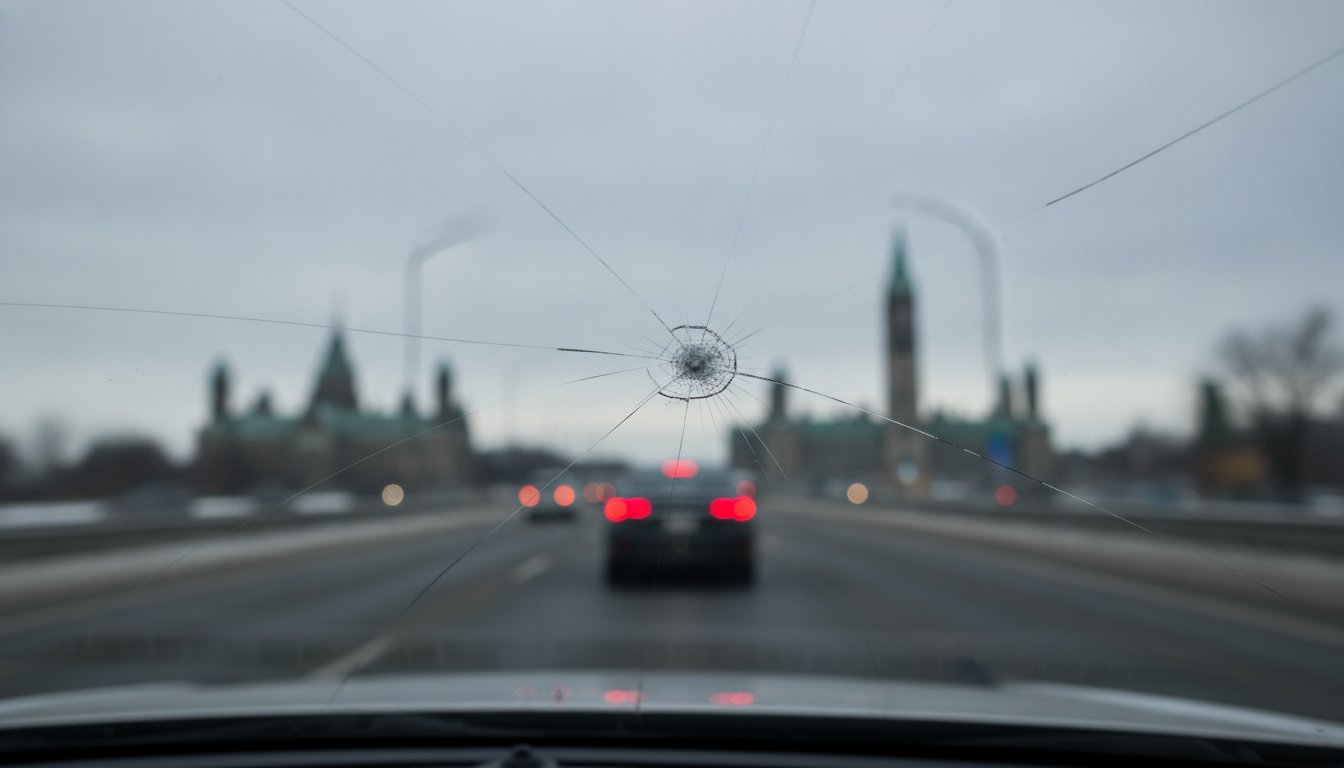
Imagine you’re merging onto the 417 during a February slush storm when a sudden “thwack” against your glass makes your heart sink. Before you reach the next exit, that tiny speck has already started to crawl across your line of sight. Ottawa’s winter weather doesn’t play fair. If you drive in the capital, you likely agree that our extreme temperature swings and heavy road salt are a constant threat to your vehicle’s safety. It’s frustrating to realize that a small chip could cause your windshield to fail in traffic. This 2026 guide shares essential Winter Windshield Care Tips for Ottawa Drivers to help you defend your glass against the harshest elements.
You’ll learn how to prevent “thermal shock” during morning defrosting, navigate insurance claims without the headache, and ensure your ADAS cameras stay accurately calibrated to keep your safety systems functioning through every blizzard. We’ll show you how to maintain your car’s structural integrity while avoiding the cost of a full windshield replacement. By taking a few proactive steps now, you can ensure your vehicle remains a safe sanctuary rather than a source of seasonal stress.
Key Takeaways
- Avoid the “thermal shock” that shatters glass by learning safe defrosting methods tailored for Ottawa’s extreme -30°C winter mornings.
- Implement effective Winter Windshield Care Tips for Ottawa Drivers to stop corrosive road salt and liquid brine from seeping into and expanding existing chips.
- Protect your vehicle’s structural integrity during summer heatwaves by understanding how direct sunlight creates dangerous pressure points in your glass.
- Save on replacement costs by using the updated “Quarter Test” to catch minor damage before it spreads or results in an Ontario Highway Traffic Act fine.
- Ensure your 2026 safety features function correctly with expert insights on ADAS camera recalibration and the convenience of professional mobile repair services.
Understanding Ottawa’s Extreme Climate: Why Your Windshield Is at Risk
Ottawa drivers face a unique challenge. Our city experiences some of the most dramatic temperature shifts in North America. We call this the “Ottawa Swing,” where the mercury can plummet 20 degrees in a single afternoon. This volatility leads to thermal shock. Thermal shock occurs when the glass expands or contracts too rapidly for its molecular structure to handle. In our region, this means transitioning from +35°C summer humidity to -30°C winter deep freezes. Just as these shifts impact your car, they also affect your home’s exterior; you can learn more about Residential Window and Door Replacement to see how modern glass technology protects residential structures from the same thermal stress.
Your windshield is far more than a clear view of the road. It serves as a vital structural component of your vehicle’s safety cage, providing up to 60% of the cabin’s strength during a rollover. Modern vehicles also house Advanced driver-assistance systems behind the glass. If the integrity of the windshield is compromised by a chip or crack, these sensors may fail to function correctly. Minor chips act as concentrated stress points. When the temperature shifts, the glass tries to move, but the chip creates a “fault line” where the tension releases, often resulting in a sudden, massive crack. Ottawa’s high humidity levels exacerbate glass stress because moisture trapped in micro-fissures expands with incredible force when it turns to ice.
The Science of Thermal Stress in the National Capital Region
When you’re parked in Kanata or Orleans on a frigid morning, your glass is brittle. Blasting the high-heat defroster immediately creates a massive temperature delta between the interior and exterior surfaces. This is where most Winter Windshield Care Tips for Ottawa Drivers start. The molecules on the inside expand while the outside remains frozen, forcing the glass to bend at a microscopic level. In the Ottawa Valley’s specific pressure zones, these micro-cracks expand significantly faster than in milder climates.
Why Ottawa Roads Are Particularly Harsh on Glass
Driving the 417 or 174 during rush hour feels like running a gauntlet. The heavy volume of commuters kickstarts debris that stays airborne in the dense, cold air. Our local geology also plays a role. The Canadian Shield’s proximity means the gravel used for traction is often harder and more abrasive than the limestone found elsewhere. In the city centre, winter road maintenance creates a constant “sandblasting” effect. Brine and grit are kicked up by leading vehicles, wearing down the glass surface and turning tiny impacts into major repairs. Following basic Winter Windshield Care Tips for Ottawa Drivers can help you spot these issues before they require a full replacement.
Winter and Spring Hazards: Surviving Salt, Ice, and the Great Thaw
Ottawa’s transition from deep winter to the “Great Thaw” creates a perfect storm for glass failure. During these months, the primary threat is ice expansion. When melting snow or liquid brine seeps into a microscopic chip, it doesn’t just sit there. It waits for the temperature to drop overnight. As that liquid turns back into ice, it expands with enough force to split the glass layers apart. This is why many drivers wake up to a “mystery crack” that wasn’t there the night before. Following proactive Winter Windshield Care Tips for Ottawa Drivers can help you identify these vulnerabilities before the cycle takes hold.
Safe Defrosting: Avoiding the ‘Morning Crack’
Warming up your vehicle on a -20°C morning requires patience. If you’re in a rush, don’t take shortcuts that compromise your safety. Start your engine and set the climate control to a medium heat setting, rather than the maximum. Direct the airflow toward the floor first to warm the cabin gradually. Shift the air to the windshield only after the interior temperature has begun to rise. This controlled approach prevents the glass from expanding too quickly. Never use boiling water to clear ice. The sudden leap in temperature will cause the glass to shatter instantly. Instead, rely on a quality plastic scraper and a specialized de-icing fluid to clear the surface without scratching the glass or damaging the rubber seals.
Potholes and Brine: The Hidden Enemies of Structural Integrity
The liquid brine used on Ottawa roads is a sophisticated chemical cocktail. While it keeps the 417 clear, it’s also highly aggressive. This brine can seep into the laminate layer of your windshield, leading to the chemical degradation of the glass resin used in modern manufacturing. Over time, this causes pitting and a “cloudy” appearance that makes night driving dangerous. This surface damage scatters light from oncoming headlamps, significantly reducing your visibility.
Spring brings another hazard: the Ottawa pothole. Hitting a deep crater on Carling Avenue sends a violent vibration through your car’s frame. Since the windshield is a structural part of the vehicle, it absorbs much of this energy. If you have a small, untreated chip, that single jolt is often the tipping point that causes the glass to fail. Cleaning your windshield at least twice a week during the winter helps remove the corrosive brine and allows you to spot new damage early. If you find a fresh impact, a quick mobile windshield repair can save the structural integrity of your glass before the next big thaw.
Summer Heat and Construction Stress: When Chips Become Cracks
Ottawa’s summer heatwaves often reach +30°C with high humidity, causing automotive glass to expand significantly. While many people prioritize Winter Windshield Care Tips for Ottawa Drivers, the expansion during July and August can be just as destructive to compromised glass. If you park your vehicle in direct sunlight near the ByWard Market, the interior can quickly become a pressure cooker. The air inside can reach temperatures exceeding 50°C, pushing outward against the glass with incredible force. This internal pressure seeks out the weakest point in the structure, which is almost always an existing stone chip.
A specific danger during this season is the “edge crack.” Most windshields have a black ceramic border called the frit. This black area absorbs heat much faster than the clear centre of the glass. The resulting temperature difference creates massive tension along the perimeter. If a small stone chip is located near this border, the heat stress will likely cause it to “run” across the entire windshield in minutes. This type of damage is often unrepairable and requires a full replacement to maintain the vehicle’s structural integrity.
Managing Glass Expansion During Ottawa Heatwaves
To protect your glass, seek shade whenever possible. Using a reflective sunshade on your dashboard significantly reduces the temperature of the glass and the ADAS sensors mounted behind it. Be careful with your air conditioning settings. Blasting freezing air onto a windshield that has been baking in the sun creates “AC Shock,” a reverse version of the winter thermal shock discussed earlier. Cracking your side windows by just a centimetre helps equalize internal and external pressure levels, reducing the strain on the glass during the hottest parts of the day.
Navigating 417 Construction Zones Safely
Ottawa’s construction season runs from May to October, turning the 417 into a high-risk zone for stone chips. Dump trucks and heavy machinery often track loose gravel onto the highway lanes, especially near major interchanges. To minimize risk, increase your following distance to at least three car lengths when driving behind large vehicles or through active work zones. This extra space gives debris time to lose its kinetic energy before hitting your glass. If you hear the distinct “pop” of a stone hit, don’t ignore it. Applying a small piece of clear tape over the chip can keep dirt and moisture out until you can arrange a professional repair. This simple action is one of the most effective Winter Windshield Care Tips for Ottawa Drivers to remember year-round, as it prevents the damage from spreading during the next temperature shift.

Proactive Prevention: How to Stop Minor Damage from Spreading
Small chips don’t stay small in the National Capital Region. If you ignore a minor impact, you’re essentially waiting for a temperature shift to finish the job. Professional resin injection is the most effective way to prevent this. A technician vacuums out the air and moisture from the impact point, then injects a high-strength, clear resin that bonds the glass layers back together. This process restores the structural integrity of the windshield and stops the damage from spreading. It’s a proactive choice that saves the average driver hundreds in replacement costs while ensuring your vehicle remains a safe sanctuary on the road.
The ‘Quarter Test’ and 2026 Ontario Safety Standards
To determine if your glass is repairable, use the ‘Quarter Test.’ If the chip is smaller than a Canadian quarter, it can usually be fixed. However, location matters as much as size. Under 2026 Ontario safety inspection requirements, any damage in the ‘acute area’, the section directly in the driver’s line of sight, is a reason for failure. Even a small chip here can distort your vision or interfere with safety sensors. If a crack is longer than 15cm, it’s no longer a legal option for repair. Driving with such damage can result in fines ranging from $110 to $500 under the Highway Traffic Act. Catching these issues early ensures you pass your next inspection without the need for a costly last-minute replacement.
Immediate Steps to Take When You Spot a Chip
Time is your biggest enemy when you’re dealing with a fresh hit. Follow the 48-hour rule: get the chip sealed before dirt, washer fluid, or road salt contaminates the area. Once debris enters the crack, the resin won’t bond as effectively, leaving a visible scar or a weak point. One of the best Winter Windshield Care Tips for Ottawa Drivers is to keep a roll of clear packing tape in your glovebox. Applying a small piece over the chip immediately keeps the site clean and dry until a professional can look at it.
- Apply clear tape over the chip immediately to block out moisture.
- Avoid car washes until the repair is completed to keep the resin site dry.
- Don’t use high-pressure air to clean the glass near the damage.
You should avoid the car wash until the work is done. The high-pressure jets can force water into the chip, and the rapid temperature change from the water can cause it to spread instantly. Instead, book a mobile windshield repair in Ottawa to have a technician come to your home or office. This ensures the repair is completed in a controlled environment before the next Gatineau freeze-thaw cycle begins. If you want to protect your vehicle and your wallet, schedule your professional repair today to ensure your vehicle remains safe and road-legal.
Professional Solutions: Mobile Repairs and ADAS Safety in Ottawa
When prevention isn’t enough, professional intervention is the only way to restore your vehicle’s safety. Even the most diligent Winter Windshield Care Tips for Ottawa Drivers can’t stop every stone kicked up on the 417. Auto Glass Ottawa operates a mobile service specifically designed to handle our city’s unique climate challenges. We bring expert care directly to your driveway or office parking lot, ensuring your schedule remains uninterrupted while your vehicle receives the attention it needs.
How Mobile Technicians Perform Repairs in Ottawa Weather
Technicians use thermal stabilization tools to manage the glass temperature before starting any work. If it’s a -20°C morning in January, the glass is too brittle for immediate resin injection. We carefully warm the impact site to a specific temperature to ensure the bond holds. During humid summer days, we focus on cooling and drying the area to prevent moisture from compromising the repair. We utilize advanced UV curing technology that guarantees the resin sets perfectly regardless of the cloud cover or external temperature. This mobile approach provides the convenience of home or office service during peak commuting hours without sacrificing the quality of a shop-based repair.
Why ADAS Recalibration is Non-Negotiable After Replacement
Modern safety features rely on precision. If your 2026 vehicle is equipped with Lane Keep Assist or Collision Avoidance, those systems use cameras mounted directly behind your windshield. Replacing the glass moves these sensors by fractions of a millimetre, which can lead to system errors or total failure. We specialize in both static and dynamic recalibration. Static recalibration occurs in a controlled environment using specialized targets, while dynamic recalibration involves a technician driving the vehicle so the system can “learn” its surroundings in real-time. Ensuring your safety tech survives the season requires these certified recalibration steps to keep your family protected on the road.
Navigating a claim shouldn’t be a source of frustration. We simplify the process by providing insurance windshield replacement in Ottawa, handling the paperwork and communicating directly with your provider. This professional assistance minimizes your out-of-pocket costs and ensures the replacement meets OEM standards. Every service we provide includes a lifetime warranty on workmanship and leakage. In a climate where seasonal stress is a guarantee, this warranty acts as a trust builder, giving you peace of mind that your structural integrity is protected through every freeze and thaw the Ottawa Valley delivers.
Secure Your Vehicle’s Safety for Every Ottawa Season
Ottawa’s weather is relentless. From the deep freezes of January to the humid construction season, your windshield faces constant pressure. By applying these Winter Windshield Care Tips for Ottawa Drivers, you can protect your car’s structural integrity and avoid the high cost of total glass failure. Remember to address small chips immediately using the Quarter Test before they expand during the next temperature swing. It’s the most effective way to ensure your vehicle remains a safe sanctuary on the road regardless of the mercury’s movement.
If you’ve spotted damage, don’t let it compromise your safety systems or your view of the road. With over 15 years of local experience, our team specializes in mobile service that fits your busy schedule. We provide certified ADAS recalibration to ensure your modern safety sensors work perfectly in any condition. Every repair and replacement also comes with a lifetime warranty on workmanship and leakage for your peace of mind. Get a Free Mobile Service Quote from Auto Glass Ottawa Today and keep your vehicle road-ready. You can drive with confidence knowing your glass is built to withstand the National Capital Region’s toughest days.
Frequently Asked Questions
Can a windshield chip be repaired in -30°C Ottawa weather?
Yes, a windshield chip can be repaired in -30°C weather provided the glass is properly stabilized first. Mobile technicians use specialized heating tools to gradually warm the impact site before injecting high-quality resin. This prevents the glass from cracking during the process. While extreme cold makes glass brittle, professional equipment ensures the bond holds. It’s one of the most important Winter Windshield Care Tips for Ottawa Drivers to address damage before moisture freezes inside.
Will my windshield crack spread faster in the summer or winter?
Windshield cracks typically spread faster in the winter due to the combination of thermal shock and ice expansion. When water enters a chip and freezes, it expands with enough force to split the glass layers. Additionally, using a high-heat defroster on a frozen windshield creates intense pressure at the chip site. While summer heat also causes expansion, the rapid temperature fluctuations of an Ottawa winter pose a more immediate threat to compromised glass.
Is it legal to drive with a cracked windshield in Ontario in 2026?
It is illegal to drive with a cracked windshield in Ontario if the damage obstructs the driver’s view of the road. Under the Highway Traffic Act, police can issue tickets ranging from $110 to $500 for an obstructed view. Specifically, cracks longer than 15cm or those located in the driver’s direct line of sight will likely result in a fine. Maintaining a clear windshield is essential for passing your vehicle safety inspection in 2026.
How much does it cost to fix a stone chip in Ottawa?
The cost to fix a stone chip in Ottawa is significantly lower than the price of a full windshield replacement. Most drivers find that a professional repair is a cost-effective way to restore structural integrity before a chip turns into a massive crack. Since many insurance providers cover the full cost of chip repairs with no deductible, your out-of-pocket expense is often zero. It’s best to address damage immediately to avoid higher costs later.
Does insurance cover seasonal windshield damage without a deductible?
Many comprehensive insurance policies in Ontario cover windshield chip repairs without requiring you to pay a deductible. Insurance companies prefer to pay for a simple repair rather than a full replacement later. Auto Glass Ottawa provides professional insurance claim assistance to help you navigate the paperwork and confirm your coverage. This ensures you can follow essential Winter Windshield Care Tips for Ottawa Drivers without worrying about unexpected out-of-pocket expenses.
How long does a mobile windshield repair take at my home in Nepean?
A mobile windshield repair at your home in Nepean typically takes between 30 and 60 minutes to complete. Our technicians arrive with all the necessary equipment to stabilize the glass and cure the resin on-site. This efficiency allows you to get back on the road quickly without the need to visit a shop. Since the resin cures almost instantly under UV light, your vehicle is ready to drive as soon as the technician finishes.
Why is my windshield cracking even though I didn’t hit anything?
Your windshield may crack without a direct hit due to stress cracks caused by extreme temperature changes. This often happens when you use a high-heat defroster on a frigid morning or blast air conditioning during a humid Ottawa heatwave. These rapid shifts cause the glass to expand or contract unevenly. If the glass was already under tension from a manufacturing flaw or a previous frame impact, the thermal shock provides the final push.
What is ADAS recalibration and why does my car need it after glass replacement?
ADAS recalibration is the process of aligning the cameras and sensors mounted behind your windshield, such as Lane Keep Assist and Collision Avoidance. These systems are calibrated to the exact angle of the glass. When you replace a windshield, even a millimetre of variance can cause the safety features to malfunction. Certified experts must perform this recalibration to ensure your vehicle’s advanced technology continues to protect you and your passengers accurately.