
Prevent Glass Damage: Ottawa’s Seasonal Maintenance Guide

Imagine waking up on a -30°C morning in Nepean, only to see that the tiny stone chip you picked up on the 417 yesterday has transformed into a jagged crack stretching across your dashboard. It’s a frustratingly common sight for Ottawa drivers; our city’s extreme temperature swings put immense pressure on your vehicle’s structural integrity. Successfully managing Seasonal Auto Glass Damage Prevention: Ottawa’s Weather Challenges requires more than just luck. It takes a proactive approach to handle everything from construction debris to the sudden “pop” of a windshield under thermal stress.
You shouldn’t have to hold your breath every time you turn on the defroster or hit a pothole on Carling Avenue. We understand the stress of unexpected repair costs and the worry that a compromised windshield might fail when you need it most. This article will show you how to extend the life of your glass and use your vehicle’s climate controls without causing thermal shock. You’ll learn exactly when a chip is a simple fix and when it becomes a mandatory replacement under 2026 Ontario safety standards. We’ll walk you through the best practices for year-round maintenance so you can drive with total peace of mind.
Key Takeaways
- Understand how Ottawa’s extreme temperature shifts cause glass to expand and contract, putting your windshield’s structural integrity at risk.
- Master the art of Seasonal Auto Glass Damage Prevention: Ottawa’s Weather Challenges by learning safe defrosting techniques that prevent sudden thermal shock.
- Learn how to use the “Quarter Test” to determine if a stone chip is a simple fix or if it requires a full replacement to meet safety standards.
- Identify the unique hazards of the spring thaw and summer heat waves that can cause minor chips to spread across your field of vision.
- Realize why ADAS camera recalibration is a mandatory safety step for modern vehicles after any seasonal windshield replacement.
Understanding Ottawa’s Extreme Climate and Your Windshield’s Integrity
Ottawa’s climate is a test of endurance for any vehicle. As one of the coldest national capitals on the planet, our city subjects automotive glass to stresses that drivers in milder regions never face. Your windshield is a sophisticated piece of safety equipment, but it remains susceptible to the laws of physics. Understanding the basics of Seasonal Auto Glass Damage Prevention: Ottawa’s Weather Challenges starts with recognizing that glass is a dynamic material. It is constantly reacting to the ambient environment, expanding and contracting as the mercury moves.
Thermal expansion and contraction are the primary drivers of glass fatigue. When the sun hits your car on a humid July afternoon, the glass molecules expand. When the temperature plunges overnight in January, those same molecules pull together. A stable temperature is the best friend of a healthy windshield; rapid shifts are the enemy. If these changes happen too quickly, the internal tension can exceed the glass’s structural limits.
The Science of Thermal Stress in the Nation’s Capital
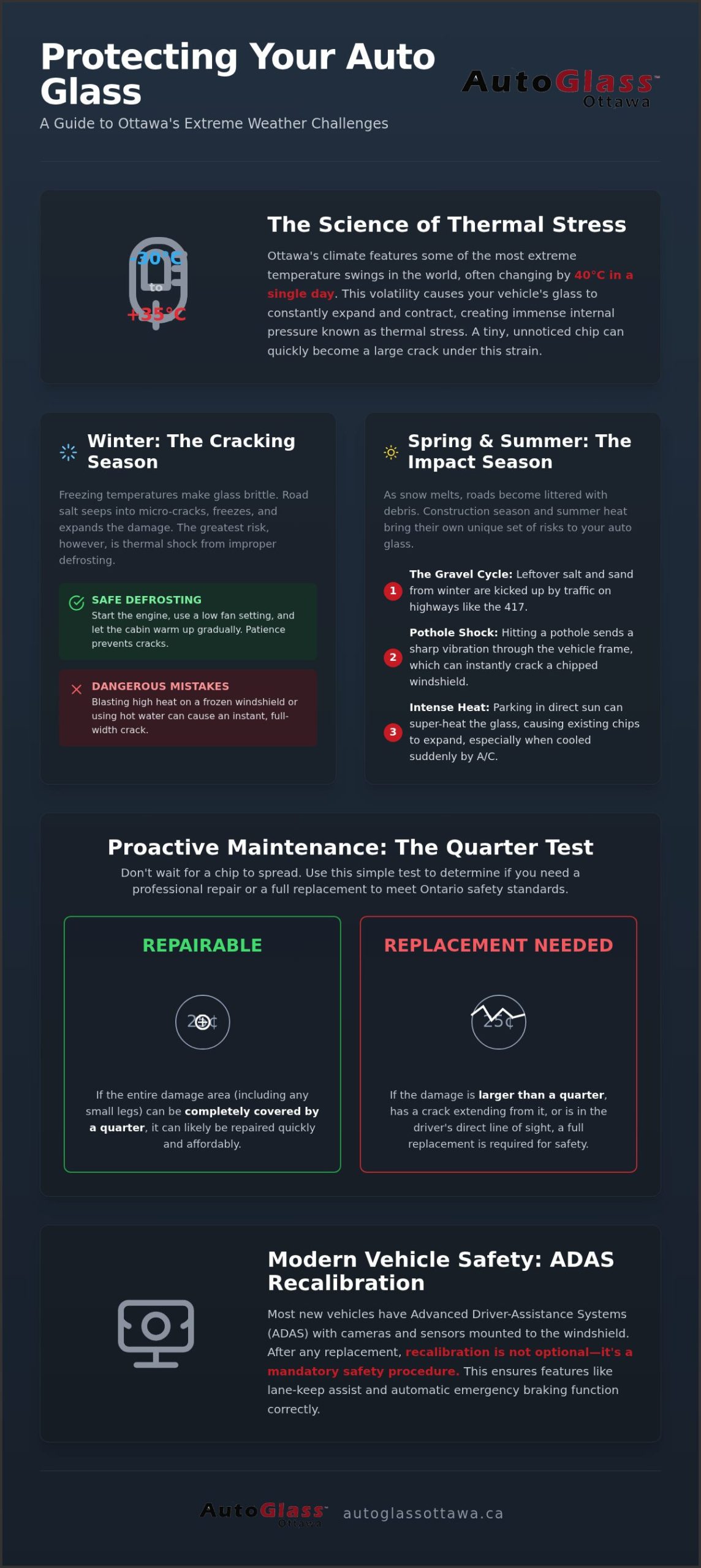
Ottawa often experiences temperature swings of 40 degrees within a single 24-hour period. This volatility can lead to thermal fracturing in glass, where the temperature differential across the surface creates unbearable stress. While the centre of the windshield can flex slightly, the edges are bonded tightly to the vehicle’s rigid frame. This mounting pressure makes the perimeter highly vulnerable. If you have a microscopic chip near the edge, these temperature shifts will likely force it to “run” across your field of vision. Furthermore, Ottawa’s high-salt winter environment can allow brine to seep into existing micro-cracks, where it freezes and expands, widening the damage from the inside out.
Humidity levels in the Valley also impact your vehicle’s structural seals. High summer humidity can trap moisture near the window frame, while the bone-dry air of a local winter can cause older adhesive compounds to lose their elasticity. Over time, this cycle weakens the bond between the glass and the car’s body, potentially compromising safety during a collision.
Why Ottawa Roads Are Particularly Harsh on Glass
The “Gravel Cycle” is a uniquely local problem. Every spring, as the snow melts, tonnes of leftover road salt and traction sand are kicked up by tires on the 417 and Highway 416. This debris creates a constant barrage of impacts. Winter road sand also acts like sandpaper, causing “pitting” that reduces visibility when driving into the sun. Additionally, Ottawa’s notorious potholes do more than just rattle your suspension. The sharp vibrations from hitting a deep hole on Hunt Club Road can provide the exact amount of structural shock needed to turn a stable chip into a full-length crack. Managing these variables is the core of effective Seasonal Auto Glass Damage Prevention: Ottawa’s Weather Challenges.
Surviving Winter: Preventing Cracks from Salt, Ice, and Defrosters
Winter in the Ottawa Valley is relentless. If you’ve lived here long enough, you’ve likely heard that sudden “crack” on a freezing January morning. It’s usually the result of a simple mistake in a morning defrosting routine. Successfully managing Seasonal Auto Glass Damage Prevention: Ottawa’s Weather Challenges means respecting how brittle glass becomes when temperatures drop below -20°C. During these months, your windshield is at its most vulnerable, and even the smallest stone chip can become a structural failure in seconds.
The primary threat during an Ottawa winter is thermal shock. When you blast hot air onto a windshield covered in thick frost, the temperature differential causes the inner layer of glass to expand while the outer layer remains contracted. This mismatch creates intense thermal stress in glass. If there’s even a microscopic chip present, the internal pressure will likely force it to split wide open. It’s a preventable disaster that often leads to an unnecessary replacement.
Safe Defrosting: A Step-by-Step Morning Routine
Patience is your best tool for preserving your glass. Start your vehicle and set the heater to a moderate level rather than cranking it to “high” immediately. Let the engine warm up naturally, which allows the air temperature hitting the glass to rise gradually. This slow transition gives the glass molecules time to expand without fracturing. For the first few minutes, direct the airflow toward the floor to warm the cabin’s ambient temperature before switching the vents to the windshield.
Road salt also plays a role in glass degradation. Brine can get trapped inside existing stone chips. As the water evaporates, the salt crystals expand and can actually deepen the damage. This chemical stress, combined with physical vibration, is why winter is the most critical time to seek a windshield repair the moment you notice a mark. Addressing a chip immediately prevents it from becoming a full-blown crack during the next cold snap.
Parking Strategies for Ottawa Winters
Where you park can significantly impact your glass health. If you have the option, face your vehicle toward the east or south. This allows the morning sun to provide natural, even thawing, which reduces the workload on your defroster. You should also avoid parking directly under roof overhangs. Heavy snow or “roof ice” sliding off a building can fall with enough force to crush a windshield. During freezing rain events, using a simple windshield cover can save you from aggressive scraping and protect the glass from the weight of accumulated ice.
Spring and Summer Hazards: Construction, Gravel, and Heat Stress
While winter is famous for cracking glass, the spring thaw is actually the busiest time for chip repairs in the National Capital Region. March and April represent a peak “gravel cycle.” As the ice melts along the 417 and Highway 416, it releases months of accumulated traction sand and construction debris. This loose material is kicked up by high-speed traffic, turning your daily commute into a literal minefield. Successfully managing Seasonal Auto Glass Damage Prevention: Ottawa’s Weather Challenges means staying vigilant during these transitional months when road debris is at its highest concentration.
Summer brings a different set of risks. Ottawa’s humid heat waves can push temperatures inside a parked car well above 50°C. This extreme heat creates “hot spots” where the glass expands against the metal frame. If you then enter the vehicle and blast the air conditioning at maximum power directly toward the windshield, you risk a thermal fracture. The rapid cooling of the inner glass layer while the outer layer remains hot creates a structural tug-of-war that can snap a compromised windshield in seconds. Maintaining a stable temperature is just as important in July as it is in January.
Navigating Ottawa’s Construction Zones Safely
During the peak construction months from May to October, roads like Hunt Club and Riverside Drive are frequently under repair. You should increase your following distance to at least three or four car lengths when driving through these zones. Avoid lingering behind dump trucks or heavy machinery, especially those lacking proper mudflaps. These vehicles often shed loose stones from their tires or trailers. Additionally, make it a habit to wipe down your wiper blades weekly. Road grit and sand can accumulate on the rubber, acting like sandpaper that “pits” your glass and reduces visibility over time.
Summer Heat Management for Your Auto Glass
Managing internal vehicle pressure can save your windshield during a July heatwave. If it’s safe to do so, crack your side windows by a centimetre to allow hot air to escape. This reduces the pressure build-up that can stress the glass-adhesive bond. Using a reflective sunshade is another effective strategy; it blocks direct UV rays and keeps the dashboard surface cooler, protecting the integrity of the safety glass. When you start your drive, aim your AC vents toward the cabin floor or centre console initially. This allows the glass to cool down gradually rather than subjecting it to an immediate, localized blast of cold air.
Proactive Maintenance: Stopping Chips Before They Spread
Ottawa drivers know that a stone chip is rarely just a cosmetic issue. In our climate, it’s a ticking time bomb. Effective Seasonal Auto Glass Damage Prevention: Ottawa’s Weather Challenges relies on catching these small points of impact before the next temperature swing forces them to expand. Professional resin injection is specifically designed to displace air inside the break and bond the glass back together. This process prevents moisture from entering the chip, where it would otherwise freeze, expand, and shatter the glass from the inside out.
The “Quarter Test” is your best tool for a quick self-diagnosis. If you can cover the entire chip with a Canadian quarter, it’s likely a candidate for a simple repair. However, you must pay close attention to the “frit,” which is the black ceramic border around the edge of the glass. Because this area is under the most structural tension from the vehicle’s frame, a chip here is far more likely to spread rapidly than one in the centre. Damage near the edges is always a high-priority fix.
Immediate Steps After Getting a Stone Chip
The first few hours after an impact are critical for a successful repair. Apply a small piece of clear tape over the chip immediately to keep out Ottawa road salt, washer fluid, and grime. These contaminants can stain the glass and make a clean resin bond impossible. You should also avoid high-pressure car washes until the glass is fixed. The force of the water and the sudden temperature change can turn a stable chip into a full-length crack in seconds. Scheduling a mobile repair before the next overnight frost is the most cost-effective way to avoid a full replacement.
Repair vs. Replacement: Making the Call
Navigating Seasonal Auto Glass Damage Prevention: Ottawa’s Weather Challenges means knowing when a repair is no longer a safe option. Ontario safety regulations are very specific about windshield integrity. Under the 2026 Safety Inspection Standard, any star-shaped chip with a diameter of 13 mm or more in the windshield wiper area results in a failure. Similarly, damage larger than 26 mm in the driver’s critical view zone is a mandatory replacement. If you have multiple chips in a small area, the structural strength of the entire pane is compromised. You can find more details in our guide on When to Repair vs. Replace Your Windshield.
If you’re unsure about the severity of a chip, don’t wait for the next cold snap to make the decision for you. You can book a mobile windshield repair to have a professional assess the damage at your home or workplace before it becomes a safety hazard.
Professional Protection: Mobile Service and ADAS Safety in Ottawa
Ottawa’s weather doesn’t wait for a convenient time to strike. When a crack finally gives way during a February blizzard or a July heatwave, driving to a repair shop can be dangerous or even illegal under the Highway Traffic Act. Professional Seasonal Auto Glass Damage Prevention: Ottawa’s Weather Challenges includes knowing when to call for help at your own doorstep. Mobile service isn’t just a luxury; it’s a safety necessity that ensures you don’t have to navigate city traffic with a compromised field of vision. A certified technician can perform a full replacement in roughly 60 to 90 minutes, followed by the necessary curing time to ensure the adhesive seal is weather-tight.
The reliability of your vehicle’s safety systems depends on the quality of the installation. Because Ottawa’s temperature range is so extreme, the seals around your glass are under constant pressure. A lifetime warranty on workmanship and leakage is vital for peace of mind. It ensures that the bond between the glass and the frame will hold up against -30°C cold snaps and the humid 35°C days common in the Ottawa Valley. Choosing a provider with 15+ years of local experience means you’re working with someone who has seen every possible weather-related glass failure in the region.
Ensuring Your Safety Tech Survives the Season
Modern vehicles are equipped with Advanced Driver-Assistance Systems (ADAS) that rely on camera sensors mounted directly behind the windshield. These sensors are incredibly sensitive to the temperature fluctuations that define our climate. If the glass is replaced, ADAS recalibration is a mandatory safety step. Without it, your lane-keep assist or automatic emergency braking might fail to engage correctly on snowy Ottawa roads. This process can account for 25% to 40% of the total service quote, but it’s the only way to ensure your technology remains accurate after the glass has been disturbed.
Streamlining Your Insurance Claim
Dealing with insurance paperwork is often the most stressful part of glass damage. Most comprehensive auto insurance policies in Ontario cover windshield repairs, often with no deductible, while replacements typically require a deductible ranging from $200 to $500. We simplify this experience by assisting with the administrative burden and dealing directly with your provider. If you’re unsure about how the process works, consult our Insurance Windshield Replacement in Ottawa: A Complete Claim Guide (2026) for a step-by-step breakdown. Comprehensive coverage is your best defence against the unpredictable nature of Ottawa’s seasonal hazards, and filing a glass claim usually won’t impact your monthly premiums.
Drive Confidently Through Every Ottawa Season
Ottawa drivers face some of the most demanding environmental conditions in the country. By adopting a gradual approach to your vehicle’s climate control and addressing minor stone chips before they encounter extreme temperature swings, you can significantly extend the life of your glass. Successfully managing Seasonal Auto Glass Damage Prevention: Ottawa’s Weather Challenges is a year-round commitment that protects both your budget and your safety on the 417.
If you’ve noticed a new chip or a spreading crack, don’t wait for the next weather event to turn a small fix into a full replacement. Our team offers 100% free mobile service across Ottawa and Gatineau to handle your needs at home or work. We are certified ADAS recalibration experts, ensuring your safety sensors are perfectly aligned after every installation. We also provide a lifetime warranty on all leakage and workmanship to guarantee your long-term peace of mind. Book Your Free Mobile Auto Glass Repair in Ottawa Today and keep your view of the capital clear and safe.
Frequently Asked Questions
Can a windshield chip spread just from the cold in Ottawa?
Yes, a windshield chip can spread rapidly when temperatures drop. As the glass contracts in the cold, any existing point of impact becomes a major stress point. If moisture from snow or condensation gets inside the chip and freezes, the expansion of the ice can force the glass to split. This is a primary driver of Seasonal Auto Glass Damage Prevention: Ottawa’s Weather Challenges.
Is it safe to use a remote starter and blast the heat in sub-zero temperatures?
It’s generally unsafe to blast high heat onto a frozen windshield immediately. While remote starters are convenient, a sudden burst of hot air against glass that is -20°C creates thermal shock. This rapid expansion often causes existing chips to turn into full-length cracks. You should set your climate control to a moderate temperature to allow the glass to warm up gradually.
How do I know if my windshield needs ADAS recalibration after a winter repair?
You will require ADAS recalibration if your vehicle is equipped with safety features like lane-keep assist or automatic emergency braking. These systems rely on cameras mounted behind the windshield. Whenever the glass is replaced, the camera’s alignment is disturbed by even a fraction of a millimetre. Only a certified technician can ensure these sensors are correctly calibrated to keep you safe on the road.
Does insurance cover windshield damage caused by road salt or gravel in Ontario?
Most comprehensive insurance policies in Ontario cover damage caused by road debris, such as gravel or salt. In many cases, insurance companies will waive the deductible for a chip repair to prevent the need for a full replacement. Filing a claim for glass damage usually does not impact your monthly premiums, making it a cost-effective way to maintain your vehicle’s safety.
Can mobile auto glass technicians perform repairs during an Ottawa snowstorm?
Mobile technicians typically cannot perform repairs outdoors during an active snowstorm. The glass surface must be completely dry and kept at a stable temperature for the resin or adhesive to bond correctly. However, if you have a dry garage or an underground parking space, our year-round mobile service can complete the work regardless of the weather conditions outside.
Why do cracks seem to spread faster in the summer than in the spring?
Cracks often spread faster in the summer because extreme heat causes the glass to expand significantly. This is a key part of Seasonal Auto Glass Damage Prevention: Ottawa’s Weather Challenges. When a vehicle is parked in the sun, the edges of the windshield become “hot spots” that are under intense pressure. This expansion is often more aggressive than the contraction seen in the spring, which is why a small chip can suddenly “pop” during a July heatwave.
What is the best way to remove ice from a windshield without scratching the glass?
The best way to remove ice is to use a high-quality plastic scraper combined with a dedicated de-icing spray. You should never use metal objects or makeshift tools like credit cards, as these can leave permanent scratches on the glass surface. For the safest results, let your defroster run on a moderate setting for several minutes to soften the bond between the ice and the windshield.
How long does it take for a windshield replacement to cure in high humidity?
A windshield replacement usually requires at least one hour of curing time before the vehicle is safe to drive. While high humidity can actually accelerate the chemical reaction in some modern urethanes, it’s vital to follow the technician’s specific instructions. This mandatory waiting period ensures the adhesive has formed a weather-tight seal that can withstand Ottawa’s unpredictable atmospheric pressure.