
Waiting Period After Windshield Replacement: When Can You Drive
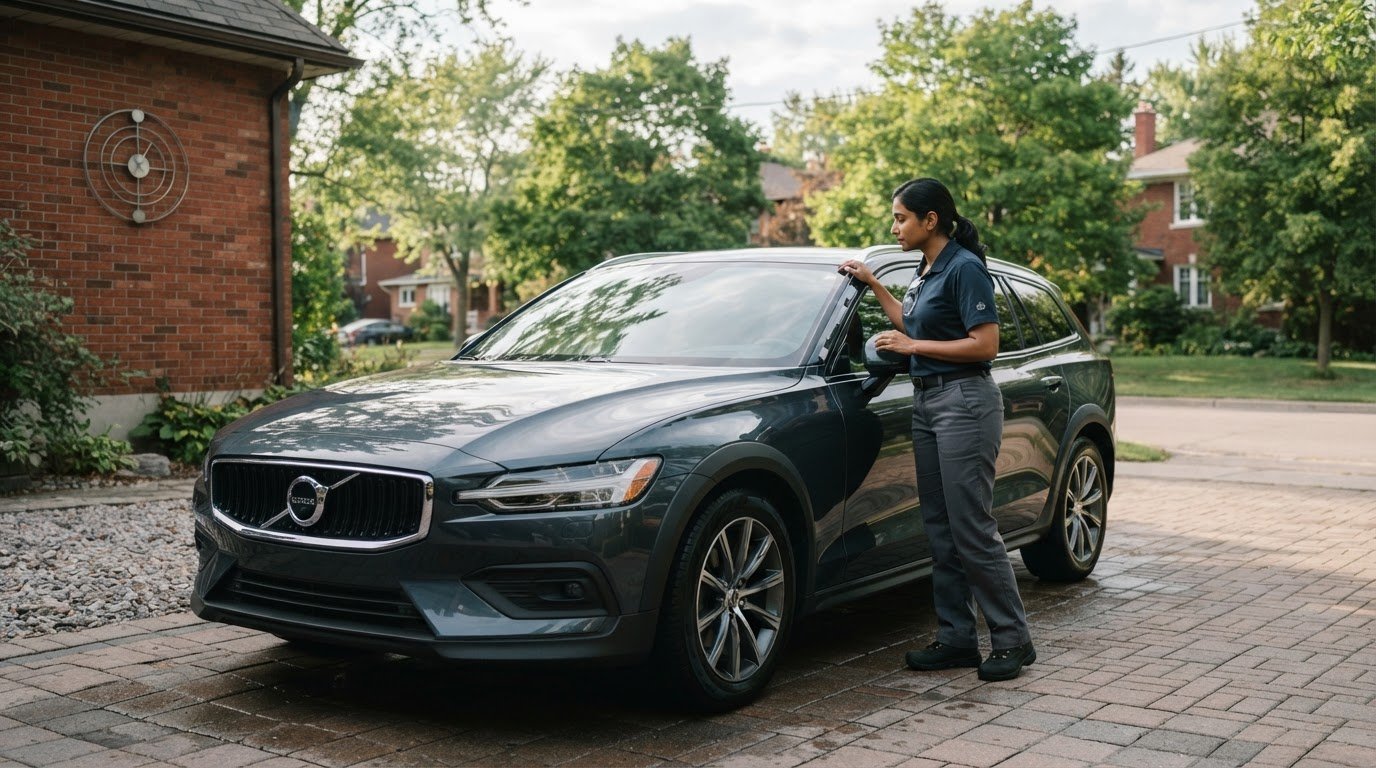
A new windshield doesn’t mean you can drive away immediately. The waiting period after windshield replacement is often between 30 minutes and a few hours, depending on the adhesive and conditions. Don’t drive until the technician’s recommended safe drive-away time has passed.
It’s natural to want your car back on the road as soon as the installation is complete. But the adhesive needs time to bond so the windshield can help support the vehicle’s structure. This guide explains what affects the wait, why driving too soon can create safety risks, and how long replacement usually takes.
You’ll also learn what to expect while the adhesive cures and which aftercare steps can help protect the new seal. This makes it easier to plan your day and know when you can drive again.
Key Takeaways
- Wait for the technician’s safe drive-away time; adhesive type and weather conditions affect when the windshield is ready.
- Protect the fresh bond by driving gently and following the installer’s advice about doors, windows and retention tape.
- Driving too soon can compromise the windshield’s bond, which matters for both cabin protection and vehicle structural support.
- The replacement itself usually takes 60 to 90 minutes, with adhesive curing time added before you can drive.
How Soon Can I Drive My Car After Windshield Replacement?
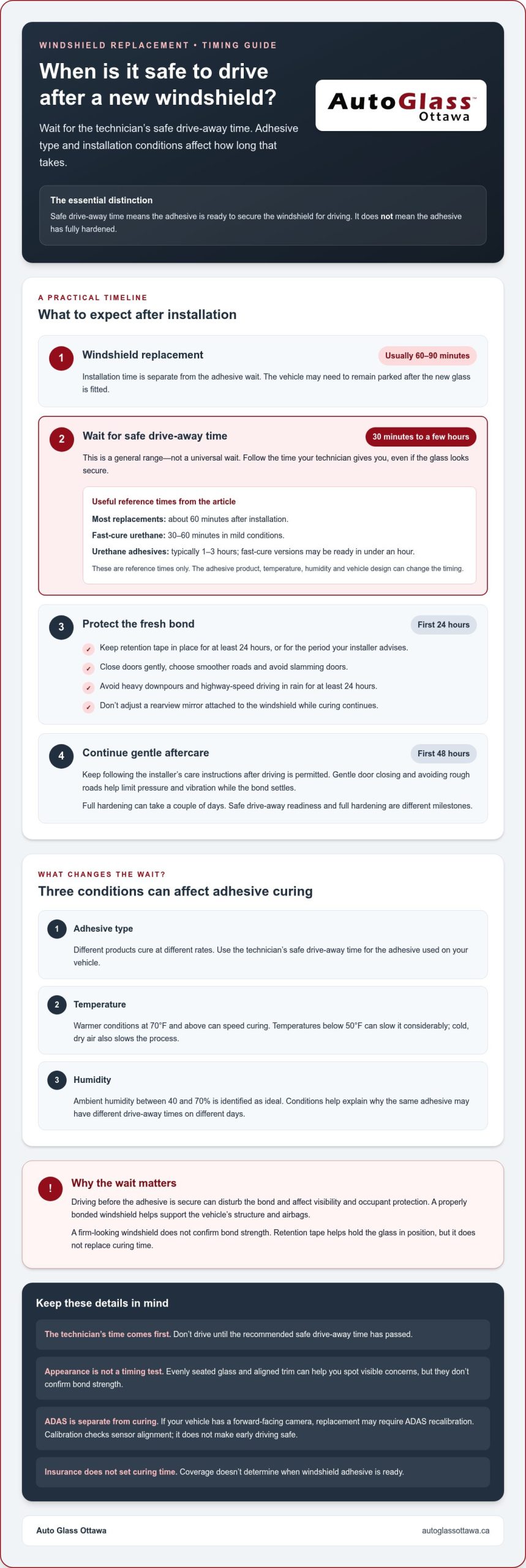
The waiting period after windshield replacement can range from 30 minutes to a few hours, depending on the adhesive and installation conditions. The technician’s safe drive-away time is the one to follow for your vehicle.
Insurance coverage doesn’t determine when windshield adhesive has cured. There isn’t one waiting period after windshield replacement that applies to every installation: adhesive type, temperature and humidity all affect timing.
Keep retention tape in place for at least 24 hours, or for the period the installer advises. It helps hold the windshield while the adhesive settles.
Adhesive Types and Curing Times
Windshield adhesives have different curing rates, so the product used affects when you can safely drive. Urethane adhesives typically require 1 to 3 hours before the vehicle is safe to drive, while fast-cure versions may be ready in under one hour. Some adhesives take up to 24 hours to fully set. Full hardening and safe drive-away readiness are different milestones.
Temperature and Humidity Effects
Temperature and humidity affect how quickly urethane adhesive cures. Cold, dry air slows the process; warmer conditions at 70°F and above can speed it, while temperatures below 50°F slow curing considerably. Ambient humidity between 40 and 70% is identified as ideal. These conditions help explain why the same adhesive can have different drive-away times on different days.
Driving and Parking During Curing
Limit pressure and vibration while the adhesive settles. During the first day, close doors gently instead of slamming them, and leave a side window slightly open if the installer recommends it. Choose smoother roads and park away from direct harsh sun or temperature extremes. Leave the retention tape in place for the advised period, and don’t adjust a rearview mirror attached to the windshield while curing continues.
Safe Drive-Away Timing
Safe drive-away time means the adhesive can secure the windshield for driving; it does not mean the adhesive has fully hardened. The wait may range from 30 minutes to a few hours. Ask the technician for the time that applies to your vehicle and adhesive, and don’t drive before that time has passed, even if the glass looks secure.
Risks of driving before the adhesive cures
Driving too soon can disrupt the windshield bond before it has properly secured the glass. This can affect both visibility and occupant protection.
Adhesive Type and Driving Readiness
Driving readiness depends on the adhesive’s safe drive-away time, not simply how firmly the glass appears seated. Standard windshield adhesives generally require a 2 to 4 hour wait, while urethane products can have different curing times. The technician’s recommended time accounts for the adhesive and conditions during installation. Keep retention tape in place as directed, and avoid slamming doors while the bond settles.
A disturbed bond can let the windshield shift, causing wind noise, water leaks or an insecure fit. In a collision, a properly bonded windshield helps support the vehicle’s structure and airbags. Driving before the adhesive is secure can increase the risk of detachment, roof collapse, ejection or airbag failure. These are safety concerns, not just cosmetic issues.
Rain and Highway-Speed Driving
Rain and highway speeds can expose a fresh windshield bond to pressure and force before it has settled. Avoid heavy downpours and highway-speed driving in rain for at least 24 hours after replacement. If your route includes a high-speed highway or severe weather, plan to keep the vehicle parked during that period. Retention tape helps hold the glass in position, but it doesn’t replace the adhesive’s curing time.
For the first 24 hours, follow the installer’s care instructions and choose gentle driving conditions after the safe drive-away time passes. Close doors carefully, avoid rough roads, and leave tape on for the advised period. If the vehicle has a forward-facing camera, windshield replacement may also require ADAS recalibration. Calibration checks sensor alignment; it does not speed up adhesive curing or make early driving safe.
Safe drive-away time after windshield replacement
Safe drive-away time is when the adhesive can secure the windshield for driving. The glass should sit evenly in its frame, with the surrounding trim aligned and no visible gaps.
Meaning of Safe Drive-Away Time
This is the adhesive’s minimum readiness for normal driving, not the point when it has fully hardened. The windshield needs a secure bond to stay in position under driving forces. Evenly seated glass and flush trim can help you spot visible concerns, but they don’t confirm bond strength.
After installation, note the time the technician gives you and wait until then before driving. Wind noise or water around the glass after driving can signal a fit or seal concern. If your vehicle has a windshield-mounted camera, confirm that it is recalibrated after replacement. Camera recalibration and adhesive curing are separate requirements; one doesn’t replace the other.
Minimum Time Before Driving
Most replacements allow driving about 60 minutes after installation, while fast-cure urethane may reach its safe drive-away point in 30 to 60 minutes in mild conditions. These are practical reference times, not a universal minimum for every vehicle. Adhesive product, temperature, humidity and vehicle design all affect readiness.
Follow the technician’s stated time for your installation, especially in cold or dry weather, when curing can take longer. Don’t treat a firm-looking windshield as proof that the minimum wait has passed. The adhesive can continue curing after the vehicle is safe to drive, and full hardening can take a couple of days.
Keep following aftercare instructions during the first 48 hours, even after driving is permitted. Gentle door closing and avoiding rough roads help limit pressure and vibration while the bond settles. If the glass looks uneven, trim is lifted, or you notice a leak or wind noise, arrange an installation assessment instead of assuming the safe drive-away time resolved the issue.
Windshield replacement duration
A windshield replacement itself usually takes 60 to 90 minutes. That covers the glass work, not the separate time needed for adhesive curing before driving. Plan for both parts when arranging your day: a vehicle may remain parked after installation even when the replacement work is complete. Weather and the adhesive used can affect how long you wait before driving, so the appointment’s end time isn’t necessarily your departure time.
Installation involves removing the damaged glass, preparing the frame and securing the replacement windshield. Each stage matters because the glass must sit properly in the frame and bond securely. Vehicle design and the condition of the existing frame can affect the work. Some vehicles may need camera or sensor checks after replacement. That check can affect the overall appointment, but it doesn’t replace adhesive curing time.
Windshield repair differs from replacement. After a minor chip or crack is repaired with resin, drivers can usually drive right away because the original glass remains in place. Replacement installs new glass with adhesive, so safe drive-away time applies. Ask for the timing based on the installation and adhesive used, rather than comparing a repair appointment with a replacement.
Plan aftercare separately, too. Follow the installer’s aftercare instructions before washing the vehicle, since the fresh seal may need time to settle. A car wash can expose the windshield perimeter to water and pressure, so don’t schedule one immediately after the appointment. Keep the safe drive-away time distinct from the longer wait before washing.
If your vehicle has a camera near the windshield, include calibration in your schedule alongside glass replacement and curing. To arrange a windshield replacement appointment, plan for installation, any required calibration, and the time the adhesive needs before driving.
Auto Glass Ottawa: Windshield Repair
Auto Glass Ottawa can help if windshield damage needs repair or replacement, or if you’re planning around the safe drive-away time. A technician can assess whether the glass can be repaired or needs replacement, then explain the adhesive curing time and when your vehicle can be driven.
If the damage requires new glass, ask about mobile windshield service to have the work completed at your home or workplace. For an insured repair or replacement, Insurance Claim Assistance can help with the claim process. If your windshield has a camera, ask whether calibration is needed after replacement so the driver-assistance system can function as intended.
Contact Auto Glass Ottawa to discuss your windshield damage and arrange the next step.
Plan your next drive with confidence
Treat installation day as a practical break in your routine, not a race back onto the road. The waiting period after windshield replacement is a good time to plan your first trip around familiar routes and essential errands. Keep your schedule flexible so you’re not rushing between commitments once the vehicle is ready.
Before setting out, make sure your usual driving essentials are accessible without pressing anything against the new glass. Ease back into your routine and notice how the vehicle feels and responds during an ordinary drive. Take the next trip at your own pace, with a clear plan.
Frequently Asked Questions
What factors affect safe drive-away time?
The adhesive product, temperature, humidity and vehicle all affect when the windshield is ready for driving. Conditions can vary between appointments, even for the same vehicle model. For planning, note the installation time and the technician’s stated release time separately. The windshield’s appearance alone can’t show whether the adhesive has reached safe drive-away strength, so don’t use a visual check to shorten the wait.
How long should you wait before driving after windshield replacement in Canada?
In Canada, the wait may range from 30 minutes to a few hours, depending on the adhesive and installation conditions. Use the safe drive-away time given for your vehicle, rather than estimating from the appointment’s finish or another vehicle’s experience. If you’re arranging a pickup, confirm who will take the keys and when, so nobody drives before the stated time.
What factors affect windshield adhesive cure time, including temperature and humidity?
Urethane curing responds to temperature and moisture in the air. Cold, dry conditions can slow the process, while warmer, suitably humid conditions support faster curing. A winter installation in Ottawa may therefore need a different wait than an installation on a mild day. The adhesive product and vehicle also matter, so weather alone can’t establish the exact drive-away time.
How long should you wait before washing a car after windshield replacement?
Wait at least 48 hours before washing the vehicle. If you need to remove a small mark sooner, gentle hand washing may be suitable after 24 hours, provided water stays away from the windshield perimeter. Avoid turning a quick spot clean into a full wash that wets the fresh seal. Follow the installation aftercare instructions for your vehicle and conditions.
How long should you wait before using a car wash after a new windshield is installed?
Wait until the new windshield adhesive has had time to set before using a car wash. This gives the fresh windshield bond time before the vehicle encounters wash equipment, water spray and pressure around the glass. A quick rinse is still exposure to water, so don’t treat it as an exception. If your installer gives vehicle-specific aftercare directions, use those when planning the first wash.
What precautions should you take during the first 24 to 48 hours after windshield replacement?
Keep the dashboard clear for at least 24 hours, and leave a side window slightly open if advised. These steps reduce pressure against the fresh seal and keep objects from pressing on the lower windshield. Avoid placing paperwork, a phone mount or other loose items against the glass. Keep following the installer’s tape and aftercare directions throughout the curing period.