
ADAS Calibration in Ontario: When Repairs Require It
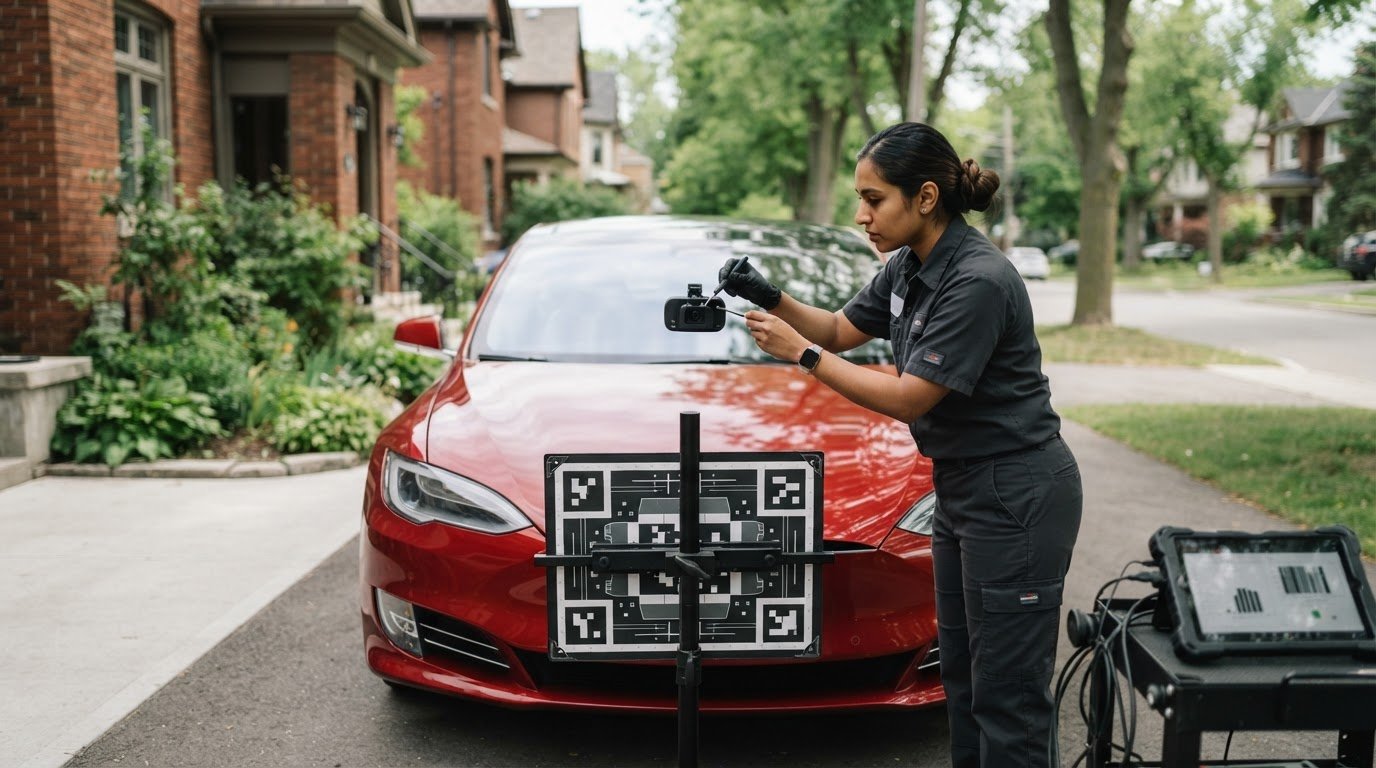
Skipping calibration after windshield replacement can leave a forward-facing camera misaligned, which may delay or prevent driver-assistance alerts. ADAS calibration requirements in Ontario depend on the vehicle’s manufacturer and the work performed; a camera mounted behind the windshield may need recalibration after the glass is replaced.
It’s easy to assume a new windshield is the final step, especially if the vehicle seems to drive normally. But camera-based features rely on precise positioning, and incorrect alignment can affect how the system detects road markings or hazards.
This guide explains when calibration may be needed after windshield replacement and other repairs, how static and dynamic calibration work, and what signs can point to an ADAS issue. You’ll also learn what to expect from recalibration and how Auto Glass Ottawa can help with windshield replacement and ADAS camera recalibration in Ottawa, including mobile service at your home or workplace.
Key Takeaways
- Check whether your vehicle’s manufacturer calls for camera recalibration after windshield replacement; procedures vary by year, make and model.
- Don’t assume a minor collision or parking-lot bump leaves driver-assistance sensors correctly aligned.
- Keep suspension, steering and wheel-alignment work in mind, since changes to vehicle geometry can affect how ADAS reads the road.
- Learn how static and dynamic calibration differ so you know what the process may involve after a repair.
ADAS-equipped vehicles and windshield-mounted cameras
Advanced driver assistance systems use sensors and control modules to support features such as lane guidance and collision warnings. Calibration aligns those components with the vehicle manufacturer’s specifications so they can read the road correctly.
Vehicles with Windshield-Mounted Cameras
Newer vehicles, including models from 2018 onward, may integrate 5 to 8 ADAS systems. These can use cameras, radar, ultrasonic sensors and control modules, with some cameras mounted behind the windshield.
Position matters: replacing the windshield can affect the camera’s view and alignment. A camera that no longer reads lane markings or hazards accurately can compromise the driver-assistance feature. The vehicle’s year, make and model determine which systems it has and which calibration procedure applies.
Qualified Professionals and Calibration Equipment
Calibration is a diagnostic process that resets and aligns sensors to the vehicle manufacturer’s specifications. It requires trained automotive technicians, manufacturer-approved diagnostic tools, precise measurement systems and up-to-date software.
Equipment needs depend on the procedure. Static calibration uses a target placed in front of the vehicle; dynamic calibration can involve driving under specified conditions. Calibration costs depend on the vehicle and whether its procedure requires static work, dynamic work or both. Correct equipment and current software help technicians perform the required procedure rather than relying on a general sensor check.
OEM Procedures and Ontario Service Options
OEM procedures are specific to the vehicle’s year, make and model; aftermarket guidance can be useful, but it may not cover every required calibration. Some aftermarket systems support only 50 per cent of available calibrations, so equipment coverage matters. Ontario drivers can find fixed-site and mobile calibration options, with regional availability and the vehicle’s procedure shaping what service is practical.
Mobile calibration may involve a road test at a specified speed on a straight route. Software also matters: calibration tools need current software, while subscription arrangements depend on the equipment provider. Ask what diagnostic process and calibration report document that the procedure is complete.
ADAS calibration after collisions and repairs
A collision can affect sensors even when exterior damage looks minor. Whether calibration is needed depends on the repair and the vehicle manufacturer’s procedure.
Repairs That May Trigger Calibration
Calibration may be required after collision repairs, windshield replacement, suspension or steering work, wheel alignment, or replacement of an ADAS camera or sensor. Each can change a component’s position or the vehicle’s geometry.
Even a low-speed impact or parking-lot bump can shift a sensor. The repair estimate alone may not show every affected system, so the vehicle manufacturer’s instructions help identify the calibration steps for that vehicle and repair.
Pre-Repair and Post-Repair Scanning
A pre-repair diagnostic scan records system faults before work begins. It can identify existing warnings and affected driver-assistance features, giving the repair team a baseline.
After repairs, a post-repair scan checks for fault codes, while required calibration verifies sensor alignment. Keep the scan results and calibration report with the repair records. An invoice alone may show that work was billed, but a calibration report can document system parameters and the completed procedure.
Calibration Requirements and Standards
Post-collision ADAS recalibration is required by law for safety-system operation. For the specific repair trigger and procedure, the vehicle manufacturer’s position statements are the source of truth; an estimating system alone does not establish whether calibration is required.
Requirements vary by vehicle, so the year, make, model and repair details matter. Following the applicable manufacturer procedure helps ensure the relevant sensors and targets are addressed, rather than relying on one rule for every Ontario vehicle.
Recalibration After Vehicle Work
After windshield replacement, a camera mounted behind the glass may need recalibration. Suspension or steering repairs can change vehicle geometry, while wheel-alignment adjustments can alter how sensors interpret the road. The required procedure depends on the manufacturer’s instructions for that vehicle.
If repair work affects a camera or sensor, use the vehicle-specific procedure and retain its calibration report. For windshield-related questions, ADAS camera recalibration information can help explain the service and its role in restoring system alignment.

Reasons calibration may be needed after vehicle service or impact
ADAS sensors depend on their position and the vehicle’s geometry. Changes from glass work, tire replacement or an impact can affect how assistance systems interpret the road.
Windshield installation can affect more than the camera’s view. During the first few days after installation, windshield adhesive curing can reduce vehicle body stiffness. That temporary change matters because the windshield contributes to the vehicle’s structure, while the camera mounted behind it needs a stable, correctly aligned position to read the road. Follow the vehicle-specific calibration procedure after replacement when the manufacturer calls for it.
Electric vehicles in Canada rely on driver-assistance systems just as other vehicles do. Their power source does not determine the calibration procedure; the vehicle’s year, make, model and installed sensors do. For example, a forward-facing camera may support lane guidance or emergency braking, while another vehicle uses radar for related assistance. Identify the affected sensors before work begins, then follow the manufacturer’s procedure for that vehicle.
Tire replacement can change a vehicle’s stance, especially when tire size or tread depth changes. That shift may alter sensor angles and how driver-assistance systems read the road. Wheel alignment can also affect sensor interpretation. A hard impact with a curb or deep pothole can affect suspension or steering geometry and may prompt a calibration assessment. Even a small change can influence what a sensor detects.
Prepare the vehicle by recording its year, make, model and recent service, then run a diagnostic pre-scan to identify system warnings. A curb strike, new tires or windshield work gives technicians useful context. After service, the manufacturer’s instructions determine which sensors require attention and the applicable calibration procedure. A post-scan can help identify remaining fault codes, but it does not replace required calibration. These checks help distinguish an unrelated warning from an issue linked to recent work, so affected safety functions can be addressed before you rely on them during daily driving.
ADAS calibration after windshield replacement
A windshield replacement can change the position or view of a camera mounted behind the glass. If your vehicle has a forward-facing camera, the manufacturer’s procedure may require recalibration so ADAS systems can read the road as designed. A normal-looking dashboard doesn’t establish that the camera is correctly aligned.
The camera looks through a specific area of the windshield. Glass choice, camera mounting and placement all matter because the system uses the camera’s view to interpret lane markings and hazards. The vehicle’s year, make and model determine the required calibration procedure. Manufacturer specifications identify the necessary steps.
Calibration may be static, dynamic or a combination. Static calibration uses targets positioned in front of the vehicle; dynamic calibration can involve driving under specified conditions. Some vehicles require both procedures. The technician uses diagnostic equipment to perform the required calibration and assess whether the camera’s position matches the manufacturer’s specifications. A road test is part of certain dynamic procedures, not a substitute for following the prescribed process.
After replacement, a warning light or message can indicate an ADAS issue, but the absence of a warning doesn’t prove calibration is complete. Incorrect alignment can affect hazard detection or delay assistance alerts. Keep the calibration report with your repair records; it documents the work and its results. If collision repair also affected a sensor, that repair may have its own calibration trigger and procedure.
Before arranging glass work, tell the repair team that your vehicle has a windshield-mounted camera and share any dashboard warnings. Ask for the manufacturer-required calibration to be included in the repair plan, then retain the results. If your windshield needs replacement, get help with windshield camera recalibration as part of restoring the vehicle’s safety systems.
Auto Glass Ottawa: Windshield Repair
Auto Glass Ottawa can help when a chip or crack needs attention, whether repair or replacement is the right option. If your windshield has a camera behind it, mention this when arranging service so the glass work and calibration needs can be addressed together.
Auto Glass Ottawa provides windshield repair and replacement, Mobile Windshield Repair, and Insurance Claim Assistance. Its workmanship is backed by a lifetime warranty against leaks or air noises, helping you feel confident about the installation after service.
If your windshield is damaged or replacement is planned, contact Auto Glass Ottawa to discuss the repair and insurance support you need.
Make the next repair decision with confidence
Your vehicle’s service record can help connect future repairs with the safety systems they affect. Keep the windshield and calibration documents together, and share that history when arranging later glass or collision work. It gives the repair team useful context and helps focus the next decision on your vehicle’s needs.
Understanding Ontario’s ADAS calibration requirements can help you plan windshield work as one coordinated repair, rather than treating glass and camera alignment as unrelated issues. If damage appears, address it promptly and mention whether your vehicle has a windshield-mounted camera or existing system warnings.
Auto Glass Ottawa provides windshield repair, windshield replacement and mobile service. If you’re deciding what your damaged glass needs, contact Auto Glass Ottawa to discuss the next step. A clear repair plan can help you move forward with confidence and keep safety in focus.
Frequently Asked Questions
What happens if I skip calibration?
Misaligned sensors may give late or inaccurate information to driver-assistance features. For example, lane guidance may not interpret road markings correctly, or a collision warning may not respond as intended. The driver remains responsible for controlling the vehicle, so don’t rely on an affected feature as a substitute for attention. If a system warning appears after repair, arrange a diagnostic assessment before depending on that feature.
Can Any Shop Perform ADAS Calibration?
A shop needs suitable diagnostic and calibration equipment, current software, and technicians trained to follow the procedure for your vehicle. Equipment that works for one make or model may not cover another calibration. When arranging service, provide the vehicle’s year, make and model, and ask for the completed calibration report. That report offers a useful record beyond an invoice showing that calibration work was billed.
How do I find the correct procedure for ADAS calibration?
Use the vehicle manufacturer’s service information for the exact year, make and model. To meet ADAS calibration requirements in Ontario, share the vehicle identification number (VIN) and describe the work performed, since equipment and procedures can differ between model versions. The repair team can use those details to identify the applicable steps and tools. Keep the procedure and calibration report with your vehicle records for future service.
How do I know if ADAS calibration is required?
Start with the work performed and the manufacturer’s instructions for your vehicle. A dashboard warning can point to a system fault, but a warning-free display doesn’t establish that a sensor remains correctly aligned. Tell the repair team about recent glass, collision or suspension work, even if the vehicle seems to drive normally. A diagnostic scan can identify faults that aren’t obvious from the dashboard.
How often should calibration be done?
ADAS calibration isn’t based on a universal calendar interval or mileage schedule. It’s generally linked to work or an impact that can affect a camera, sensor or vehicle geometry, with the manufacturer’s procedure guiding the decision. Routine maintenance alone doesn’t mean every sensor needs recalibration. Keep service records so a technician can connect new work with previous repairs and identify relevant triggers.
What ADAS calibration standards and procedures apply to vehicle repairs in Ontario?
Ontario’s ADAS calibration requirements include recalibration after a collision for safety-system operation. The specific procedure depends on the vehicle manufacturer’s instructions and the repair performed; there isn’t one universal calibration process for every vehicle. The correct equipment and a trained technician are needed to complete the applicable procedure. Keep the calibration report with the repair paperwork as a record of the work performed.