
Fleet Vehicle Glass Maintenance Program in Ottawa: A Practical Buying Guide
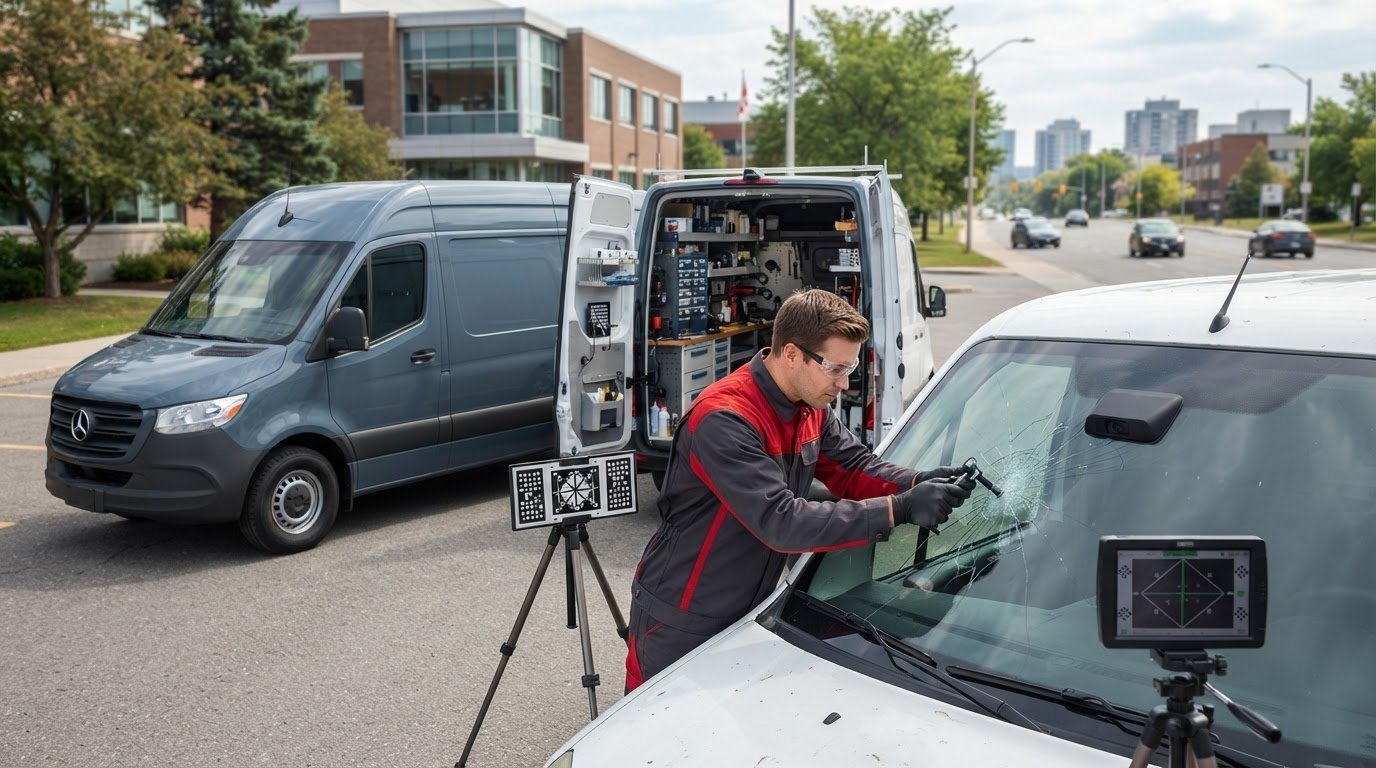
What if one cracked windshield could disrupt an entire day’s schedule? For Ottawa fleet managers, glass damage can mean a vehicle off the road, a driver unsure whether it’s safe to continue, and questions about camera recalibration after replacement. A fleet vehicle glass maintenance program Ottawa operators can rely on turns those scattered issues into a clear response process.
You already know fleet vehicles need to stay safe and available. This guide will help you set practical steps for reporting damage, deciding when a vehicle needs attention, and coordinating glass work with the right follow-up. A windshield contributes to a vehicle’s structural support, and when it has a forward-facing camera, replacement may also require ADAS recalibration so driver-assistance features can work as intended.
We’ll cover how mobile appointments can reduce disruption at your workplace, what to consider when arranging repair or replacement, and how insurance assistance and workmanship coverage can support your fleet. Auto Glass Ottawa brings glass service and in-house ADAS recalibration together, backed by over 15 years serving Ottawa and Gatineau. The goal is a straightforward plan that puts safety first and helps keep your vehicles moving.
Key Takeaways
- Build a fleet vehicle glass maintenance program Ottawa teams can use to report damage, assess vehicle status, and plan a response.
- Learn how technicians assess windshield, door glass, and other damage before determining the appropriate service.
- Compare support options by mobile arrangements, technician qualifications, warranty coverage, insurance assistance, and ADAS capability.
- Use a simple response workflow to assign responsibility, coordinate appointments, and record completed work.
- See how local glass service and ADAS recalibration can help reduce disruption while keeping safety in focus.
Why an Ottawa fleet vehicle glass maintenance program supports safety and uptime
Fleet managers have to protect drivers without leaving scheduled work uncovered. A stone chip, cracked windshield or damaged door glass can raise an immediate question: who should assess it, and how will the vehicle’s status affect upcoming assignments? A fleet vehicle glass maintenance program Ottawa businesses can use answers those questions with a consistent process, rather than leaving each driver to decide what happens next.
A fleet glass maintenance program is a repeatable process for reporting damage, arranging a professional assessment and resolving the issue, supporting both vehicle safety and operational continuity. It is a practical part of fleet management, where maintenance needs to fit the way vehicles are assigned and used. Unlike a one-time repair appointment, a program sets out what happens whenever damage is reported, regardless of which vehicle or driver is involved.
What does a fleet vehicle glass maintenance program include?
Keep the process straightforward. Drivers need to know where to report damage and what information to provide, while a designated manager or coordinator receives the report, tracks the vehicle’s status and arranges an assessment. A technician can then determine the appropriate glass service. After the work, keep a completion record with the vehicle’s details, reported damage, assessment outcome and service completed.
Clear ownership matters when several people share vehicles or vehicles rotate between jobs. Without one reporting route, a driver may mention damage informally and assume someone else will arrange follow-up. Assigning responsibility helps prevent reports from being overlooked and gives dispatch or operations staff a reliable way to see whether a vehicle is awaiting assessment, booked for service or ready to return to its schedule.
Set internal steps that fit your operation, but don’t invent a fixed inspection interval if your fleet has no established basis for one. Make the expectation clear: report new damage promptly, record it, and route it for assessment. That creates a consistent response without confusing a fleet process with a mandatory inspection schedule.
Why glass condition matters across a working fleet
Vehicle glass does more than keep out weather and road debris. A clear windshield supports the driver’s view, and properly installed windshield glass contributes to the vehicle’s structural support. Damage can affect visibility or require professional attention, so drivers shouldn’t be asked to decide for themselves whether a vehicle is safe to continue using. Have them report what they see and follow the fleet’s direction while the damage is assessed.
Unresolved glass damage can also complicate vehicle assignments. A vehicle expected for a delivery, service call or staff transport may need to be reassigned while its condition is reviewed and the required work is coordinated. Prompt reporting gives managers a chance to plan around the vehicle’s status instead of discovering the issue just before departure. The goal isn’t to keep every vehicle in service at any cost. It’s to make informed decisions that put driver safety first and reduce avoidable schedule disruption.
What fleet glass maintenance should cover, from damage assessment to ADAS
A useful fleet process separates reporting damage from deciding how to fix it. Drivers provide clear information; a qualified technician assesses the glass and determines whether repair or replacement is suitable. The assessment should account for the damage and the vehicle, rather than relying on a driver or manager to make a technical call from a description alone.
Include the full range of vehicle glass in your reporting process: windshields, door glass and other affected windows. A small impact mark on a windshield, a spreading crack, or broken door glass each calls for an assessment based on its location, visibility impact and vehicle requirements. Keeping the same reporting route for each type helps managers arrange the right service without assuming every case needs the same response.
How to triage windshield and other vehicle glass damage
Ask drivers to report the details that help a technician understand the issue. They should identify the vehicle and describe where the damage is, its approximate size and whether it affects their view. A photo may help communicate its appearance, but it doesn’t replace professional assessment. Drivers shouldn’t decide on their own that damaged glass is safe to ignore or continue using a vehicle without following the fleet’s direction.
- Vehicle identification: Record the unit number or other fleet identifier, along with make, model and year if available.
- Damage details: Note the glass affected, damage location and approximate size.
- Visibility impact: Ask whether the damage interferes with the driver’s view.
Route the report to the person responsible for fleet coordination. They can keep the vehicle’s status visible, arrange a professional assessment and use the technician’s recommendation to coordinate repair or replacement. This creates a clear decision path without treating a driver’s initial report as a repair diagnosis.
When ADAS recalibration belongs in the glass-service process
Some vehicles use cameras near the windshield as part of advanced driver-assistance systems (ADAS). These systems can support features such as lane-keep assist, which helps a vehicle stay within lane markings, and collision avoidance, which can alert a driver or assist with responding to a potential hazard. Glass work can affect the camera’s position, so the vehicle may need recalibration as part of the service process.
ADAS recalibration checks and aligns a vehicle’s driver-assistance camera after relevant glass work, helping it read the road from the correct position. It’s a technical step, not a visual check that a driver can perform. For fleet managers, connecting glass replacement with recalibration through one service provider can simplify coordination. Auto Glass Ottawa handles ADAS recalibration in-house alongside glass service, helping keep the work connected. Explore commercial fleet auto glass service as part of your fleet’s response plan.
How to compare fleet glass maintenance support in Ottawa
For a fleet manager, the right glass-service partner needs to do more than complete an individual repair. Compare how each part of the process is handled, from the types of glass supported to appointment coordination, technical work and records. Compare who handles each step, not just the repair itself. That decision rule helps you focus on safe work, vehicle continuity and a process that fits your team’s administrative needs.
Use the criteria below to assess support for your fleet vehicle glass maintenance program Ottawa. Give priority to services that connect the practical details, including mobile arrangements, insurance assistance and ADAS needs, rather than treating them as separate issues.
| Comparison area | What to look for | Auto Glass Ottawa support |
|---|---|---|
| Service scope | Coverage for windshields, door glass and commercial vehicle glass needs. | Commercial auto glass service, including windshield repair and replacement. |
| Mobile arrangements | Options for coordinating service at a fleet workplace or another suitable location. | Mobile glass service that can help reduce vehicle disruption. |
| Technicians and materials | Qualified technicians and glass that meets or exceeds OEM standards. | Certified technicians trained to meet or exceed provincial and industry safety standards, using quality materials. |
| ADAS and insurance | Coordination of relevant camera recalibration and assistance with insurance claims. | ADAS camera recalibration and insurance claim assistance. |
| Workmanship coverage | Clear terms addressing installation workmanship and leakage. | A lifetime warranty on workmanship and leakage. |
Which service capabilities matter to fleet managers?
Match service scope to the vehicles your team operates. A fleet with work vans may need windshield support as well as help with damaged door or other vehicle glass. Mobile arrangements can also matter: coordinating work at a suitable fleet location may help avoid unnecessary trips away from scheduled duties. If a vehicle has a camera-based driver-assistance system, connected glass and ADAS services can simplify coordination after relevant replacement work.
How warranty, certification, and insurance support affect the decision
Glass installation is safety-related work. Certified technicians and glass meeting or exceeding OEM standards help support professional installation and the vehicle’s intended safety performance. A stated lifetime warranty on workmanship and leakage gives fleet managers clear coverage terms to review. Auto Glass Ottawa also assists with insurance claims, helping with administration; coverage and claim decisions remain subject to the insurer and policy.
Keep the comparison focused on dependable process and service quality, not price alone. A fleet manager should be able to understand what glass work is supported, how mobile service fits operations, how ADAS needs are addressed and what workmanship coverage applies. For local commercial auto glass support, Auto Glass Ottawa brings these service considerations together for fleet operators in Ottawa and Gatineau.
How to set up a practical fleet glass response workflow
A clear workflow helps each glass issue move from driver report to documented completion without leaving dispatch guessing about a vehicle’s status. In a fleet vehicle glass maintenance program Ottawa managers can put into practice, one coordinator should own the handoff, keep the status visible and help operations plan around the vehicle while it’s assessed and serviced.
Create a simple driver reporting process
Give drivers one clear route for reporting damage, such as a fleet form or a direct message to the designated coordinator. Ask them to include the vehicle identifier, their contact information, the affected glass, damage location and approximate size, plus any visibility concerns. They should report newly discovered or changing damage promptly, not decide on their own whether it’s safe to ignore.
Coordinate service and return vehicles to work
Once a report arrives, keep the next steps easy to follow. A shared status record can show who is coordinating the issue, what assessment or service is arranged, and whether the vehicle is ready for assignment. Group the relevant vehicle details and reported glass needs before arranging service. For a workplace appointment, plan a suitable location where technicians can carry out the work, then coordinate around the fleet’s operating schedule without assuming a specific appointment time.
- Receive the report. Direct each driver to the same coordinator or reporting channel. Capture vehicle details, damage location, visibility concerns and a way to reach the driver.
- Make the vehicle status clear. Record that glass damage has been reported and share the status with staff who assign vehicles. Follow your organization’s direction for vehicle use while it awaits professional assessment.
- Arrange a professional assessment. Send the report details for technician review. The technician determines the suitable glass service; the driver’s description helps explain the issue but doesn’t replace an assessment.
- Coordinate the appointment. Gather the vehicle information and service needs, then arrange a suitable appointment and work location. Mobile service at a fleet workplace may help reduce extra trips and fit work around vehicle scheduling.
- Record completion and update the fleet. Document the service completed and any ADAS recalibration information provided by the technician. Update the vehicle’s status so dispatch can make an informed assignment decision.
Keep the record practical, not burdensome. Consistent entries help reveal which units are awaiting attention and give managers a clear history of the reported issue and completed service. If glass replacement involves a camera-based driver-assistance system, include the technician’s recalibration information with that vehicle’s service record.
For help coordinating glass service within this process, explore Commercial Fleet Auto Glass in Ottawa and arrange mobile support around your fleet’s workplace needs.
Choose Auto Glass Ottawa for fleet glass support across Ottawa and Gatineau
Fleet glass support works best when it fits the way your vehicles operate. Auto Glass Ottawa provides fleet glass repair and replacement, mobile service, and ADAS recalibration across Ottawa and Gatineau. With over 15 years serving the area, the team can help managers coordinate glass work and related camera recalibration through one local provider. A lifetime warranty on workmanship and leakage also gives your team clear coverage to keep with its service records.
What Ottawa-area fleets can expect from mobile service
Mobile appointments can bring glass service to a suitable workplace, office, or parking lot, helping reduce the need to take a vehicle to a shop. Mobile service is free in Ottawa and Gatineau. Service coverage includes Ottawa and communities such as Kanata and Barrhaven, so managers can plan around where vehicles are based or scheduled to work.
Certified technicians handle vehicle glass work and related recalibration needs. If a windshield replacement involves a camera-based driver-assistance system, having glass service and ADAS recalibration coordinated through Auto Glass Ottawa can simplify planning for the fleet coordinator. Technicians assess the vehicle and carry out the appropriate work, while your team can keep the vehicle’s assignment status visible until service is complete.
Mobile support is especially practical when several vehicles operate from one workplace. A manager can organize vehicle details and service needs in advance, identify a suitable work area, and coordinate appointments around operational schedules. This can reduce avoidable travel to a shop while giving technicians the information needed to prepare for the vehicle’s reported glass issue. Appointment timing can be arranged to suit the service and fleet’s needs.
Start a fleet glass service conversation
To make coordination clear, prepare a short overview of your fleet before arranging service. Include the vehicle types, where they operate, the kinds of glass damage your drivers report, and how your team handles appointment coordination and vehicle status. If vehicles have ADAS cameras, note that recalibration may need to be part of the glass-service plan after relevant work. This gives the conversation a practical starting point without asking drivers to diagnose the damage themselves.
The Commercial Fleet Auto Glass in Ottawa manager’s guide can help you connect those details to a repeatable service approach. For fleet managers building a fleet vehicle glass maintenance program Ottawa teams can follow, local support for repair, replacement, mobile appointments, and recalibration can keep the service process organized across vehicles and locations.
Arrange mobile fleet glass support through Auto Glass Ottawa and share your vehicle types, operating locations, and coordination needs. Arrange fleet glass support for your Ottawa-area operation.
Make your fleet’s glass response part of daily operations
A useful next step is to put your glass-response process where drivers and dispatchers already look for operating instructions. Add the reporting route to driver onboarding, keep the coordinator’s details easy to find, and include glass-related vehicle status in your regular dispatch handoff. That way, a fleet vehicle glass maintenance program Ottawa teams can rely on becomes part of routine operations, not a procedure people have to remember only after damage occurs.
Review the process after a service case. Were reports reaching the right person? Could dispatch see which vehicles were awaiting assessment or service? Use those answers to refine your internal handoffs and make the next response clearer. Keep driver safety at the centre of each decision, and leave technical assessment and repair recommendations to qualified technicians.
Auto Glass Ottawa supports fleet glass repair and replacement, mobile service, and in-house ADAS recalibration for Ottawa and Gatineau businesses. Arrange mobile fleet glass service with Auto Glass Ottawa and take the next step toward a clear, safety-focused process for your vehicles.
Frequently Asked Questions
How often should fleet vehicles get a glass check?
There isn’t one fixed glass-check interval that suits every fleet. Include a visual check in the routine your team already uses for vehicle condition, and have drivers report new damage as soon as they notice it. After a stone chip or impact, don’t wait for the next scheduled check to report it. A fleet vehicle glass maintenance program Ottawa managers organize around prompt reporting helps get damage assessed before the vehicle’s next assignment.
Can one fleet glass program cover different vehicle makes and models?
Yes. A fleet process can cover a mix of makes and models, while the glass service is assessed for each specific vehicle. For example, a service van and a passenger vehicle may have different glass types or camera systems, so include each unit’s make, model and year in the report. This helps the technician understand which vehicle needs attention and supports accurate service coordination across the fleet.
What should a driver do if a fleet vehicle’s side window breaks?
The driver should notify the fleet coordinator promptly and report which window broke, the vehicle identifier, whether glass has entered the cabin and whether the damage affects visibility. They shouldn’t handle loose shards or decide on their own that the vehicle is safe to use. Keep people clear of broken glass, follow your organization’s direction about vehicle use, and arrange a professional assessment and suitable door glass service.
Does fleet glass maintenance include door glass replacement?
Yes. Fleet glass service can include door glass replacement as well as windshield repair or replacement, depending on the damage and vehicle. A broken door window can leave the cabin exposed and create loose-glass concerns, so include it in the same reporting process as windshield damage. Auto Glass Ottawa provides door glass replacement for vehicle makes and models, helping fleet managers route different glass needs through a consistent service process.
Can mobile auto glass service come to a fleet workplace in Ottawa?
Yes. Mobile auto glass service can be arranged at a suitable fleet workplace in Ottawa, so a vehicle may not need to be driven to a shop for its appointment. Before coordinating, identify a practical work location and provide the vehicle details and reported damage. This can help your team fit the appointment around operations. Mobile service is also available in Gatineau and across Ottawa-area communities.
Can insurance assistance be part of fleet glass service?
Yes. Auto Glass Ottawa provides insurance claim assistance for glass service, which can help a fleet manager handle the administrative steps associated with a claim. Keep the vehicle details and damage information together, and have the relevant policy information available when organizing the service. Insurance coverage, deductibles and claim decisions depend on the policy and insurer, so assistance does not guarantee that a particular repair or replacement will be covered.
What does a lifetime workmanship warranty cover?
Auto Glass Ottawa’s lifetime warranty covers workmanship and leakage related to the glass work. It addresses the quality of the installation, not every type of future glass damage or unrelated vehicle issue. Keep the service record with the vehicle’s maintenance information so your fleet team can refer to the completed work if a workmanship or leakage concern arises. This gives managers a clear point of reference after the vehicle returns to service.