
Signs of a Leaking Windshield: What to Watch For and Do
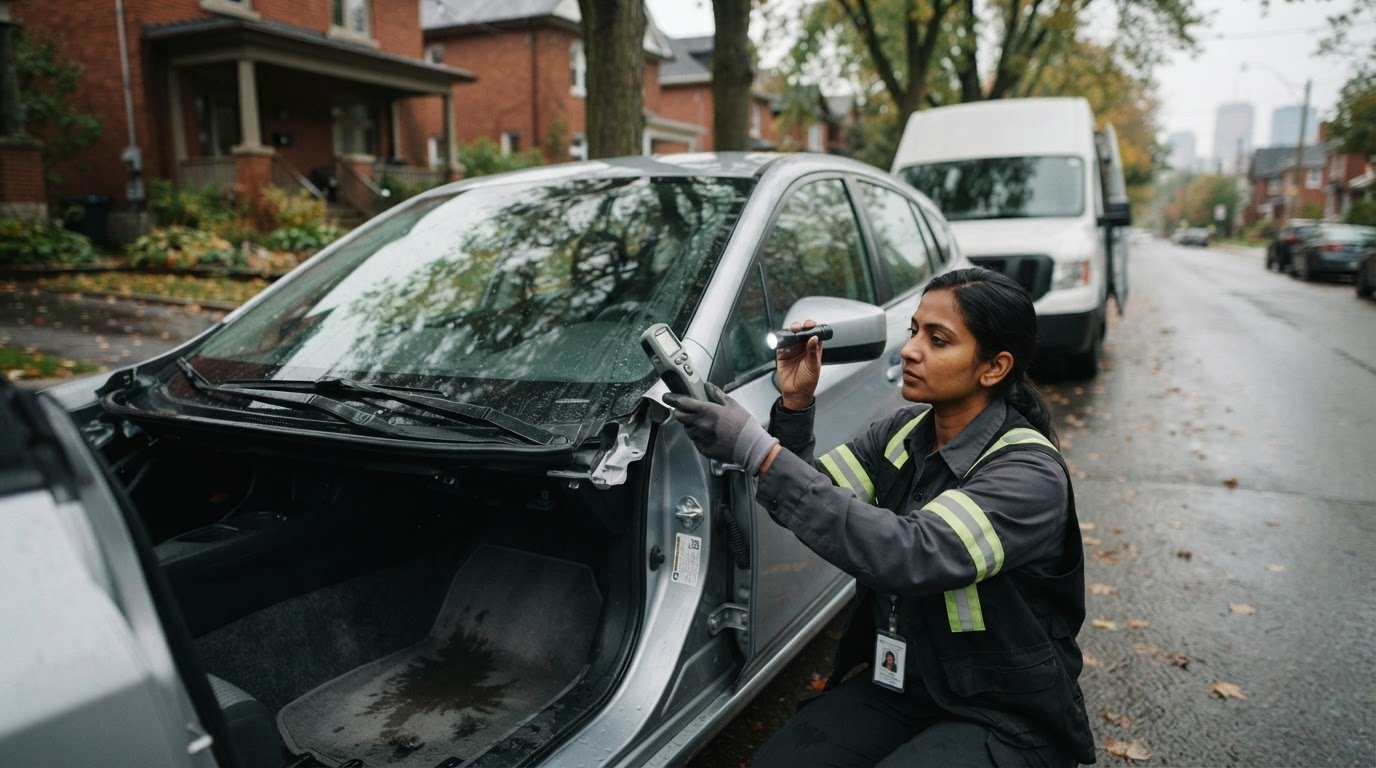
Water in your footwell, foggy windows or a musty odour can be signs of a leaking windshield, but they don’t confirm where the water entered. A blocked drain, leaking sunroof or door seal can cause similar symptoms. Note when the dampness appears and where you first see it. Those details can help a technician trace the source instead of treating the wrong area.
Take recurring moisture seriously. The windshield’s bonded seal helps hold the glass in place and contributes to your vehicle’s structural support. If that bond is compromised, a professional assessment can help determine whether the windshield installation needs attention. Auto Glass Ottawa provides mobile windshield repair and replacement in Ottawa and Gatineau, so you can arrange service at home or work with less disruption.
This guide explains the common signs of a windshield leak, how to distinguish them from other sources of water and what to do while arranging an assessment.
Key Takeaways
- Water at the windshield edge may point to a leak, while fogged windows, a musty odour and damp carpet indicate moisture without confirming its source.
- Note where dampness appears and whether it follows rain, a vehicle wash or another condition. A sunroof, door seal or body-area opening can also let water in.
- Record symptoms, dry accessible surfaces and avoid applying sealant or disturbing windshield trim before an inspection.
- A technician can assess the leak source and windshield installation, then determine whether repair or replacement is appropriate.
- Auto Glass Ottawa’s mobile service can make arranging windshield service in Ottawa and Gatineau more convenient at home or work.
What are the signs of a leaking windshield?
A windshield leak allows water into the cabin around the glass. Some signs of a leaking windshield are direct, such as droplets along the glass edge. Others, including damp carpet or a recurring musty odour, suggest moisture but don’t reveal where it entered. Water can travel behind trim or beneath carpeting before becoming visible, so the dampest spot may not be the source.
Visible signs of water entering near the windshield
After rain or a vehicle wash, look for water around the windshield perimeter. A droplet on the glass edge or a wet track running down nearby trim is a useful clue. The windshield is laminated safety glass; this overview of windshield construction and purpose explains its general role in the vehicle. Keep your check to visible areas, and note what you find.
- Water at the glass edge: Look for droplets or damp tracks around the top, sides or lower edge of the windshield.
- Damp nearby surfaces: Moisture on trim, the dashboard edge or carpeting near the front of the cabin may be related, but it doesn’t prove the windshield is leaking.
- A repeatable pattern: Record whether water appears after rain, washing or another specific condition, and which area becomes wet first.
Note the date and conditions, and take a photo if you see a water track. Avoid pulling at trim to look behind it. A technician can assess the installation without you disturbing the surrounding parts.
Lingering moisture clues inside the cabin
A leak may not leave an obvious drip. Moisture that remains inside the vehicle can cause recurring fog on the windows, a musty odour or upholstery that stays damp. These signs are worth investigating, especially if they return after you dry the cabin. They can also have causes other than the windshield, so treat them as clues to excess moisture, not a diagnosis.
- Fogged windows: If the glass repeatedly fogs from inside, note when it happens and whether the cabin or floor feels damp.
- Musty odour: A persistent smell may point to moisture collected out of sight, but it doesn’t identify the entry point.
- Damp upholstery or carpet: Check whether the dampness returns and record exactly where you find it.
A wet front footwell can make the windshield seem like the obvious culprit, but water may travel before it reaches the carpet. Repeated moisture is a reason to find the source, not proof that the windshield is leaking. Share the pattern with a technician so they can assess where water is entering and whether the windshield installation needs attention.
How a windshield leak develops and why the seal matters
The windshield is held in place by a bonded connection between the glass and the vehicle frame. This original bond is called the factory seal. It helps keep water outside the cabin and secures the windshield as part of the vehicle’s structure. If the bond is no longer sound, water may find a path inside. A leak alone, however, doesn’t prove that the vehicle is unsafe to drive.
What the factory seal does
The factory seal works as both a water barrier and an attachment point. It closes the gap around the windshield while helping the glass stay connected to the frame. That connection contributes to structural support, meaning the windshield has a role in the vehicle’s overall structure, not just in providing a view of the road. A wet carpet alone can’t show whether the bond is in good condition.
A sound factory seal helps keep water out while holding the windshield securely in place. If the seal or surrounding bond is compromised, the glass may not be secured as intended. Proper glass work matters for this reason. The Auto Glass Safety Council (AGSC) standards for windshield replacement provide guidance focused on safe auto glass replacement and installation.
Common reasons a windshield may begin leaking
There isn’t one cause that applies to every vehicle. A technician needs to inspect the windshield area and installation to identify the source. Possible contributors include:
- Age-related deterioration: Seal or bonding materials may change over time, potentially leaving a path for water.
- An installation gap: If the windshield wasn’t seated or sealed correctly during previous glass work, a small opening may allow moisture through.
- Damage near the edge: Damage to the glass or surrounding area may affect the seal at the perimeter.
- Previous windshield work: If a leak appears after glass work, the timing is useful to report. It doesn’t prove that the work caused the leak.
These are possibilities, not a diagnosis. If a leak becomes noticeable after windshield replacement, the installation may need attention, but water could also be entering elsewhere. Signs of a leaking windshield can point to a concern, but they don’t reveal the condition of the bond beneath the trim. Avoid pulling back the trim or applying sealant, since either can make the area harder to assess.
If you notice recurring water near the windshield, a professional assessment can help establish whether the glass bond needs attention. Auto Glass Ottawa provides windshield repair and replacement, with the appropriate next step guided by the inspection findings.
How to tell a windshield leak from another source
Water inside the cabin doesn’t automatically mean the windshield is leaking. A sunroof drain, door seal or another opening in the vehicle body may let moisture in. The visible wet spot may be some distance from where the water entered. Use the location and timing of the dampness as clues, not as a diagnosis.
Clues that point toward the windshield area
Water appearing at or just inside the windshield edge after rain or washing may suggest an issue around the glass or its seal. Note which edge seems wet, when you first see moisture and whether it follows particular weather or washing conditions. A repeatable pattern can help a technician decide what to inspect.
| What you notice | What it may suggest |
|---|---|
| Water tracks or droplets beside the windshield after rain or washing | A possible leak near the windshield edge, though the pattern alone doesn’t confirm it. |
| Dampness around the roof opening or upper cabin area | A sunroof or nearby body-area leak may be worth investigating. |
| Moisture around a door or along its interior edge | A door-seal or adjacent body-area source may be involved. |
| Wet carpeting without visible water near the glass | The water may have travelled from another entry point before reaching the floor. |
Why water can appear far from its entry point
Water can run behind trim or beneath carpeting before it becomes visible. A leak higher in the cabin, for example, may leave the floor wet while the entry point stays hidden. The wettest area is useful to report, but it can’t reliably show where the water began.
Signs of a leaking windshield can overlap with clues from other leaks. A front footwell that gets damp after rain may raise questions about the windshield without identifying the cause. Moisture around a roof opening or door doesn’t rule out another nearby source, either. Avoid removing trim or lifting carpet to investigate. Disturbing these areas can make it harder to trace the water’s path.
If the source remains unclear or the moisture keeps returning, arrange a professional inspection. A technician can assess the windshield area and other likely entry points, then trace the leak before recommending work. Bring notes about when and where the dampness appears. That pattern can guide the assessment, while an in-person inspection establishes the source.

What to do when you suspect a leaking windshield
Take a methodical approach. Signs of a leaking windshield can help a technician understand the problem, but a careful record and professional inspection are safer than trying to seal the glass yourself. These steps can help limit interior moisture and prepare you to describe the issue.
- Record what you notice. Photograph visible water or damp areas, and note when they appear. Record whether the moisture followed rain, a vehicle wash or another condition. Include recurring fogging, musty odours and upholstery that stays damp. This information describes the pattern without assuming where the water entered.
- Limit further moisture. If practical, remove standing water with an absorbent cloth and dry accessible surfaces. Keep belongings off wet carpeting. Don’t pull up trim, lift carpet or press around the windshield. Avoid household or automotive sealant before the source has been assessed, as a patch can obscure the area that needs inspection.
- Arrange a professional inspection. A technician can assess whether the windshield seal is involved and consider other possible entry points. If water keeps returning, arrange an assessment rather than waiting for the damp area to spread. Share your photos, notes and any relevant history of windshield work.
Take visibility, electronics and cabin safety seriously. If moisture affects your view through the glass, warning lights or vehicle electronics appear, or the interior feels unsafe to occupy, seek prompt professional guidance. Don’t rely on a DIY water test or guess at a repair when the source is uncertain. The right next step depends on the inspection findings.
Arrange an inspection and understand insurance support
Auto Glass Ottawa assists with insurance claims for windshield service. Assistance doesn’t guarantee a claim will be covered. Coverage depends on your policy and your insurer’s decision, so review your policy and discuss the claim process with your insurer. The insurance windshield replacement guide can help you understand what information may be useful when discussing a replacement claim.
For Ottawa and Gatineau drivers, mobile windshield service can make it easier to arrange service at home or work, with less disruption to your day. If water keeps returning or you’re unsure whether the windshield is involved, arrange windshield service to help identify the source before deciding on repair.
Get a leaking windshield inspected in Ottawa and Gatineau
An inspection can replace guesswork with a clearer next step. A technician assesses where water is entering and checks the condition of the windshield installation. The findings help determine whether windshield repair, replacement or another response is appropriate. A leak doesn’t automatically mean the windshield must be replaced. The source and installation should be assessed before work is recommended.
What a professional leak assessment can establish
Tracing the entry point helps distinguish a windshield concern from water coming through another part of the vehicle. If the windshield is involved, the technician can assess the factory seal, the bonded connection between the glass and frame, and the surrounding installation. The findings guide the work and help determine the suitable next step.
If replacement is needed, the installation must allow for windshield adhesive curing, the hardening process that gives the adhesive its final bonding strength. Follow the technician’s guidance after the work so the adhesive can cure as directed.
Mobile auto glass service for Ottawa and Gatineau drivers
Auto Glass Ottawa provides free mobile windshield service in Ottawa and Gatineau, with technicians who can come to your home or workplace. This can reduce the disruption of arranging windshield service while you manage damp carpets or recurring moisture. You can share your observations with the technician as they assess the windshield installation.
Auto Glass Ottawa’s certified technicians bring over 15 years of experience serving Ottawa and Gatineau. If the findings point to windshield repair or replacement, the appropriate work depends on the condition of the glass, seal and installation. Completed work is backed by a lifetime warranty on workmanship and leakage.
Before the appointment, keep notes or photos of where and when water appeared handy. Mention any recent windshield work and whether the moisture returned after rain or washing. These details help explain the pattern, while the inspection guides the assessment. If another source is responsible, identifying it helps avoid treating the wrong area.
You don’t need to diagnose the problem on your own. Arrange a mobile windshield inspection with Auto Glass Ottawa to have the leak source and installation assessed at your home or workplace in Ottawa or Gatineau.
Take the next step with confidence
You don’t need to pinpoint the cause before getting help. Your observations are a useful starting point, and an inspection can clarify what needs attention. Acting on persistent signs of a leaking windshield gives you a practical way forward instead of letting moisture continue unchecked.
Once the source is identified, you can make an informed decision based on the condition of the glass and its installation. If repair or replacement is needed, a professional assessment helps keep the focus on a suitable solution for your vehicle. You can also discuss insurance claim assistance without assuming your policy will cover the work.
To have a suspected leak assessed, arrange mobile windshield service in Ottawa or Gatineau. Auto Glass Ottawa can help you take the next step with service at your home or workplace.
Frequently Asked Questions
Can a leaking windshield cause fogged windows or a musty smell?
It can, but neither symptom identifies the windshield as the source. Brief fogging on a cold Canadian morning can happen when warm, moist cabin air meets cold glass. Notice whether it clears with normal ventilation and whether the pattern changes on dry days. If an odour persists, note when it’s strongest, such as after the vehicle has been parked overnight, and share that detail during an assessment.
How can I tell whether water is coming through my windshield seal?
You can suspect a seal leak, but cabin clues alone can’t confirm it. Signs of a leaking windshield need to be assessed alongside the condition of the glass and installation. Avoid pressing on the windshield or pulling back trim to investigate. If the vehicle has had previous glass work, keep any paperwork showing when it was done. That history may help a technician assess the installation.
Can water inside my car come from somewhere other than the windshield?
Yes. Note the conditions when you notice moisture, such as whether it appears after the vehicle has been parked outdoors, after a wash or during dry weather after using the air conditioning. This information doesn’t diagnose the source, but it gives the technician useful context beyond the location of the damp area.
Is it safe to drive with a leaking windshield?
There isn’t a reliable yes-or-no answer without assessing the vehicle. If water interferes with your view, or you’re concerned that the windshield is loose or the vehicle’s electrical functions are affected, don’t treat the leak as a minor inconvenience. Seek professional guidance before driving. If you’re unsure, explain what you’ve noticed and arrange an assessment so you can make a safety-focused decision.
Can I seal a leaking windshield myself?
A surface-applied product can’t establish whether the leak is at the windshield or somewhere else, and it isn’t a substitute for assessing the installation. Don’t force water into the area with a pressure washer to test it, as this may make the source harder to assess. Leave the glass and trim undisturbed, and have the installation checked before deciding whether repair or replacement is appropriate.
Does insurance cover a leaking windshield?
Coverage varies by policy and insurer, so don’t assume a leak will qualify. When you speak with your insurer, ask what documentation they need and whether they want to review the issue before work begins. Keep the claim reference and any instructions you receive. Auto Glass Ottawa can assist with insurance claims, but your insurer determines coverage under your policy.
Can a windshield leak damage the vehicle interior?
Yes. Before an assessment, remove personal items from affected areas and keep anything that can be safely lifted out of standing water. Avoid using a heat gun or leaving a portable heater unattended inside the vehicle. If you’ve tried drying the cabin, tell the technician what you used and which areas remained damp. That context can help them assess the interior’s condition.