
What Windshield Glass Brand Does My Car Use? How to Identify It
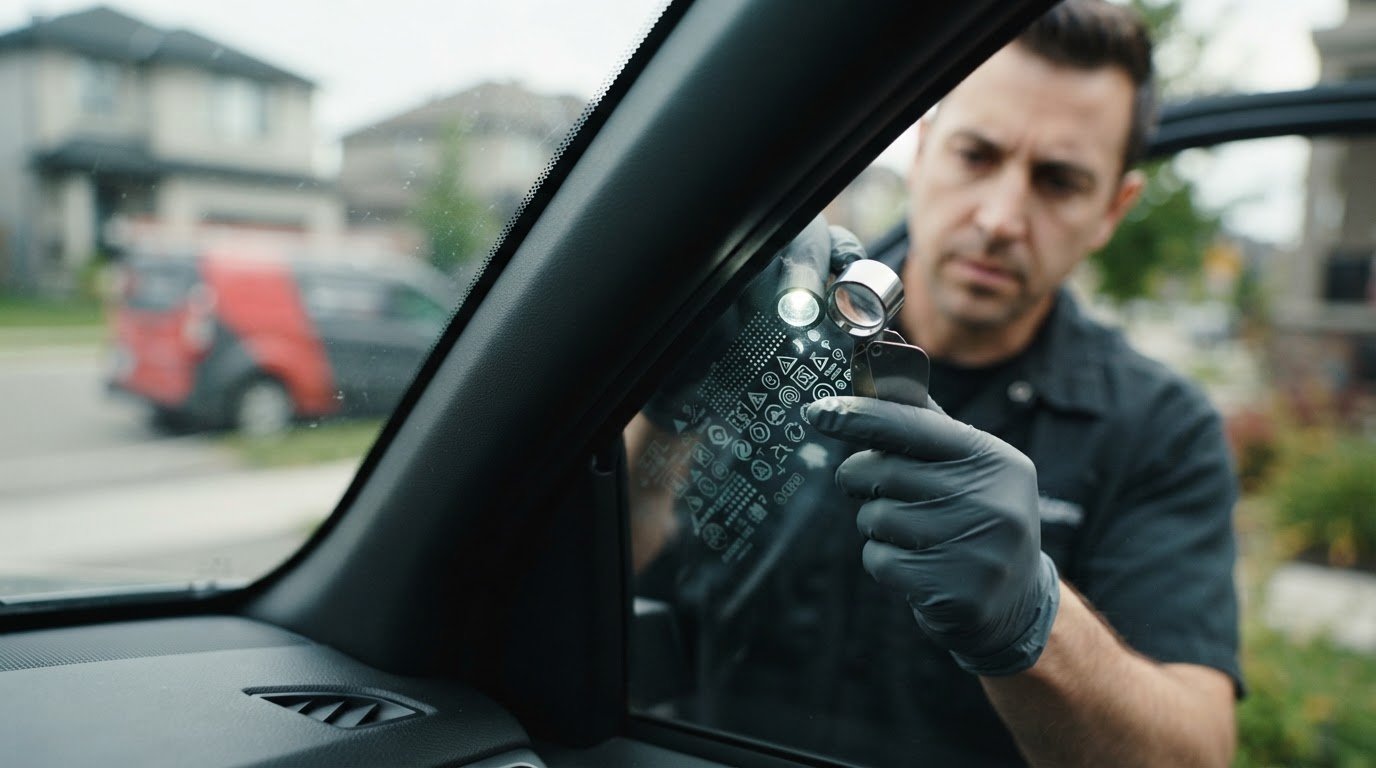
What if the tiny, confusing cluster of numbers stamped on the bottom corner of your glass is the most critical safety code on your vehicle? If you are looking at those mysterious symbols and wondering, “what windshield glass brand does my car use,” you’re not alone. It’s completely normal to feel unsure whether a previous owner swapped the original glass for a cheaper alternative, or to worry that an incorrect brand might interfere with your lane-keep assist cameras.
Fortunately, reading that stamp is straightforward once you know what to look for. You will learn exactly how to identify your vehicle’s windshield glass brand using the safety stamp and understand why it matters for your replacement. We break down how to decode the manufacturer’s monogram, explain the difference between factory glass and aftermarket options, and help you make an informed choice to protect your vehicle’s structural integrity.
Key Takeaways
- Learn how to decode the permanent safety stamp in the corner of your glass to answer the question, “what windshield glass brand does my car use?”
- Understand the differences between factory-original glass and high-quality equivalent alternatives to make an informed choice for your next replacement.
- Discover how your windshield provides critical structural support and why low-quality brands can cause optical distortion that interferes with advanced driver-assistance sensors.
- Find out how to evaluate your current glass damage to see if a small stone chip can be repaired with industrial-strength resin before committing to a full replacement.
Decoding the Windshield Monogram: How to Find Your Glass Brand
Every piece of automotive glass on your vehicle carries a permanent safety stamp known as a “bug” or monogram. If you’re inspecting your vehicle and asking yourself, “what windshield glass brand does my car use,” this tiny marking holds your answer. By law, every auto glass piece must display specific regulatory markings to ensure it meets strict safety guidelines. You can typically find this faint black or white stamp etched into the lower bottom corner of either the driver or passenger side of the glass. It is often positioned just above the wiper blade line, meaning you might need to step outside the vehicle to read it clearly under direct light.
This monogram provides a wealth of information about the composition of your windshield, which is made of laminated glass designed to withstand severe impacts and keep occupants safe. Beyond material details, this stamp serves as official confirmation that the component and its installation parameters comply with the Automotive Glass Replacement Safety Standard.
Locating the Manufacturer Logo and Trademark
To find the specific brand, look directly at the very top of the safety stamp. If your vehicle still has its original factory glass, you will often see the prominent logo of the automaker, such as Ford, Honda, or Toyota. However, if the glass has been replaced before, or if you look closely beside the automaker’s mark, you will find the trademark of the actual glass producer. Primary global manufacturers include industry giants like Pilkington, Vitro, PGW, and Saint-Gobain Sekurit. Recognizing the difference between a car brand logo and a dedicated glass specialist brand name helps you determine if your vehicle currently carries factory-original or aftermarket glass.
Reading the DOT Code to Identify the Factory
When the brand name is faded or difficult to recognize, the DOT code provides an undeniable alternative. Search the monogram for the letters “DOT” followed by a series of numbers. This Department of Transportation code identifies the exact manufacturing plant where the glass was produced. Because every manufacturing facility is assigned a unique number, you can easily look up this specific code online through public automotive databases to verify the brand origin instantly. This step eliminates the guesswork, helping you cross-reference the plant number with its parent company so you know exactly who made your glass before scheduling a replacement.
Understanding OEM vs. OEE Aftermarket Auto Glass Brands
When you look closely at your vehicle to determine what windshield glass brand does my car use, you will quickly encounter two major categories: OEM and OEE. Original Equipment Manufacturer (OEM) glass is identical to the original part installed at the factory when your vehicle was first assembled. In contrast, Original Equipment Equivalent (OEE) glass represents high-quality aftermarket alternatives built to similar specifications by independent manufacturers. A common misconception among Canadian vehicle owners is that aftermarket glass brands are universally inferior to dealer-branded options. In reality, both options must comply with strict safety regulations, including the Federal Motor Vehicle Safety Standard No. 205, before they can legally be sold or installed. This means that a certified OEE option will still protect you in an accident just as effectively as factory glass.
The Characteristics of Genuine OEM Glass Brands
Genuine OEM brands are easily identified because they carry the vehicle maker’s official logo directly on the monogram alongside the glass manufacturer’s brand name. Choosing this type of glass guarantees an exact match for glass thickness, specific tint colour, and precise glass expansion coefficients. These precise thermal properties prevent the glass from cracking under extreme temperature fluctuations common in Canadian winters. This level of precision ensures that the replacement glass preserves the precise factory seal around your vehicle’s frame perfectly, eliminating cabin wind noise and preventing water leaks.
When to Choose an OEE Aftermarket Brand
Reputable OEE brands provide excellent thermal stability and long-term durability without the steep dealership markup. Top-tier glass shops rely on these certified equivalent glass brands because they meet the exact structural support needs required during a collision. If your vehicle is older or your insurance policy defaults to aftermarket glass, choosing a major brand like Pilkington or PGW ensures you don’t compromise on safety. Before you invest in a brand-new piece of glass, it is wise to check for repairable windshield chips. If your damage is minor, the team at Auto Glass Ottawa can often restore the glass using an industrial-strength resin, saving you from a full replacement while keeping your original factory seal intact.
Why Windshield Glass Brands Impact Vehicle Safety and ADAS Tech
Modern windshields are sophisticated, engineered components that provide vital structural support during a collision. In a rollover accident, the glass helps prevent the roof from caving in, protecting everyone inside. It also serves as the necessary backstop for the passenger side airbag to deploy correctly. If you’re asking, “what windshield glass brand does my car use,” you’re really asking about the integrity of your vehicle’s safety cage. Low-quality glass brands often suffer from subtle optical distortion near the camera viewing area. While your eyes might adjust to these tiny waves, your vehicle’s computer cannot.
Choosing the correct glass brand ensures safety sensors function exactly as designed. Organizations like the Auto Glass Safety Council set the benchmarks for these installations, ensuring that the materials used meet rigorous safety standards. Following every replacement, a professional technician should perform an ADAS health check to ensure all driver assistance sensors remain correctly aligned and functional.
The Role of Glass Quality in Camera Recalibration
Advanced driver assistance systems (ADAS) rely on a perfectly clear, distortion-free view through the glass to operate. Determining what windshield glass brand does my car use is the first step in ensuring these sensors function exactly as designed. Even minor variations in glass thickness or curvature can throw off lane-keep assist and collision avoidance sensors. When a camera’s line of sight is bent by inferior glass, the system may provide false alerts or fail to brake when needed. By choosing trusted brands, you prevent calibration failures that often force expensive, time-consuming dealership visits.
Thermal Stability and Environmental Performance
Canadian weather is notoriously hard on auto glass. Our vehicles must handle freezing winters and sweltering summers, often within the same week. Premium brands design their products with controlled glass expansion coefficients to handle these temperature swings without cracking. If a brand lacks this thermal stability, you’ll likely see stress cracks or premature adhesive failure. This leads to water leaks and wind noise that compromise your comfort and the vehicle’s long-term health. Using high-quality materials ensures the factory seal remains intact, keeping the interior dry and the structural support strong regardless of the Ottawa weather.

Steps to Take When Replacing Your Brand of Windshield Glass
If you have finished decoding the safety stamp to answer “what windshield glass brand does my car use,” you are ready to begin the replacement process. First, examine the impact point carefully. Many drivers assume a full replacement is the only path, but small stone chips can often be fixed using industrial-strength resin. This process preserves your factory seal and avoids the need for a total glass swap. If the damage is beyond repair, you will need to move toward a full replacement while ensuring the new piece matches the safety specifications you identified in the corner of your glass.
Once you know a replacement is necessary, gather your vehicle information and contact your insurance provider. You need to clarify your comprehensive deductible and ask about their specific glass coverage rules. It is equally important to select a local service center that employs certified technicians and follows the strict Automotive Glass Replacement Safety Standard. This ensures the structural integrity of your vehicle remains intact after the job is finished, which is vital for your safety on the road.
Navigating Insurance Policies and Deductibles
Contacting your insurance provider is a critical step in managing your out-of-pocket expenses. You should ask if your policy includes a deductible waiver, which can sometimes eliminate the cost for qualified glass repairs. It is also vital to ask if your policy covers a premium OEM brand replacement or if it specifies OEE alternatives. Many Canadian insurers have different tiers of coverage based on the age of your vehicle. For a detailed walkthrough on handling these claims, refer to this insurance windshield replacement Ottawa guide to ensure your paperwork is processed correctly.
What to Expect During the Installation Process
When you take your vehicle in, expect a professional shop to prioritize safety and cleanliness. This includes a thorough glass debris cleanup if your original windshield has shattered, protecting your upholstery and your family. The most important part of the visit is the waiting period. The windshield adhesive curing process takes time to reach its final bonding strength, and a professional technician will not let you drive away until the bond is secure. Many expert shops also use ultrasonic leak detectors to verify a flawless seal before you leave the lot, ensuring there is no wind noise or water intrusion. If you are ready to restore your vehicle’s safety, contact the experts at Auto Glass Ottawa for a professional installation.
Trust Auto Glass Ottawa for Certified Windshield Matching and Installation
Once you’ve decoded the safety monogram to determine what windshield glass brand does my car use, you need a partner who can source that exact part. Auto Glass Ottawa brings over 15 years of local experience to every job, specializing in matching both factory OEM and premium equivalent glass brands. We understand that your vehicle’s safety depends on the quality of the materials and the precision of the install. Our team prioritizes safety by utilizing certified technicians who consistently exceed provincial and industry standards. Whether you drive a brand-new SUV or a vintage sedan, we stock a large variety of glass for every make and model to ensure a perfect fit.
We believe that a professional service should provide lasting peace of mind. Every replacement we perform comes with a lifetime warranty on workmanship and leakage protection. This means you don’t have to worry about wind noise, water intrusion, or seal failure for as long as you own the vehicle. By choosing a team that follows the Automotive Glass Replacement Safety Standard, you ensure your vehicle’s structural integrity remains exactly as the manufacturer intended.
Free Mobile Service Across Ottawa and Gatineau
Life in the capital region is busy, and we’ve designed our service to eliminate any disruption to your day. Our mobile units operate daily from 6:00 a.m. to 8:00 p.m., traveling directly to your home or office. We serve all major areas including Kanata, Nepean, Barrhaven, Orleans, Ottawa, and Gatineau. These mobile teams come fully equipped with everything needed to perform a professional replacement in residential driveways or workplace parking lots. You don’t have to waste time sitting in a waiting room; we bring the shop to you.
In-House ADAS Recalibration and Insurance Support
Modern vehicle technology requires more than just a piece of glass. If your car features lane-keep assist or automatic braking, the camera must be realigned after the new glass is in place. Unlike many shops that outsource this critical step, we handle all ADAS camera recalibrations in-house. This ensures your safety systems are tested and verified by the same team that installed the glass. If you are a business owner managing multiple vehicle brands, our commercial fleet auto glass Ottawa guide explains how we streamline these services for larger operations.
Our team also assists directly with major insurance providers to simplify the paperwork for your claim. We help you understand your coverage and handle the administrative burden so you can focus on getting back on the road. If you are ready to restore your vehicle with the right glass brand and a professional seal, book your appointment online today for fast, certified service.
Restore Your Safety with Expert Windshield Matching
Understanding exactly what windshield glass brand does my car use is the first step toward a safe and professional replacement. By decoding the monogram, you ensure that your new glass provides the necessary structural support and optical clarity required for modern safety sensors. Whether you opt for a factory-original part or a high-quality equivalent, the priority is always a precise fit that protects your vehicle’s integrity.
With over 15 years of trusted service in Ottawa and Gatineau, Auto Glass Ottawa is here to take the stress out of your glass repair. Our certified in-house ADAS recalibration specialists ensure your technology functions perfectly, while our lifetime warranty on workmanship and leakage gives you long-term peace of mind. You don’t have to disrupt your busy schedule to get the job done right. Book your mobile windshield replacement with Auto Glass Ottawa today to enjoy the convenience of professional service at your home or office. We look forward to getting you back on the road safely.
Frequently Asked Questions
Can I tell if my windshield has been replaced before by looking at the brand?
Yes, you can usually identify a previous replacement by checking for the automaker’s logo. If the safety stamp lacks a car brand trademark like Honda, BMW, or Ford, it’s almost certainly an aftermarket replacement. Even if the glass is produced by a high-quality manufacturer like Pilkington, the absence of the vehicle manufacturer’s logo indicates that the glass isn’t the original factory part installed during assembly.
Will using an aftermarket glass brand void my vehicle’s manufacturer warranty?
Using an aftermarket glass brand won’t void your entire vehicle warranty. Under Canadian consumer protection principles, a manufacturer can’t revoke your warranty just for using equivalent parts. However, the automaker won’t cover the glass itself or any damage caused by a faulty installation. This is why it’s vital to choose a shop like Auto Glass Ottawa that provides a lifetime warranty on workmanship and leakage protection to cover those gaps.
What does the DOT number on my windshield safety stamp mean?
The DOT number is a specific code assigned by the Department of Transportation that identifies the exact manufacturing plant where the glass was produced. When you are trying to figure out what windshield glass brand does my car use, this number is your most reliable tool. You can cross-reference this code with public databases to see the factory location and the parent company responsible for the glass, regardless of which logo is present.
Why do some windshield brands have a car manufacturer logo while others do not?
Windshield brands with a car manufacturer logo are Original Equipment Manufacturer (OEM) parts, meaning they are identical to what came with the vehicle. Brands without the automaker’s logo are typically Original Equipment Equivalent (OEE) parts. While OEE glass is built to similar safety specifications and expansion coefficients, it doesn’t carry the trademarked car brand. Both must meet legal safety requirements to be road-legal in Canada.
Does my choice of windshield brand affect my lane departure warning system?
Your choice of brand can significantly impact your lane departure warning system and other ADAS features. If you’re asking what windshield glass brand does my car use, you should know that lower-quality glass often has minor optical distortions that confuse camera sensors. Choosing a premium brand ensures the camera has a clear view. Always ensure a professional performs a certified ADAS health check after the replacement to verify all sensors are functional.
Is a stone chip repairable regardless of the windshield brand installed?
A stone chip is usually repairable regardless of the glass brand, provided the damage hasn’t spread too far. Most minor impacts can be restored using an industrial-strength resin that bonds with the glass to prevent further cracking. The repair process is effective on both OEM and OEE brands. It’s best to have a technician evaluate the chip immediately to see if you can save the factory seal and avoid a full replacement.
How long do I have to wait after installation for the windshield adhesive to cure?
You must typically wait at least one hour before driving, though the full windshield adhesive curing process can take up to 24 hours to reach maximum strength. Factors like Ottawa’s humidity and temperature will affect this timeline. A certified technician will always provide a specific safe drive-away time. Respecting this window is critical because the adhesive needs to be fully set to provide necessary structural support during a collision.