
Star Break vs. Bullseye Chip Repair: How to Tell What Your Windshield Needs
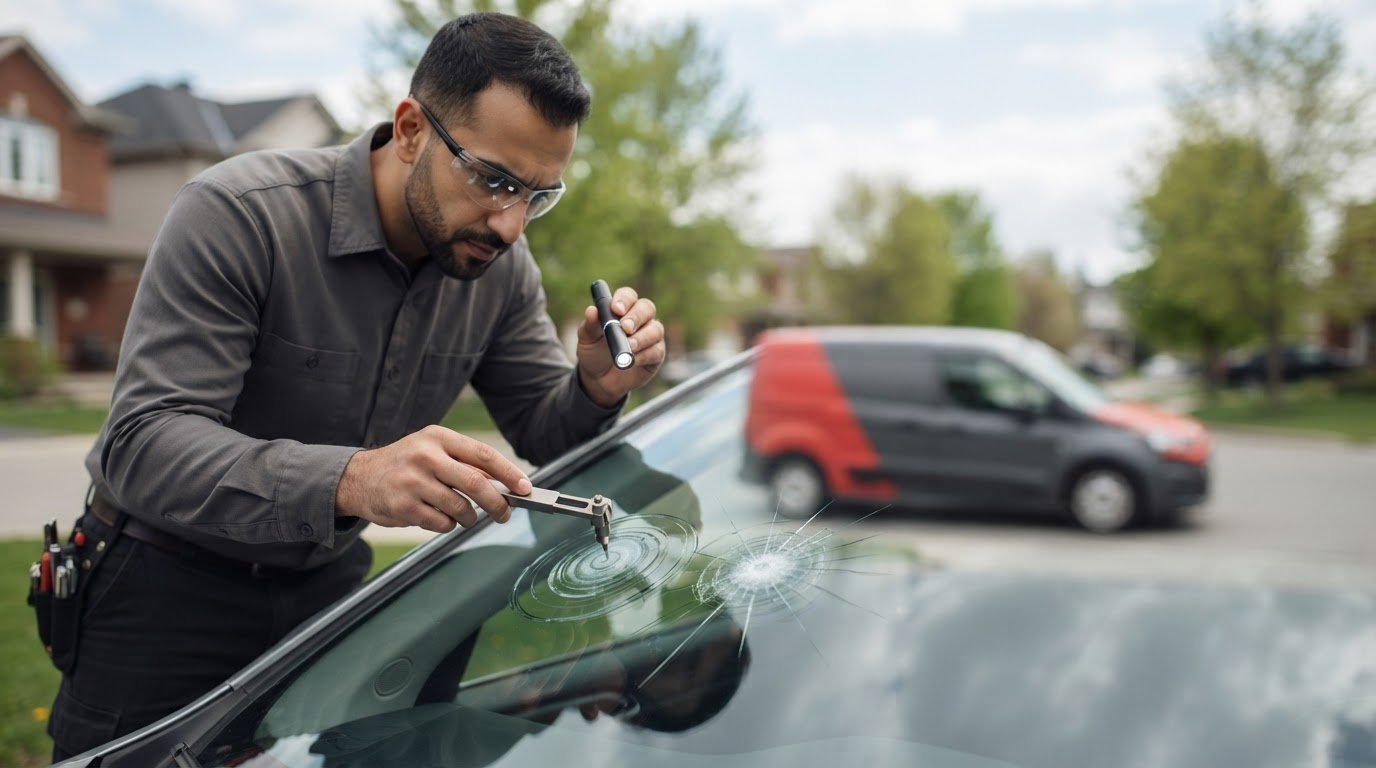
A bullseye may look more contained than a star break, but the pattern alone can’t tell you whether your windshield is repairable. If you’re weighing star break vs bullseye chip repair, the visible shape is a useful clue, not a diagnosis.
It’s understandable to wonder whether the damage will spread or interfere with your view. A star break has fine cracks radiating from a central impact point, while a bullseye usually appears as a round, circular mark. Either can worsen with temperature changes, and damaged glass can affect visibility and structural support.
This guide explains how to tell the patterns apart, what a technician considers when deciding between repair and replacement, and what you can do next. Size, depth, location and age all matter, so don’t rely on appearance alone. Arrange a professional assessment, especially if the damage changes or affects your view. Mobile windshield service can make that step easier to fit into your day.
Key Takeaways
- Spot the difference between a circular bullseye and a star-shaped pattern by looking at the impact centre and surrounding fractures.
- With star break vs bullseye chip repair, the pattern is only one clue. The full damage area helps determine the right next step.
- Fracture spread, size, location and visibility can all affect whether a chip is suitable for repair.
- After spotting damage, document it, avoid disturbing the area and note when it appeared or changed.
- Mobile service can make a professional windshield assessment easier to arrange at home or work.
Star Break vs. Bullseye Chip: How to Recognize Each Windshield Pattern
| Feature | Bullseye chip | Star break |
|---|---|---|
| Shape | Rounded ring or cone-like mark | Small central impact with narrow lines radiating outward |
| Visible centre | Often a noticeable crater-like or circular centre | Usually a distinct point where the impact occurred |
| Fracture pattern | Damage appears more contained around the centre | Fine fracture “legs” extend away from the centre |
Both patterns can start when an object, such as a stone chip from road debris, strikes laminated windshield glass. The impact can leave a mark on the surface and fractures within the glass layers. What you see from outside may not show the full extent of the damage.
What does a bullseye chip look like?
A bullseye chip typically has a rounded ring or crater-like appearance around the point of impact. From the driver’s seat, it may look like a small circle; from another angle, it can appear cone-like. That circular pattern helps distinguish it from a star break, but it doesn’t confirm that the damage is suitable for repair.
Light reflecting off the glass can hide the ring’s edge, while dust or dirt can make the outline harder to see. Don’t judge the damage by the surface mark alone. A technician assesses the visible area and the fractures in the laminated glass layers. General windshield repair methods and considerations include the damage type, size and location.
How can you recognize a star break?
A star break has a central impact point with narrow fractures, or “legs,” radiating outward. Some legs may be short and fine, while others extend farther from the centre. This branching pattern is the main visual clue. Glare, shadows and your viewing angle can make the finest lines difficult to see.
If it’s safe, look at the area from outside the vehicle, then from inside. Change your angle rather than touching the glass. Don’t press, probe or scrape the damaged spot. That won’t show how far fractures extend beneath the surface, and it can disturb the area.
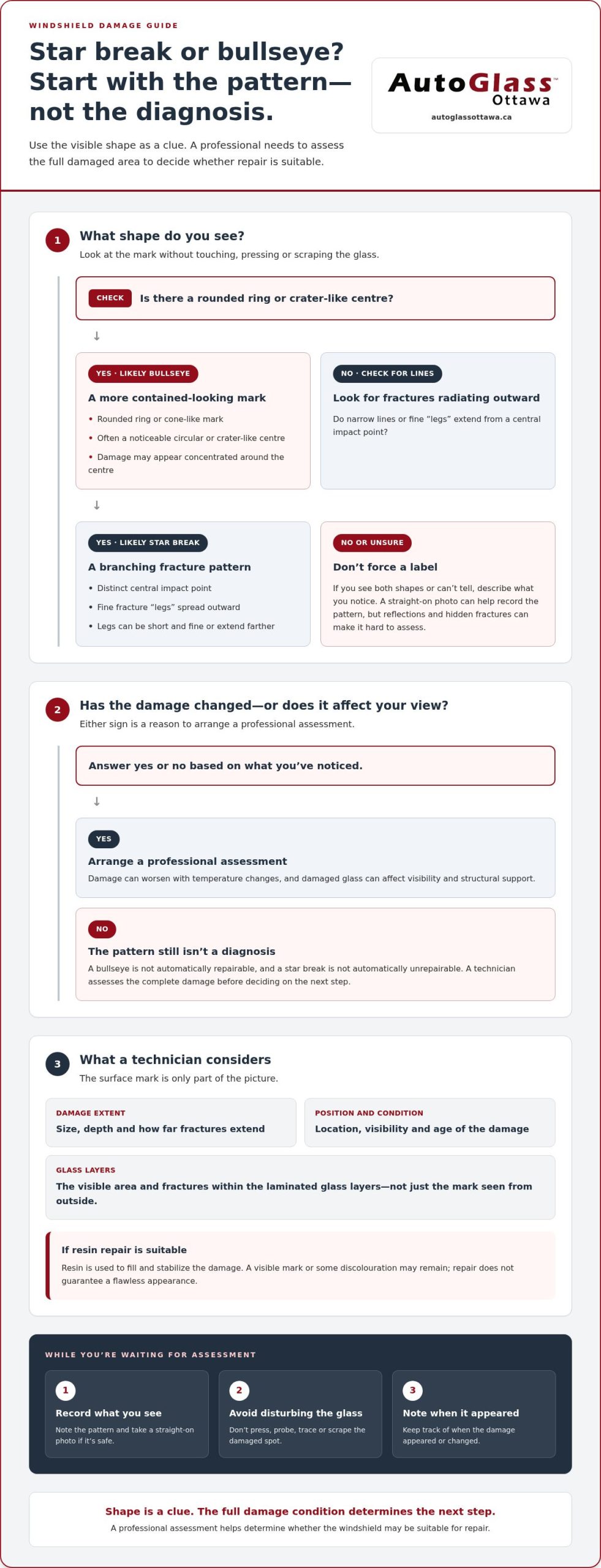
For a quick visual check, note whether the damage forms a rounded ring or has distinct lines spreading from a centre. If you see both shapes, or can’t confidently tell them apart, describe what you notice rather than trying to name it. A straight-on photo can help you record the pattern, but reflections and hidden fractures may still make it difficult to assess.
The distinction matters because each pattern gives a technician a different shape to assess. A bullseye’s damage may appear concentrated, while a star break’s fine legs can extend beyond the obvious impact point. In either case, a professional assessment considers the whole damaged area, not just its label. The phrase star break vs bullseye chip repair describes a comparison, not a guarantee that either pattern can be repaired.
Why Star Breaks and Bullseye Chips Respond Differently to Repair
Windshield resin repair is intended to fill and stabilize suitable impact damage. A technician applies resin to the damaged area so it can reach spaces created by the impact, then cures it as part of the repair process. The goal is to help stabilize the glass, not to promise that the mark will disappear or look like new glass.
The damage pattern affects how resin can reach the affected areas. A more contained break may offer a relatively direct route into the impact point. A star break can have several narrow legs branching away from it, each of which needs careful attention. The pattern visible from outside doesn’t reveal the full depth or condition of the glass.
How repair resin interacts with a bullseye
For a suitable bullseye, a technician works resin into the impact area and surrounding fracture space. Because the visible damage is often concentrated around the centre, the route into the break may be more direct than it is with fractures extending in several directions. The technician still needs to assess the whole damaged area before deciding whether resin repair is appropriate.
Some discolouration or a visible mark may remain after repair. Resin is used to fill and stabilize the damage, not to guarantee a flawless appearance.
Why star-break legs need careful assessment
Each fine leg in a star break can create another narrow path for resin to reach. If a leg is missed or resin doesn’t reach it adequately, that part of the damage may remain less stable. A technician inspects the branches and surrounding glass to determine whether repair can stabilize the break or whether another solution is more suitable.
A star break isn’t automatically unrepairable, and a bullseye isn’t automatically an easy repair. The surface pattern is only one part of the assessment. The full condition of the damage matters, including how far fractures extend and whether the glass is otherwise suitable for repair.
Repair suitability depends on the complete damage condition, not its label alone. A technician’s assessment helps distinguish damage that may respond to resin from damage that needs a different approach. Don’t press on the glass or trace fractures to try to predict the repair result.
A windshield also plays a role in vehicle safety, so repairs should be assessed with the condition of the glass in mind. The U.S. National Highway Traffic Safety Administration provides general vehicle safety information, including NHTSA windshield safety standards.
If you’re unsure whether the fracture can be stabilized, arrange a professional assessment rather than relying on the pattern name. Learn about windshield damage assessment and service from Auto Glass Ottawa.
Which Is Easier to Repair? Compare the Factors That Matter More Than the Name
A bullseye can look more contained, while a star break may have several fine fractures to assess. That difference can affect the repair approach, but it doesn’t decide the outcome on its own. A technician considers the whole damaged area, including where it sits and whether the fractures are changing.
| Factor | What a technician assesses |
|---|---|
| Pattern | A circular impact or radiating star-shaped fractures may call for different repair approaches. |
| Fracture spread | Whether lines extend away from the impact or appear to be growing. |
| Size and depth | The full damaged area, not just the mark visible on the surface. |
| Location | Proximity to the windshield edge and the driver’s viewing area. |
| Visibility | Whether the damage could interfere with a clear view of the road. |
A bullseye isn’t automatically repairable, and a star break doesn’t automatically mean replacement. Either pattern may need a different solution depending on the full condition of the glass. The Auto Glass Safety Council repair standards offer a reference for safe auto glass repair practices. A technician assesses how those considerations apply to the damage on your vehicle.
How size, depth and spreading affect the decision
The mark you see on the surface may not show the full damage beneath it. Fractures can extend beyond the obvious centre, and a small-looking impact can have a different depth or spread than its appearance suggests. For example, a compact bullseye with hidden fractures may call for a different decision from one with damage contained around its centre. There is no single visual measurement that settles every case.
If you notice a line extending or the damaged area changing, arrange a professional assessment promptly. Don’t press on the glass to test it. A technician can examine the visible pattern and its extent to determine whether repair is suitable or replacement is the safer course.
Why windshield location and visibility matter
Damage in the driver’s viewing area deserves careful attention because even a repaired mark may remain visible. Glare or changing light can make it harder to see through an affected spot. Damage near the windshield edge also warrants close assessment, since its position may affect the repair decision. Neither location alone determines the result.
A windshield contributes to clear vision and vehicle structural support, so the decision isn’t only about which pattern seems easier to fill. If the damage obstructs your view, is close to an edge or appears to be spreading, don’t rely on a quick glance to decide it’s safe to leave alone. Have the full area assessed. A professional can explain whether repair or replacement best suits the glass condition and your vehicle’s safety needs.
What to Do After You Spot a Star Break or Bullseye Chip
A fresh stone chip can be unsettling, especially if you’re unsure whether it has changed since the impact. Take a few simple steps to record what you see and protect the area while you arrange a professional assessment. Don’t decide on repair or replacement from the pattern alone.
- Document the damage. Take a clear photo from outside the vehicle, ideally in even light and without glare. Include a nearby landmark, such as the windshield edge, so you can describe where the impact is located. If you can’t see the pattern clearly, record what you can instead of touching the glass to investigate.
- Note the timing and any changes. Write down when you first noticed the impact and whether the mark or any fractures have grown since then. If you heard a stone hit the windshield while driving, note where and when it happened. This timeline can help a technician understand how the damage has developed.
- Avoid disturbing the area. Don’t push on the chip, probe it, scrape it or apply household products or other unapproved substances. Keep the area clear of loose dirt, but don’t pick at the glass. Arrange an assessment, particularly if the damage is changing or affecting your view.
Temperature shifts and changes in driving conditions can place stress on damaged glass. That doesn’t mean the damage will definitely spread, but it may change. Avoid delaying an assessment if you notice new lines or a change in visibility. The star break vs bullseye chip repair decision depends on the condition of the glass, not just the name of the pattern.
How to protect the damaged area before assessment
Leave the impact area undisturbed. Don’t press it to test its firmness or cover it with glue, polish or another substance that hasn’t been approved for automotive glass. If dust is nearby, avoid scraping or rubbing the chip while cleaning the windshield. If the damage grows or starts to interfere with your view, seek professional guidance promptly.
What information helps a technician assess the chip?
Share the approximate location, when you noticed the impact and whether you’ve seen any spreading. Describe the pattern as best you can, such as a rounded mark or fine lines, without treating that description as a diagnosis. A clear photo can help explain what you see when arranging service, but it can’t reveal every detail of the glass.
An on-site professional assessment guides the repair decision. The technician can examine the full damaged area and consider its condition, location and effect on visibility. That means the next step is based on the windshield itself rather than a photo or a guess.
In Ottawa and Gatineau, Auto Glass Ottawa provides 100% free mobile service to your home or workplace. See Auto Glass Ottawa’s mobile windshield service and arrange an assessment at a convenient location.
Get a Professional Star Break or Bullseye Chip Assessment in Ottawa
A pattern can help describe windshield damage, but it can’t show whether the full area is suitable for repair. A professional assessment is the practical way to determine whether repair or replacement best fits the glass condition and supports safe driving.
Auto Glass Ottawa offers mobile service in Ottawa and Gatineau, so you can arrange an assessment at home or work instead of making a separate trip to a shop. Certified technicians bring over 15 years of experience serving the area and can explain the recommended next step in clear terms.
What happens during a mobile windshield assessment?
A technician examines the damage pattern, its location and the overall condition of the windshield. They consider how the damage extends beyond the visible mark and whether its position may affect your view or the glass’s structural support. This assessment helps determine whether windshield repair is suitable or replacement is the better option.
Mobile service can take place at your home or workplace in Ottawa or Gatineau. The technician can assess the glass where your vehicle is parked and explain the recommendation, helping you make an informed decision without relying on a pattern name or photo alone.
How Auto Glass Ottawa supports the next step
Auto Glass Ottawa’s certified technicians are trained to meet or exceed provincial and industry safety standards. Windshield repairs and replacements are backed by a lifetime warranty on workmanship and leakage. If the assessment points to replacement, the team can explain that option and assist with the insurance claim process. Coverage depends on your policy and insurer.
If you’re reviewing insurance steps, the related article is titled Insurance Windshield Replacement in Ottawa: A Complete Claim Guide (2026). Use it for guidance on the claim process, then discuss your specific situation with your insurer.
After the assessment, you’ll know whether repair or replacement is recommended and what the next step involves. This takes the guesswork out of star break vs bullseye chip repair and keeps the focus on your windshield’s condition and safety.
Arrange a mobile windshield assessment with Auto Glass Ottawa to have a technician evaluate the damage at your home or workplace in Ottawa or Gatineau.
Take the Next Step With Confidence
Windshield damage can interrupt your plans, but deciding what to do next doesn’t have to. If you’ve been weighing star break vs bullseye chip repair, get guidance based on your vehicle and the condition of its glass.
An assessment can help you understand the available option and plan for the work around your day. Auto Glass Ottawa can arrange a mobile windshield assessment at your home or workplace in Ottawa or Gatineau, helping you move forward without an extra trip to a shop.
Arrange a mobile windshield assessment with Auto Glass Ottawa and take the next step towards a clear, safety-focused plan for your vehicle.
Frequently Asked Questions
Can I repair a star break with a DIY windshield repair kit?
A DIY kit isn’t a reliable way to confirm that a star break can be repaired. If you’ve already used one, tell the technician what product you applied and when, and keep the packaging or instructions if available. That detail can help them understand what’s on the glass before assessing it. For star break vs bullseye chip repair, a professional evaluation is a safer basis for deciding what to do.
Does windshield chip repair make a bullseye or star break disappear completely?
No repair should be treated as a promise that the glass will look unused. Before work begins, describe any cosmetic concerns, especially if the mark is near an area you regularly look through while driving. Ask the technician what appearance to expect for the specific damage and what the repair is intended to achieve. This helps set realistic expectations and keeps the decision focused on the condition of your windshield.
Can my insurance cover star break or bullseye chip repair?
Possibly, but coverage depends on your policy and your insurer’s decision. Check your policy documents or ask your insurer whether windshield repair is covered and whether a deductible applies. Have your policy details available when you make the enquiry. Auto Glass Ottawa can assist with the claim process, but coverage decisions remain with your insurer.
Can cold weather make a windshield chip worse?
Temperature changes may affect damaged glass, though the outcome can’t be predicted from the weather alone. Avoid pouring hot water on a cold windshield or using a separate heat source on the damaged spot. If you need to clear the glass, follow your vehicle’s normal defrosting instructions rather than applying sudden, direct heat to the impact area. Note any change you observe and share it when arranging an assessment.
Is it safe to drive with a star break or bullseye chip?
It depends on the damage and whether it affects your ability to drive safely. Don’t inspect or photograph the windshield while the vehicle is moving. If you need to check the damage, park somewhere safe first. If the affected area interferes with your view or you’re uncertain that you can see clearly, avoid continuing to drive whenever possible and arrange a professional assessment before resuming your trip.
Can a star break turn into a larger windshield crack?
Yes, fractures from a star break can extend, but the pattern alone can’t predict if or when that will happen. If you notice a new line, mention where it appeared and when you first saw it while arranging service. Avoid marking or tracing the fracture on the glass. A technician can assess the changed condition and recommend a suitable next step for your windshield.