
Removing Stickers from an Old Windshield: Safe Methods and When to Stop
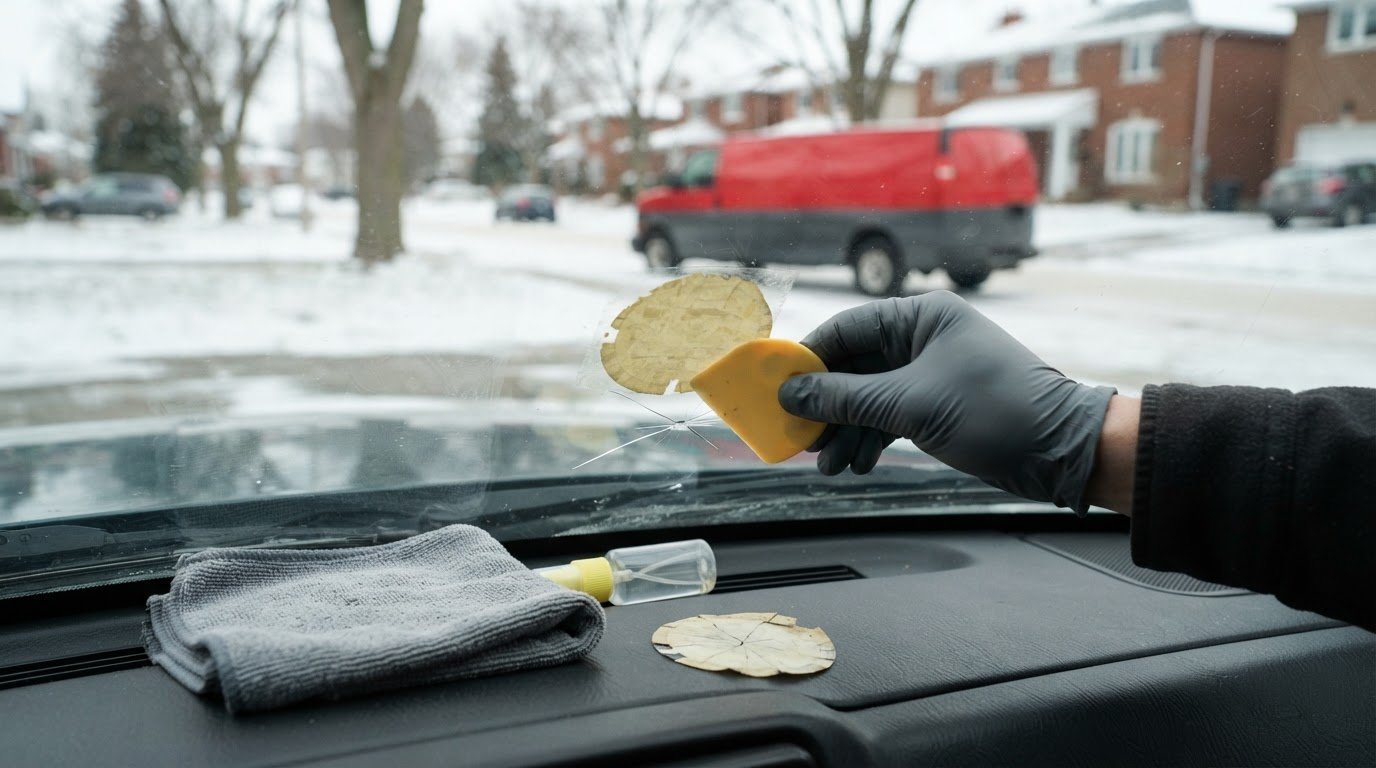
A brittle sticker can turn a quick cleanup into a risk if you force it off a fragile windshield. When removing stickers from old windshield glass, it’s understandable to worry about scratching the surface, spreading sticky residue or making a small chip worse, especially in cold weather.
You can start gently, but you don’t have to keep going if the sticker won’t lift or the glass looks damaged. This guide explains how to remove an old windshield sticker, clean leftover adhesive and choose a cautious first approach. It also covers signs that mean it’s safer to stop.
As the sticker comes away, look for chips or cracks that may have been hidden underneath. If removal reveals damage, or the windshield is already compromised, avoid putting more pressure on the glass. Auto Glass Ottawa has more than 15 years of experience serving Ottawa and Gatineau, with mobile glass service available when your windshield needs professional attention.
Key Takeaways
- Before starting, inspect the glass for chips, cracks, loose edges or existing scratches that could make removal risky.
- When removing stickers from old windshield glass, begin gently and avoid forcing a brittle sticker to lift.
- Clean leftover adhesive separately. Follow the cleaner’s label and your vehicle’s guidance before applying a product.
- Dry scraping, excessive force and sudden temperature changes can put extra stress on the glass.
- Stop if damage appears or worsens. A stubborn sticker is different from a windshield that may need repair or replacement.
Before Removing a Sticker from an Old Windshield, Check the Glass
An old sticker may tear as you peel it, leaving patches of adhesive behind. Before trying to lift a brittle corner, pause and inspect the windshield in good light. Look for chips, cracks, existing scratches and loose or damaged areas around the glass. Note where the sticker sits, too. A spot near the dashboard, trim or driver-assistance equipment needs extra care.
Start by inspecting and cleaning the glass before removal. Clearing away surface dirt helps you see the glass and reduces the chance of rubbing grit across it as you work. Stickers can be made from materials such as plastic or vinyl and may use different adhesives. The general background on Stickers on car windscreens helps explain why an old sticker may not peel away in one piece.
Is the sticker on the inside or outside of the windshield?
Location affects both your access and what’s around the sticker. An outside sticker may be close to painted bodywork, while an inside sticker can sit above the dashboard or beside trim. Before loosening it, protect nearby surfaces from drips. Keep tools and cleaning products away from anything they could mark or damage.
If the sticker is near a camera or sensor, check your vehicle manual for guidance on that area. Driver-assistance equipment may be mounted around the windshield. Don’t cover, press on or interfere with it while working.
When should you avoid starting a DIY removal?
Pause if you see a chip, crack, fragile-looking glass or damage near the sticker. Applying pressure before you understand what’s there can make the damage harder to assess. Residue can also obscure the glass, so note visible marks before you start rather than trying to judge them after scraping or rubbing.
Don’t proceed if the windshield changes as you work, the sticker resists gentle handling or you’re unsure whether a nearby camera or sensor could be affected. Stop rather than increasing pressure or switching to a tool or product you haven’t checked for the surface. When removing stickers from old windshield glass, a stubborn sticker is frustrating, but visible or worsening damage makes the task a safety concern.
How to Remove an Old Windshield Sticker: Start Gently
Once the glass is clean and you’ve checked for damage, resist the urge to scrape the sticker off. A brittle sticker may come away in pieces, but force can scratch the glass or put pressure on a vulnerable spot. Work gradually and reassess as soon as anything feels wrong.
Clean, soften, lift and reassess. First, remove loose dirt with a soft, clean cloth. If the vehicle manual doesn’t warn against moisture in that area, warm, soapy water may help soften the sticker. Dampen the sticker rather than pouring water over it, especially inside the vehicle, where liquid could run onto the dashboard or trim. Give it time to loosen, then try lifting a corner gently with your fingernail. If it resists, stop rather than pulling harder.
Can warm water or a hair dryer loosen an old sticker?
Warm, soapy water is a cautious first option for some stickers, but it isn’t suitable for every location or vehicle. Controlled warmth from a hair dryer may help loosen stubborn material, but avoid applying heat abruptly or to a cold windshield. Sudden temperature changes can stress glass. Don’t use warmth near cameras, sensors or sensitive interior surfaces unless your vehicle guidance says it’s appropriate.
Should you use a scraper or razor blade?
A scraper or razor isn’t automatically safe just because the windshield is glass. Used at the wrong angle or with too much pressure, a blade can scratch the surface. It may also slip and damage nearby trim or other surfaces. The right approach can depend on whether the sticker is inside or outside and on your vehicle’s instructions. If gentle lifting doesn’t work, don’t escalate to a blade or bear down harder.
Stop if the glass changes, a mark appears or the sticker won’t release with light pressure. If you uncover a chip or crack, avoid working over it. Safelite offers guidance on when to stop a windshield chip or crack from spreading. A damaged area should be assessed rather than treated as a stubborn sticker.
If removal exposes windshield damage, Auto Glass Ottawa provides windshield repair and mobile glass service in Ottawa and Gatineau. Explore mobile windshield repair as a convenient next step when the glass needs attention.
How to Remove Windshield Sticker Residue Without Smearing It
Peeling off the sticker and cleaning the adhesive are separate steps. Treat residue only after removing the sticker backing. If you rub while pieces of backing are still stuck, you can spread adhesive across a larger area and make the glass harder to clean.
What can you try when adhesive remains on the glass?
Start with a clean, soft cloth and a glass-cleaning product whose label says it is safe for automotive glass. Follow the product label and your vehicle’s guidance before applying anything, including a cleaner or adhesive remover. A product that works on glass may still be unsuitable for nearby tint, coatings, trim or interior materials.
Use a small amount on the cloth rather than saturating the area. Wipe the adhesive with light, controlled strokes, checking the cloth as you go. Switch to a clean section when it picks up residue so you don’t transfer sticky material back onto the windshield. Avoid abrasive pads and repeated dry rubbing. If the adhesive doesn’t come away easily, don’t scrub harder. Review the product instructions before trying another approach.
Adhesive removers vary, so don’t assume a household solvent is safe for a windshield or its surrounding materials. Check that the label permits the intended use, then follow its directions for application and removal. If the label or vehicle guidance doesn’t address the surface you’re treating, don’t apply the product there.
How do you protect the interior while cleaning residue?
For an inside sticker, place an absorbent cloth or similar barrier below the work area before using any liquid. This helps catch drips before they reach the dashboard. Keep cleaner away from vents, dashboard electronics, trim and visible cameras or sensors. If the sticker is close to driver-assistance equipment, consult the vehicle manual and avoid applying liquid around it.
Wipe up drips promptly, following the cleaner maker’s directions for cleanup. Don’t let liquid run into gaps or onto materials that the product label doesn’t identify as compatible. Once the residue is gone, use a clean cloth and the recommended glass-cleaning method to remove any remaining film. Then check the area from the driver’s seat to make sure your view is clear.
Take your time. When removing stickers from old windshield glass, checking the product and protecting nearby surfaces is safer than using a stronger solvent or more pressure to speed things up.

Windshield Sticker Removal Mistakes That Can Damage Glass
A glass surface isn’t automatically safe for every tool or chemical. Excessive force, dry scraping or an unlabelled product can create a new problem while you’re trying to remove an old sticker. Use only methods suitable for your vehicle, and stop if you can’t work gently or keep a tool under control.
- Don’t force a stuck edge. Pulling hard or pressing a tool against the glass can put unnecessary stress on a chipped or weakened area.
- Don’t scrape dry. A tool dragged across the glass can scratch it, particularly if dirt or grit is caught under the edge.
- Don’t guess with products. Avoid unlabelled cleaners and solvents. Check the product label and vehicle guidance before use.
- Don’t continue through damage. Stop if a crack appears, a chip worsens or you can’t control the tool safely.
Why can sudden heat or cold be a problem?
Glass can respond to temperature changes by expanding or contracting. If one area changes temperature much faster than another, that uneven change can place stress on the windshield. This doesn’t mean every temperature shift will cause damage, but it is a reason to avoid abrupt heating or cooling during sticker removal.
Never pour hot water onto cold or frozen glass. Don’t use a hair dryer or another heat source to rapidly warm a cold windshield, especially if you’ve noticed a chip or crack. If the glass is very cold, wait until conditions are more gradual before attempting removal. Avoid using ice or other sudden cooling methods, too.
What should you avoid around sensors, tint, and trim?
Before working near the windshield’s upper edge, identify any camera or sensor areas. These systems help driver-assistance features detect the road, so don’t cover, press on or apply liquids near them. If your vehicle has equipment mounted around the glass, follow the vehicle-specific instructions rather than assuming a general sticker-removal method is suitable.
Take similar care around tint, coatings, seals and interior materials. A scraper that seems manageable on bare glass could catch an edge or mark an adjacent surface. A chemical intended for glass may not be suitable for tint or trim. Don’t apply a product or tool near these areas unless the product label and vehicle guidance support that use.
Stop at the first sign of change. If a chip spreads, a crack appears or worsens, or a tool starts slipping, put it down and don’t keep testing the glass. Auto Glass Ottawa provides windshield repair and replacement, with mobile service in Ottawa and Gatineau. If removal reveals damage, explore windshield repair options rather than continuing DIY work.
When to Stop DIY Removal and Get Windshield Help
A sticker that won’t lift is frustrating, but it isn’t automatically a glass problem. New or worsening damage is different. If you spot a chip or crack, or the windshield changes as you work, stop rather than applying more pressure. Sticker removal may reveal a mark that was already there, so seeing it during the task doesn’t prove that removal caused it.
What signs mean you should stop and inspect the windshield?
Pause the removal if you notice any of the following:
- A chip, crack or scratch that wasn’t visible before you began.
- A chip or crack that appears to spread or change as you work.
- A tool that slips, catches or needs force to move the sticker.
- A sticker positioned close to a camera or sensor that you can’t safely work around.
Don’t try to diagnose a mark by scraping or pressing it. A stubborn sticker may simply need a different approach, but visible glass damage calls for a separate assessment. A technician can determine whether the windshield needs repair or replacement. You can’t reliably make that decision from the sticker’s resistance alone.
How can mobile auto glass service help in Ottawa and Gatineau?
If sticker removal exposes damage, or you’re not comfortable continuing, Auto Glass Ottawa provides mobile auto glass service at your home or workplace in Ottawa and Gatineau. Certified technicians bring more than 15 years of experience serving the area and can assess windshield concerns without requiring a trip to a shop.
Stopping DIY work is a sensible choice when the glass may be compromised. Avoid further scraping or pressure and arrange professional attention so the windshield can be assessed with its safety and structural role in mind.
If you’ve found damage or would rather leave the glass work to a professional, Get help with your windshield in Ottawa or Gatineau.
Remove the Sticker Carefully, Then Protect Your Windshield
When removing stickers from old windshield glass, patience matters more than force. Inspect the area first, loosen the sticker gently, then clean remaining adhesive separately with products suitable for your vehicle. Avoid dry scraping, sudden temperature changes and unlabelled cleaners.
If a chip or crack appears, worsens or becomes harder to assess, stop. A stubborn sticker is a DIY challenge; damaged glass needs professional attention. Don’t keep scraping or pressing on a windshield when you’re unsure of its condition.
Auto Glass Ottawa provides free mobile auto glass service in Ottawa and Gatineau, so you can get help at home or work with less disruption. Certified technicians bring more than 15 years of experience serving the area, and workmanship and leakage are backed by a lifetime warranty.
If your windshield needs attention, get mobile auto glass help in Ottawa or Gatineau. Take a careful first step, then leave glass concerns to experienced technicians when it’s safer to stop.
Frequently Asked Questions
Can I remove an old sticker from my windshield with a razor blade?
A razor blade can scratch the glass or damage nearby surfaces if it slips, catches an edge or is pressed too hard. Don’t assume it’s safe just because the windshield is glass. Check your vehicle’s guidance and consider the sticker’s location, especially if it’s near trim, tint or a camera. If the sticker resists gentle lifting, stop rather than pressing harder or using a blade without clear guidance.
How do I remove sticky residue from a windshield?
Remove the sticker backing first, then clean the adhesive separately so you don’t smear it over a wider area. Use a clean, soft cloth and a glass-cleaning product whose label supports your intended use. Wipe lightly, switching to a clean part of the cloth as it picks up residue. Avoid abrasive pads and dry scrubbing. Check vehicle guidance before using an adhesive remover, particularly near tint, coatings or trim.
Is it safe to use a hair dryer on a cold windshield?
A hair dryer can warm the glass unevenly, so avoid using it to rapidly heat a cold or frozen windshield. Sudden temperature changes can stress glass, particularly if a chip or crack is present. Don’t pour hot water on cold glass, either. If you can’t loosen the sticker with a gentle approach, pause instead of increasing the heat. Follow vehicle-specific guidance around cameras, sensors and nearby interior surfaces.
Can rubbing alcohol or adhesive remover damage windshield glass?
It depends on the product and the surfaces around the glass. A cleaner may be unsuitable for tint, coatings, seals, dashboard materials or trim, even if it’s intended for glass. Read the product label and your vehicle guidance before applying rubbing alcohol or an adhesive remover. Don’t use unlabelled solvents or pour cleaner directly onto the windshield. If compatibility is unclear, avoid applying it near the sticker.
What should I do if a windshield sticker will not peel off?
Stop pulling if the sticker resists gentle lifting. Forcing it may damage nearby surfaces or put pressure on glass that already has a chip or crack. Check the area and your vehicle guidance, then consider a gentle loosening method suitable for that sticker location. Don’t escalate to dry scraping, stronger chemicals or extra heat without clear product and vehicle instructions. If the glass changes or the method feels unsafe, stop.
How do I remove an inspection or parking sticker from inside a windshield?
First check your vehicle manual, especially if the sticker is near a camera or sensor. Protect the dashboard and trim with an absorbent cloth before using any liquid. Try gently loosening an edge, and avoid pressing a scraper toward the glass or nearby equipment. Once the sticker backing is off, clean remaining adhesive with a compatible product applied as directed. Stop if you see damage or the sticker won’t release gently.
When should I stop trying to remove a sticker and get auto glass help?
Stop if you notice a chip, crack, new scratch or a change in existing damage, or if a tool slips, requires force or approaches a sensor. A stubborn sticker is different from a windshield safety concern, and remote advice can’t determine whether damage needs repair or replacement. Auto Glass Ottawa provides mobile auto glass service in Ottawa and Gatineau, with certified technicians and more than 15 years serving the area.