
Mobile Auto Glass Repair Timing for Ottawa Drivers
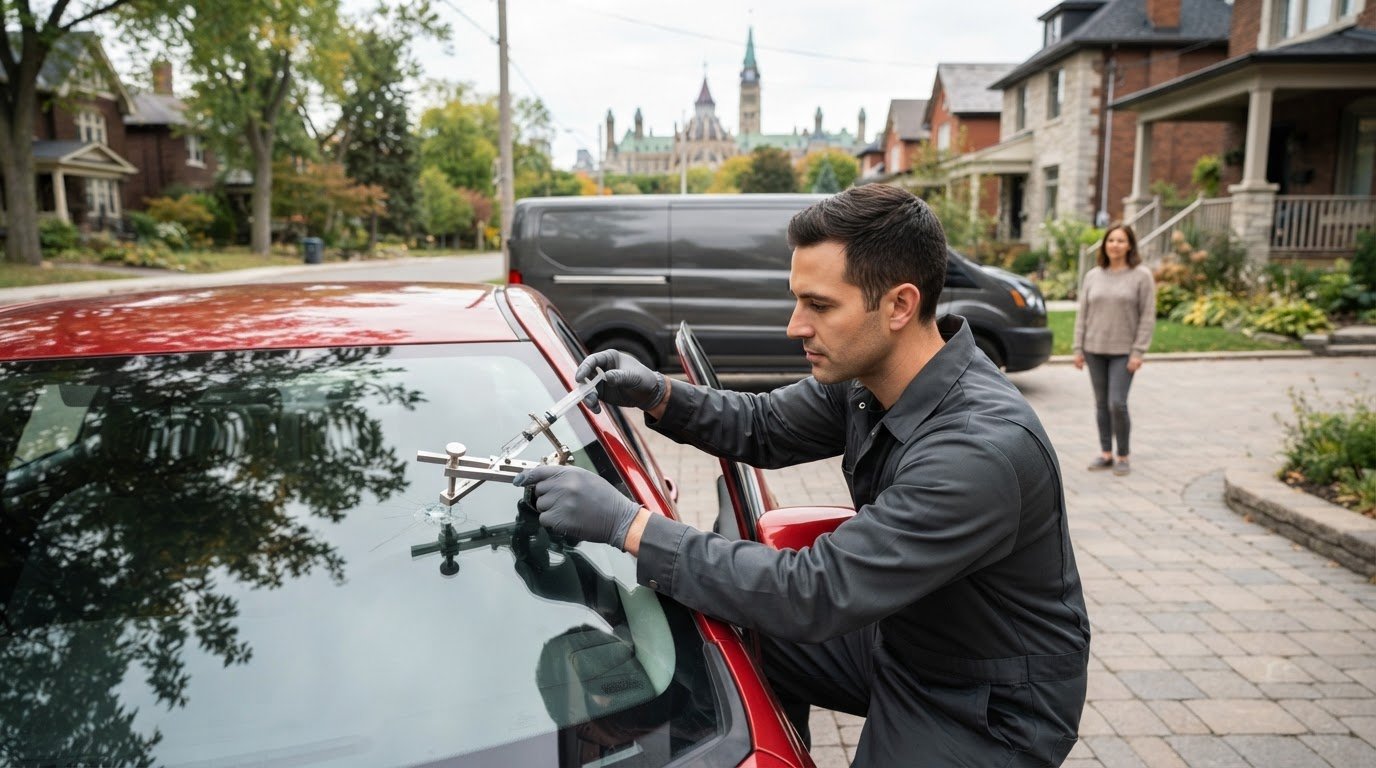
A damaged windshield doesn’t always mean a trip to a repair shop. A mobile windshield chip repair usually takes just under an hour from start to finish. For Ottawa drivers, knowing what to expect during a mobile windshield repair means understanding that a technician first assesses the damage, then repairs suitable chips with resin and checks the result.
It’s reasonable to want a clear idea of the timing and whether you can keep driving safely. The right approach depends on the damage: a repairable chip is handled differently from a crack or damage that calls for replacement.
This guide explains what happens during an on-site visit, what can affect repair or installation quality, and how weather and vehicle sensors may shape the work. You’ll also learn why windshield replacement comes with specific safe-drive instructions, so you can plan around the repair with less disruption.
Key Takeaways
- Mobile service can bring glass work to your home or workplace, while severe weather, limited space or a specialized vehicle may make an in-shop setting more suitable.
- After windshield replacement, follow the technician’s safe-drive instructions; adhesive curing conditions affect when the vehicle is ready to drive.
- If your vehicle has a windshield-mounted camera or sensors, ask how recalibration is handled after replacement so driver-assistance features can work as intended.
- Small chip repairs usually take just under an hour, but damage size, location and condition help determine whether repair is suitable.
- Before the visit, choose a safe, accessible spot for the vehicle and note where the damage is so the technician can assess it efficiently.
What is Mobile Auto Glass Repair?
Mobile auto glass repair brings a technician to your vehicle instead of requiring a shop visit. Knowing what to expect during a mobile windshield repair starts with the assessment: the technician checks the damage and determines whether repair or replacement is appropriate.
Mobile Versus In-Shop Service
With mobile service, a technician assesses the glass at your home, workplace or another suitable parking location. In-shop service takes the vehicle to a repair facility, where a controlled work area can help when weather or limited space affects the job. Consider the damage, available workspace and whether replacement or repair is needed. Damage that affects visibility may require replacement rather than a chip repair.
Convenience of On-Site Service
An on-site appointment can save you a separate trip and let you carry on with work or home routines while the vehicle is serviced. Choose a safe, accessible parking spot with room around the vehicle for the technician to work. If a side window is broken, mention loose glass when arranging service so the visit can account for the damage and glass debris cleanup.
For Ottawa drivers, mobile units serve Ottawa, Kanata, Nepean, Barrhaven and Orleans. They operate daily from 6:00 a.m. to 8:00 p.m. and can perform replacements in residential driveways and parking lots. The location needs enough working space, and weather can affect whether an outdoor appointment is suitable.
Auto Glass Ottawa offers same-day appointments and same-day service for mobile repairs and replacements in Ottawa. Timing depends on the damage and glass required. When booking, share the vehicle’s make, model and year, along with the damage location. These details help identify the right glass and whether the work involves repair or replacement.
The technician’s first step is to inspect the windshield damage and decide whether resin repair is suitable. A small chip outside the driver’s direct line of sight may be repairable if it hasn’t spread or reached the glass edge. Damage that compromises visibility, reaches an edge or affects the inner glass layer can point to replacement. These factors matter because the windshield contributes to structural support and clear vision.
Windshield replacement may also involve calibration if the vehicle has a camera or sensor mounted near the glass. Calibration checks that these driver-assistance systems are correctly aligned after installation. Tell the technician about dashboard warnings or driver-assistance features when arranging service. This helps account for calibration as part of the work, rather than treating glass installation as the only step.
For insurance, review your policy’s glass provisions and ask your insurer how your coverage applies to the damage. Policy terms determine whether chip repair is covered and whether a deductible applies. There is no single deductible rule for every Ontario driver. Keep claim details available if you plan to use coverage. A clear idea of what to expect during a mobile windshield repair includes understanding both the glass work and any insurance steps.
Adhesive curing and safe drive-away guidance
Chip repair and full windshield replacement use different materials and have different safe-drive instructions. Before driving, know whether the appointment involved resin repair or a bonded windshield installation.
Resin Application and Curing
For a repairable chip, the technician applies resin into the damaged area. The resin fills the impact point and helps restore the glass’s strength while limiting further spread. Once the resin has cured, the technician checks the repair to assess the result. The repair process typically takes 20 to 45 minutes, depending on the damage severity.
Repair time and safe-drive guidance are different things. Ask the technician whether the resin has cured and whether any care instructions apply before driving. Don’t assume a repaired chip and a replacement windshield are ready on the same schedule. The work performed determines which instructions matter.
Good information helps drivers plan the rest of the day. If you have an advanced driver-assistance system, or ADAS, tell the technician about it during the appointment. Cameras or sensors near the windshield may need calibration after replacement. Calibration checks that these systems are accurately aligned, but it doesn’t replace the adhesive’s curing time or safe-drive instructions.
Conditions for Adhesive Curing
During replacement, adhesive bonds the windshield to the vehicle frame. Urethane adhesive is used for this bonded installation. Curing is the process that allows the adhesive to harden and strengthen the bond. Temperature and weather can affect curing, so follow the technician’s safe-drive guidance for your specific installation.
Mobile work takes place at the vehicle’s location, so outdoor conditions matter. Cold temperatures, precipitation or a site exposed to the elements can affect the work and its timing. The technician considers the adhesive and conditions before providing safe-drive guidance. If the parking area is sheltered, mention it when arranging the appointment; the actual work area still needs to suit the installation.
After installation, don’t drive until the technician says the vehicle is ready. A waiting time of about one to two hours is recommended after replacement, but follow the instructions given for your adhesive and the conditions during the appointment. A general wait time found elsewhere may not match your installation.
Before leaving, confirm when you can drive and whether the vehicle needs any temporary care. If calibration is part of the job, confirm it has been completed before relying on the related driver-assistance features. These are separate checks: the adhesive bond needs time to cure, while calibration addresses sensor alignment. Following both steps supports a safe return to driving.
Technician qualifications and installation quality
Technician training matters because windshield installation affects visibility and the vehicle’s structural support. In Canada, vehicle glazing must meet the ANSI Z26 Safety Standard (1996), subject to specified exceptions, according to the Department of Justice Canada. This glazing standard does not describe every step of a repair.
For a windshield repair or replacement, look for a certified technician trained to follow provincial and industry safety standards. Certification and training indicate preparation for the work, but installation quality also depends on careful handling, correct fit and attention to vehicle-specific features. If your vehicle has an advanced driver-assistance system, ask how the camera or sensors will be handled during replacement.
At the appointment, the technician assesses the damage and the glass around it. A suitable chip can be repaired with resin, while damage in the driver’s line of sight or reaching the windshield edge may call for replacement. The assessment helps avoid treating a weakened windshield as a minor surface issue.
For replacement, the technician removes the damaged windshield and prepares the frame for the new glass. The new windshield must fit correctly and bond to the vehicle frame. That bond supports the factory seal and contributes to structural support. A poor fit or incomplete bond can affect performance, so removal and installation require care.
Vehicle details matter. The replacement glass must suit the make and model, and any brackets or camera mounts need to align with their intended positions. If the windshield houses a camera, calibration may be needed after installation. Calibration checks whether the camera is aligned for the driver-assistance system, rather than simply confirming that the glass looks properly placed.
Ask about the wipers before the technician finishes. The windshield wiper arms may need to be removed to access the glass, then reinstalled in the correct positions. The technician should check that the arms sit securely and the blades move across the windshield without obstruction. After the appointment, watch for uneven wiping or unusual contact with the new glass.
Before driving, review the technician’s instructions about adhesive curing and calibration. These are separate parts of the job: the adhesive bonds the glass, while calibration addresses sensor alignment. Confirm when the vehicle is safe to drive and that the driver-assistance system is ready to use. Clear answers help you understand what was completed and what to expect on your first drive.

Weather and glass availability considerations
Weather, temperature and damage type can affect the timing of mobile auto glass work. A technician needs suitable conditions and enough space to complete the repair or replacement safely. Mobile service brings the work to your vehicle, but an exposed driveway during poor weather can limit the available options.
The main risks are unsuitable working conditions and damage that makes the vehicle unsafe to drive. A windshield crack that reaches the edge, spreads across the driver’s line of sight or weakens the glass calls for prompt attention. Driving with impaired visibility can make it harder to see hazards. If the windshield is badly damaged, don’t assume it’s safe to drive to a shop.
For mobile auto glass repair, the technician assesses the damage, determines whether repair or replacement is appropriate, then completes the work on-site when conditions allow. The vehicle’s make, model and glass features help identify the correct replacement part. A windshield with a camera mount, for example, involves specific fit and calibration requirements.
Weather is a practical limit, not just a scheduling detail. Rain or extreme temperatures can affect outdoor installation and adhesive curing. A repair shop’s controlled work area can reduce weather interference, making in-shop service preferable during extreme conditions. A specialized vehicle or a parking area without safe working space can also make mobile service unsuitable for that appointment.
Glass availability can shape the next step. The exact part must match the vehicle, and features such as a sensor bracket affect which windshield fits. Sharing the vehicle details and describing the damage during booking helps identify the required glass. If the correct part isn’t ready for the appointment, replacement timing depends on obtaining the right component, not simply dispatching a mobile unit.
When choosing mobile auto glass assistance, focus on the work the vehicle needs. Look for certified technicians, training in installation procedures and a clear plan for ADAS calibration after windshield replacement. Calibration checks whether a camera or sensor is aligned after the glass is installed. Ask how the completed work and any required calibration will be reviewed before driving.
Insurance claims are a separate consideration from weather and glass supply. Your policy may cover windshield damage, but its terms determine eligible repairs and whether a deductible applies. Keep your policy information and claim details available if you’re using coverage. Assistance with claims can help organize the required steps, while the insurer’s policy remains the basis for coverage decisions.
Before confirming a mobile appointment, choose a safe, level parking space with room around the vehicle. Move it under cover when possible, and tell the technician about tight access, a steep driveway or severe damage. If weather or space prevents safe work, an indoor setting may be more suitable. The priority is a sound installation, not completing the job in unsuitable conditions.
Windshield chip repair duration
A mobile windshield chip repair usually takes just under an hour from start to finish. In Canada, repair is generally considered when damage is small, outside the driver’s direct line of sight, hasn’t spread and doesn’t compromise the windshield edge.
Rock-Chip Repair Duration
A stone chip repair involves assessing the impact, preparing the area, applying resin and checking the result. The full visit usually takes just under an hour, though the damage’s size and condition affect the work. A single, contained chip can require less attention than several impact points or a chip with cracks spreading outward.
Give the technician a clear view of each mark, including chips near the windshield edge. Dirt or moisture in the impact can affect the repair, so avoid probing the glass or applying household products. The technician determines whether resin repair is suitable or replacement is needed.
Mobile Repair Duration
The just-under-an-hour estimate applies to most mobile windshield chip repairs, from arrival and assessment through repair and inspection. A mobile appointment also includes practical steps such as positioning the vehicle and preparing the damaged area. If the technician finds damage that requires replacement, the work changes and the repair estimate no longer describes the visit.
Plan to be available while the technician inspects the damage and explains the result. If more than one chip needs attention, point out each mark before work begins. A crack near the driver’s line of sight, damage reaching the edge or a chip that has spread can change the recommendation from repair to replacement.
Repair time and safe-drive time are different considerations. After applying resin, the technician checks the repair once it has cured. Ask whether any instructions apply before driving, especially if the damage was near the edge or in your view. For a replacement, follow the separate adhesive curing instructions rather than assuming chip-repair timing applies.
Damage can change while you wait for service. Road vibration and temperature changes may cause a small chip to spread, turning a repairable mark into damage that requires windshield replacement. Avoid pressing on the glass, and keep the damaged area clear of debris. If the chip obstructs your view, treat that as a safety concern, not just a question of appointment length.
For a convenient on-site visit, share your vehicle details and describe the number and location of the chips when arranging service. Mention whether the damage has grown since it occurred. These details help the technician prepare to assess repair or replacement and give you a clearer idea of the work involved. Arrange a windshield chip repair if you need a technician to assess the damage.
Auto Glass Ottawa: Windshield Repair
Auto Glass Ottawa helps Ottawa drivers decide whether windshield damage calls for repair or replacement. If a chip is suitable for repair, the free mobile service brings a certified technician to your home or workplace. If the damage requires a new windshield, the team handles replacement and the required ADAS camera recalibration.
Certified technicians use quality materials, and workmanship and leakage are covered by a lifetime warranty. Insurance Claim Assistance can help you with claim-related steps, while your policy determines coverage and any deductible. Mobile service is available throughout Ottawa and Gatineau, helping reduce the disruption of arranging glass work around your day.
Contact Auto Glass Ottawa to discuss your windshield damage and arrange the next step.
Make a Clear Plan for Your Windshield
Knowing what to expect during a mobile windshield repair can help you prepare. Before arranging service, note where the damage is, whether it has changed, and whether your windshield has a camera or sensor. These details help clarify what your vehicle may need.
Auto Glass Ottawa provides windshield repair, windshield replacement and free mobile service. If you’re unsure whether the damage is suitable for repair, describe what you see and arrange an assessment. For replacement, keep the technician’s drive-away instructions handy and follow them before returning to the road.
A timely assessment can help you decide with safety and visibility in mind. Choose a convenient place for the vehicle and have its make and model details ready. That gives the service conversation a practical starting point without adding guesswork to an already inconvenient situation.
Contact Auto Glass Ottawa to discuss your windshield damage and take the next step with confidence.
Frequently Asked Questions
What happens during a mobile windshield repair appointment?
The technician examines the damage, checks its location and decides whether repair or replacement is appropriate. Knowing what to expect during a mobile windshield repair also means being ready to describe when the damage happened and whether it has changed. Point out any dashboard warnings or windshield-mounted cameras. Before the appointment, remove items that block access to the windshield and have your vehicle details ready.
How long does a mobile windshield chip or crack repair take?
Most mobile chip repairs take just under an hour from start to finish. A crack may need a closer assessment, since its length, location and spread affect whether resin repair is suitable. If the damage calls for replacement, chip-repair timing no longer applies. Tell the technician if the mark has grown or if you’ve noticed more than one impact point since it first appeared.
What weather and temperature conditions are suitable for mobile windshield repair?
Mobile work needs a safe area where the technician can access the glass and complete the job. Rain and extreme temperatures can affect scheduling or adhesive curing during replacement. Extreme cold can also affect resin curing. A sheltered, level parking spot can provide a workable setting, but severe weather or limited space may make an indoor service area preferable.
What should I do before the mobile windshield technician arrives?
Park on a level surface and leave enough room around the vehicle for the technician to work. Share the make, model and year, then describe where the chip or crack sits. For example, mention if it’s close to the windshield edge or within your line of sight. Keep the damaged area clear, and don’t press on it or apply household products before the assessment.
How soon can I drive after a windshield repair?
Follow the technician’s instructions before driving, because the repair type determines the next step. For a chip repair, ask whether the resin has cured and the vehicle is ready. Replacement involves bonded glass, so adhesive curing instructions apply instead. Don’t assume the same waiting guidance covers both jobs. If the appointment includes camera recalibration, confirm it is complete before relying on driver-assistance features.
How do mobile windshield repair services differ from shop repairs?
Mobile service brings the work to where your vehicle is parked, while shop repairs happen inside a repair facility. To understand what to expect during a mobile windshield repair, consider whether your parking area offers safe access and enough room. Auto Glass Ottawa’s free mobile service can save you a separate trip, and a sheltered work area can help during severe weather or when the vehicle needs specialized work.