
Car Wash After Windshield Replacement: The Essential Ottawa Aftercare Guide (2026)
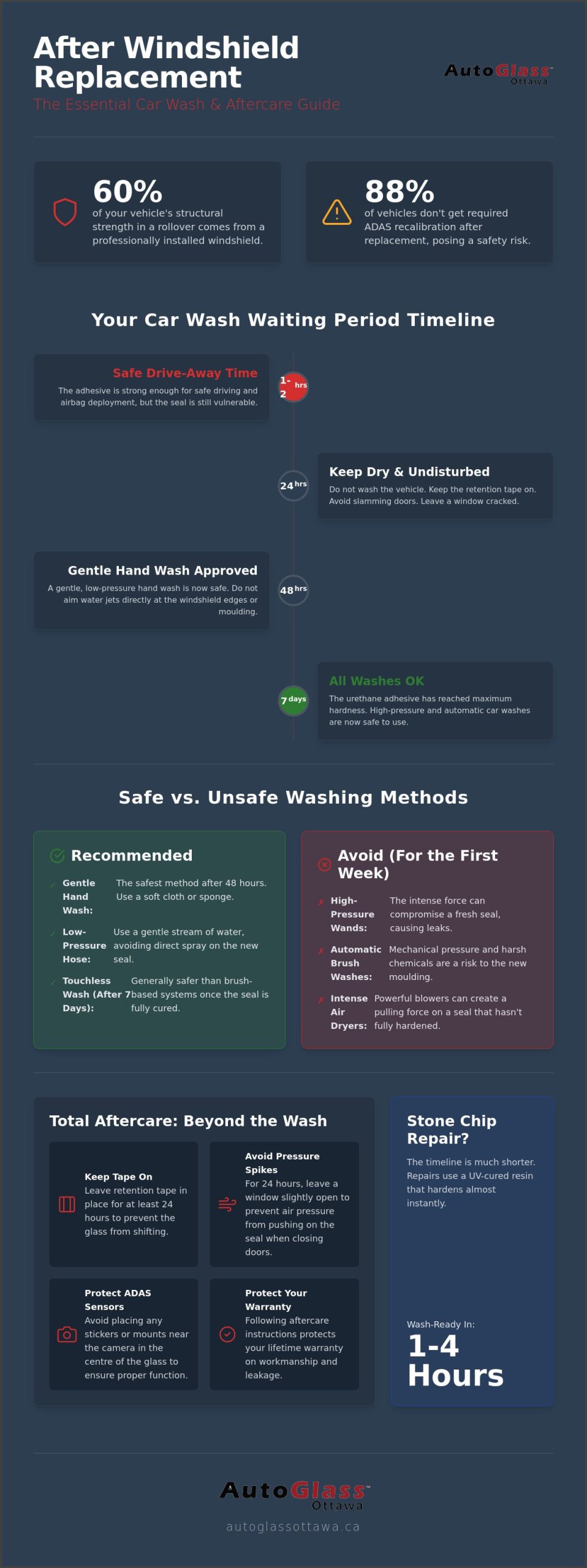
Did you know that a professionally installed windshield provides up to 60% of your vehicle’s structural strength in a rollover accident? It’s a critical safety component, yet 88% of vehicles requiring ADAS recalibration after a replacement don’t receive it, leaving drivers at risk. If you’re wondering about the best time for a car wash after windshield replacement, you’re likely feeling a mix of pride in your clear view and anxiety about ruining the fresh seal. You don’t want to risk leaks or shift the glass before the adhesive has fully cured.
Timing is everything. We understand that you want your car looking its best without compromising your safety or your lifetime warranty. This guide provides the exact timeline you need to follow to protect your investment and the sensors in the centre of your glass. You’ll realize which washing methods are safe during the first 72 hours, how to avoid common mistakes that lead to leaks, and why the Ottawa climate plays a role in your curing time.
Key Takeaways
- Learn the critical difference between safe drive-away time and the recommended 24 to 48-hour wait before your first car wash after windshield replacement.
- Discover why hand washing is the safest method to protect your new seal and which high-pressure automatic washes you should avoid during the first week.
- Understand how to protect sensitive ADAS cameras and sensors from water damage or misalignment during the cleaning process.
- Identify why retention tape must stay in place for at least 24 hours to prevent the glass from shifting while the adhesive sets.
- Find out how following professional aftercare instructions protects your lifetime warranty on workmanship and leakage.
The Golden Rule: How Long to Wait for a Car Wash After Windshield Replacement
If you just had your glass swapped by a professional, your first instinct might be to clean off the installation residue or handprints. Stop. Patience is the most important tool in your aftercare kit. The standard industry benchmark for a full car wash after windshield replacement is 24 to 48 hours. This window allows the high-strength urethane adhesive to form a permanent, weather-tight bond with your vehicle’s frame. If you rush this process, you risk compromising the structural integrity of the entire installation.
Understanding The Science of Curing is essential for every Ottawa driver. There is a significant difference between “Safe Drive-Away Time” (SDAT) and “Wash-Ready Time.” SDAT is the minimum period, often just one or two hours, required for the adhesive to become strong enough to hold the glass in place during a collision or airbag deployment. However, being safe to drive doesn’t mean the seal is ready for the mechanical stress of a car wash. Exposing the urethane to water or high-pressure jets too early can cause the adhesive to shift, thin out, or develop micro-gaps. This leads to persistent leaks, annoying wind noise, and potential rust around the frame over time.
Timeline for Full Windshield Replacement
Your patience during the first week determines the longevity of your new glass. During the first 24 hours, you must keep the car completely dry and avoid all mechanical pressure. By the 48-hour mark, a low-pressure hand wash is generally safe, provided you don’t aim the hose directly at the edges. You should wait a full 7 days before using high-pressure automatic washes, as the intense dryers can actually “pull” on a seal that hasn’t reached maximum hardness.
Timeline for Stone Chip and Crack Repairs
If you only received a repair rather than a full replacement, your timeline is much shorter. Professional stone chip repairs use a specialized UV resin that hardens almost instantly under a curing lamp. Because this process doesn’t rely on the slow chemical bond of urethane, you can typically realize a clean car much sooner. Most repairs are wash-ready within 1 to 4 hours. You should still avoid high-pressure wands directly on the impact point for the first day to ensure the resin remains perfectly flush with the glass surface.
The Science of Curing: Why Water and Pressure Are Your New Windshield’s Enemies
The black adhesive used to secure your glass is a high-viscosity urethane. It is not just glue; it is a structural polymer designed to meet rigid safety standards. Unlike traditional adhesives that dry through evaporation, auto glass urethane is a moisture-cure product. This means it requires humidity from the air to trigger a chemical reaction that transforms it from a paste into a rock-hard solid. This chemical process is why a car wash after windshield replacement requires such careful timing. If you introduce liquid water or heavy pressure before this reaction is complete, you can actually halt the curing process or wash away the primer that bonds the glass to the metal.
One of the biggest traps for drivers is the “skinning” effect. Within an hour, the exterior of the adhesive bead develops a rubbery skin that feels dry to the touch. This leads many to believe the car is ready for a scrub. However, the adhesive underneath remains soft and pliable for much longer. This period is known as the safe drive-away time, a critical safety window where the glass is secure enough for travel but not yet stable enough for mechanical stress. If you’re unsure about the status of your seal, our team at Auto Glass Ottawa can provide a specific timeline based on the materials used during your installation.
The Role of Air Pressure and Vibration
Water isn’t the only threat to your fresh seal. Air pressure plays a massive role in those first 24 hours. When you drive at high speeds, the wind rushing over your vehicle creates a vacuum effect that pulls outward on the glass. Even more dangerous are “air spikes.” If you slam a car door with all the windows rolled up, the sudden pressure increase inside the cabin can literally push the windshield out of its frame by a few millimetres. We recommend leaving your windows cracked open by at least an inch for the first day to give that pressure an escape route.
Ottawa Weather and Your Cure Time
Living in the Ottawa Valley means our curing conditions change with the seasons. During our humid summers, the moisture in the air acts as a natural catalyst, often speeding up the chemical bond. Conversely, our dry winters can be a challenge. When the air is bone-dry in January, the urethane cures much slower. You must also be wary of road salt and slush. These corrosive elements can degrade the adhesive if they seep into the seal before it has fully hardened. If you are getting a replacement during a cold snap, plan to extend your wait time before visiting a wash bay.
Comparing Car Wash Methods: What is Safe for Your New Glass?
Once you’ve passed the initial 24-hour curing window, you’ll still need to choose your cleaning method wisely. A car wash after windshield replacement isn’t a one-size-fits-all situation. The physical stress and chemical exposure vary significantly between a driveway bucket wash and an industrial tunnel. Understanding these differences is the best way to protect your lifetime warranty and ensure your seal stays watertight for years to come. We’ve seen many installations compromised simply because a driver chose the wrong type of wash too early.
Hand washing remains the gold standard for post-replacement care. It gives you total control over water temperature, pressure, and proximity to the new seal. You can gently clean the glass while avoiding the perimeter where the urethane is still reaching its maximum hardness. If you’re doing this at home, use a dedicated automotive soap and plenty of water to lubricate the surface, ensuring you don’t put unnecessary weight or pressure on the glass itself.
Friction or “brush” washes are the highest risk for new installations. You should avoid these for at least seven days. The heavy, spinning curtains and brushes exert significant lateral force on your vehicle. If the adhesive hasn’t fully set, this mechanical slapping can actually shift the windshield by a fraction of a millimetre. That tiny movement is all it takes to create a permanent whistle at high speeds or a slow leak during the next Ottawa rainstorm. Touchless washes are a better alternative, but even they require caution due to the sheer force of their water jets and air dryers.
The Danger of High-Pressure Jets
Chemical Concerns: Soaps and Wax
The chemicals used in express car washes are often highly alkaline to strip away road grime quickly. These harsh detergents can prematurely degrade the surface of uncured urethane. Additionally, avoid “Hot Wax” or “Rain-X” cycles during the first week. These waxes are designed to be hydrophobic and can seep under the retention tape, interfering with the bond between the adhesive and the glass. For your first wash, stick to pH-neutral soaps and a soft microfibre mitt to keep the area clean without causing chemical stress or bond failure.
Total Aftercare: Beyond the Car Wash
Successful aftercare involves more than just watching the clock. While your primary concern might be the timing of your first car wash after windshield replacement, several other factors influence how well that new glass integrates with your vehicle. From the retention tape on your roof to the sensitive sensors behind your rearview mirror, every detail matters. Taking these extra precautions ensures you don’t accidentally compromise the bond or your safety systems during those first few critical days.
Wait at least 48 hours before cleaning the interior side of your new windshield. Pressing on the glass from the inside is often more dangerous than external pressure because it pushes the adhesive away from the frame’s pinch weld. For parking, seek out shade but avoid trees that drop sap or heavy seeds. Sap is highly acidic and can etch into the glass or bond with the fresh seal, making it nearly impossible to remove without causing a leak. If you have questions about your specific vehicle’s needs, contact our Ottawa team for expert advice.
Managing Retention Tape and Sealants
That strip of tape across the top of your windshield serves a vital purpose. It prevents the glass from shifting or “sliding” down the frame while the urethane is in its most pliable state. Leave this tape in place for at least 24 hours. When you remove it, pull it slowly and away from the seal to avoid lifting the edge of the glass. If you notice a small gap or hear a whistling sound during your first drive, contact us immediately. These are signs the seal didn’t set perfectly. You should also avoid applying rain-repellent coatings for at least seven days, as these chemicals can seep into the fresh bond and weaken it.
Protecting Your ADAS Recalibration
Modern vehicles rely on a suite of Advanced Driver Assistance Systems (ADAS) typically housed behind the upper portion of your windshield. If your car has lane-keep assist or automatic emergency braking, the camera’s view must be perfectly clear. Water spots or residue from a premature wash can trigger system errors or even cause the safety features to shut down entirely. Precision is vital; any mechanical stress on the sensor housing during cleaning can misalign the camera. For a safe and accurate setup, visit our page on ADAS camera recalibration Ottawa to see how we verify these systems after every installation.
Why Professional Installation in Ottawa Makes a Difference
The safety of your vehicle depends entirely on the quality of the bond between your glass and the frame. While knowing the right time for a car wash after windshield replacement is crucial, that knowledge only matters if the initial installation was flawless. At Auto Glass Ottawa, we don’t just swap glass. We restore your vehicle’s structural integrity. Every replacement we perform comes with a lifetime warranty on workmanship and leakage. This ensures you can drive and wash your car with total peace of mind. Our certified technicians use the highest industry standards to guarantee a perfect bond every time. We realize that your family’s safety is on the line, so we never cut corners on materials or technique.
Our process is designed to remove the stress from your schedule. We offer 100% free mobile service across the entire Ottawa and Gatineau region. This allows you to have your windshield replaced while you work or relax at home. It is a massive advantage for the curing process. Instead of driving your car back from a shop and exposing the fresh seal to wind pressure, your vehicle stays stationary. It sits in your driveway while the urethane begins its essential moisture-cure reaction. This significantly reduces the risk of the glass shifting or the seal failing. We also provide comprehensive insurance claim assistance to handle the administrative burden for you, making the entire experience seamless.
Our Commitment to Your Safety
The Ottawa climate presents unique challenges for automotive adhesives. We use premium-grade urethanes specifically engineered to handle the extreme temperature swings of the Canadian capital. Whether it’s a humid July afternoon in the Valley or a frigid January morning, our materials are chosen for their reliability. With over 15 years of local experience, we understand the specific road conditions and environmental factors that Ottawa drivers face. This local expertise ensures your installation is weather-tight and durable. If you’re navigating an insurance claim, our insurance windshield replacement Ottawa guide offers a clear roadmap to getting your glass fixed without the headache.
Next Steps: Booking Your Service
Getting back on the road safely starts with a simple conversation. You can receive a same-day quote for your vehicle by providing us with a few key details:
- Vehicle make, model, and year
- Your current insurance provider
- Presence of ADAS features like lane-departure warnings
- Your preferred location for mobile service
To prepare for our mobile team, ensure there is enough space around your vehicle. Keep the area clear of debris. Once the job is done, we’ll walk you through the specific timeline for your first car wash after windshield replacement based on that day’s weather and humidity levels. We want you to feel confident in your new glass. Contact Auto Glass Ottawa today for a free mobile quote!
Drive with Confidence and Clarity
A new windshield is a major safety investment. By respecting the 24 to 48-hour window before your first car wash after windshield replacement, you protect the structural bond that keeps you safe on the road. Prioritize hand washing during that first week to avoid the mechanical stress of high-pressure systems. You should also ensure your vehicle’s ADAS cameras are professionally calibrated to maintain the accuracy of your safety features. These small steps in aftercare prevent leaks, wind noise, and system failures down the line.
Our team simplifies the entire process by bringing the shop to you. With 100% free mobile service in Ottawa and Gatineau, our certified ADAS recalibration specialists handle the technical details while you stay home. Every installation is backed by our lifetime warranty on workmanship and leakage, so you know the job is done right the first time. If you need expert care for your vehicle, Get a Free Mobile Quote for Your Windshield Replacement in Ottawa. We’re here to help you get back on the road with total peace of mind.
Frequently Asked Questions
Can I wash my car 24 hours after windshield replacement?
You can safely hand wash your vehicle 24 hours after a replacement, provided you use low water pressure and avoid the edges. However, you should wait at least 48 hours for any commercial wash. The adhesive needs this time to reach a stable state where it can resist mechanical force without shifting or thinning out.
Is it okay to go through a touchless car wash with a new windshield?
You should wait at least 48 to 72 hours before using a touchless car wash. Even though brushes don’t touch the glass, the concentrated water jets and high-velocity air dryers can force water past the fresh seal. For the best car wash after windshield replacement experience, stick to a gentle garden hose at home for the first few days.
What happens if it rains right after my windshield is replaced?
Don’t panic if it rains shortly after your installation. Most professional-grade urethanes are moisture-cured, meaning they actually use humidity to trigger the hardening process. A light rain won’t hurt the seal, but you should avoid driving in heavy downpours or through deep puddles that could splash large volumes of water against the fresh adhesive during the first few hours.
When can I remove the yellow tape from my new windshield?
You should leave the retention tape on your vehicle for a full 24 hours. This tape is not just for show; it holds the glass in its precise position while the urethane is still pliable. Removing it too early, especially if you drive on bumpy Ottawa roads, can cause the windshield to sag or create a tiny gap that leads to persistent wind noise.
Can I use a pressure washer on my car after getting a new windshield?
Avoid using a pressure washer directly on the new glass for at least seven days. The high PSI from a power washer can easily cut into the curing adhesive or force moisture into the bond. If you must wash your car, keep the nozzle at least one metre away from the glass and use a wide spray pattern rather than a concentrated jet.
Why do I need to leave my windows cracked open after glass replacement?
Leaving your windows cracked open by an inch for the first 24 hours prevents internal air pressure from damaging the seal. When you close a car door with the windows fully shut, the air inside has nowhere to go and creates an “air spike.” This sudden pressure can push the uncured windshield outward, creating a permanent leak or a whistle at high speeds.
Will washing my car too soon void my windshield warranty?
Yes, failing to follow specific aftercare instructions can jeopardize your coverage. Our lifetime warranty covers workmanship and leakage, but it assumes the driver hasn’t subjected the new glass to extreme conditions too early. Attempting a high-pressure car wash after windshield replacement before the recommended 48-hour window is a common cause of avoidable seal failures that may not be covered.
Can I clean the inside of my new windshield immediately?
No, you should wait at least 48 hours before cleaning the interior of the glass. Applying pressure from the inside is actually more dangerous than cleaning the outside during the early curing stages. When you push on the interior glass, you are pushing the windshield away from the frame’s pinch weld, which can easily create gaps in the soft adhesive.