
Windshield Care: Why Sealant Curing Time Matters
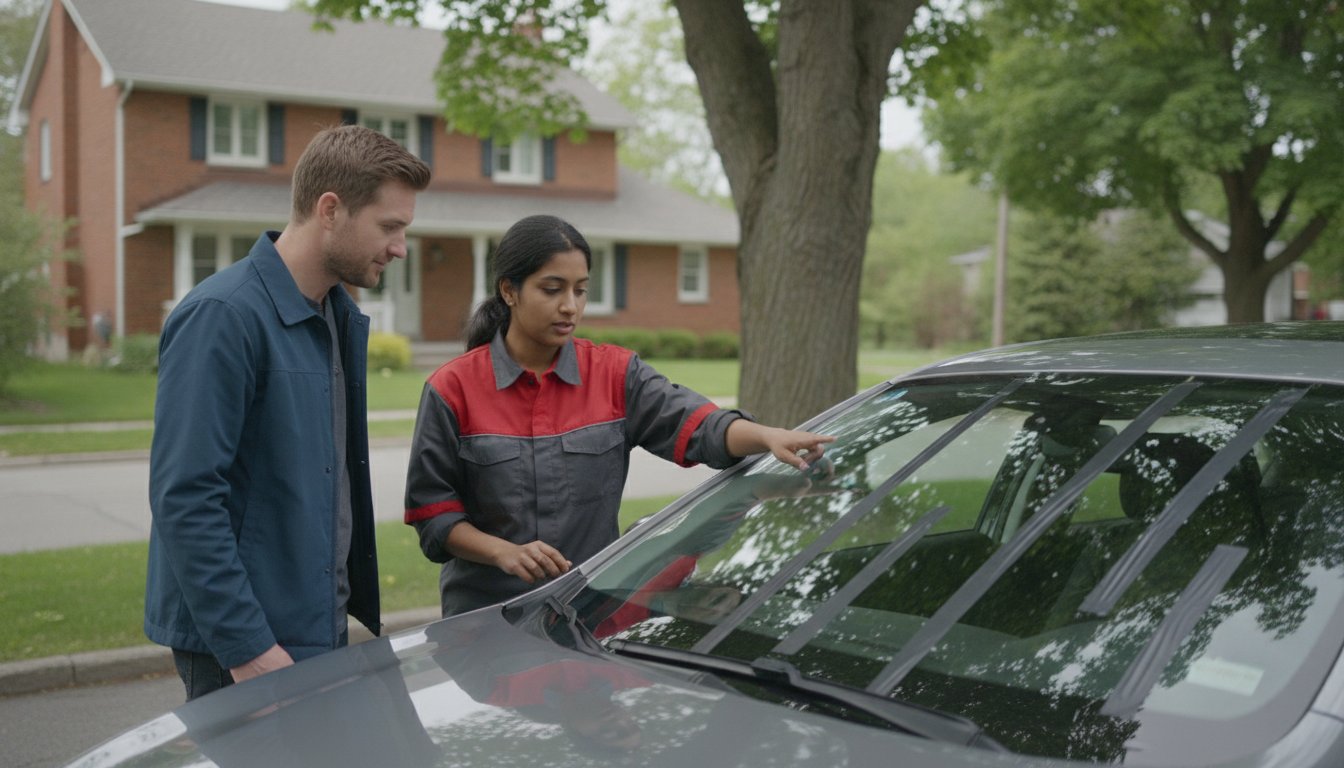
Your windshield is far more than just a piece of glass; it is a vital safety component that provides up to 60 percent of your vehicle’s structural integrity during a rollover accident. If the adhesive hasn’t had enough time to bond properly to the frame, that protection is completely compromised. We know it’s frustrating to wait when you have a busy schedule, but rushing back onto the road can be a dangerous mistake. This Post-Replacement Care Guide: Why Sealant Curing Time Matters will help you understand the science of adhesive bonding to ensure your car remains a safe haven for you and your family.
You might notice the sealant looks dry within minutes, but there is a significant difference between a surface that is dry to the touch and one that is fully cured. We’ll walk you through the essential timeline for safe driving and explain how Ottawa’s specific climate impacts your wait time. You’ll also learn which everyday activities, like visiting a high-pressure car wash or slamming your doors, you must avoid to protect your investment. By the end of this guide, you’ll have the confidence to know exactly when your vehicle is truly ready for the road again.
Key Takeaways
- Learn why the sealant is a critical structural component that supports your vehicle’s roof and ensures proper airbag deployment during a collision.
- Use this Post-Replacement Care Guide: Why Sealant Curing Time Matters to distinguish between being “dry to the touch” and meeting the official Safe Drive Away Time (SDAT).
- Discover how Ottawa’s specific humidity and temperature levels act as the “fuel” for the chemical curing process of modern automotive adhesives.
- Master the essential 48-hour checklist, including why you must leave your side windows slightly cracked and keep the retention tape in place.
- Understand how choosing certified technicians ensures the use of high-quality materials that back your safety with a lifetime warranty.
Beyond the Glass: Why Your Sealant is a Critical Safety Feature
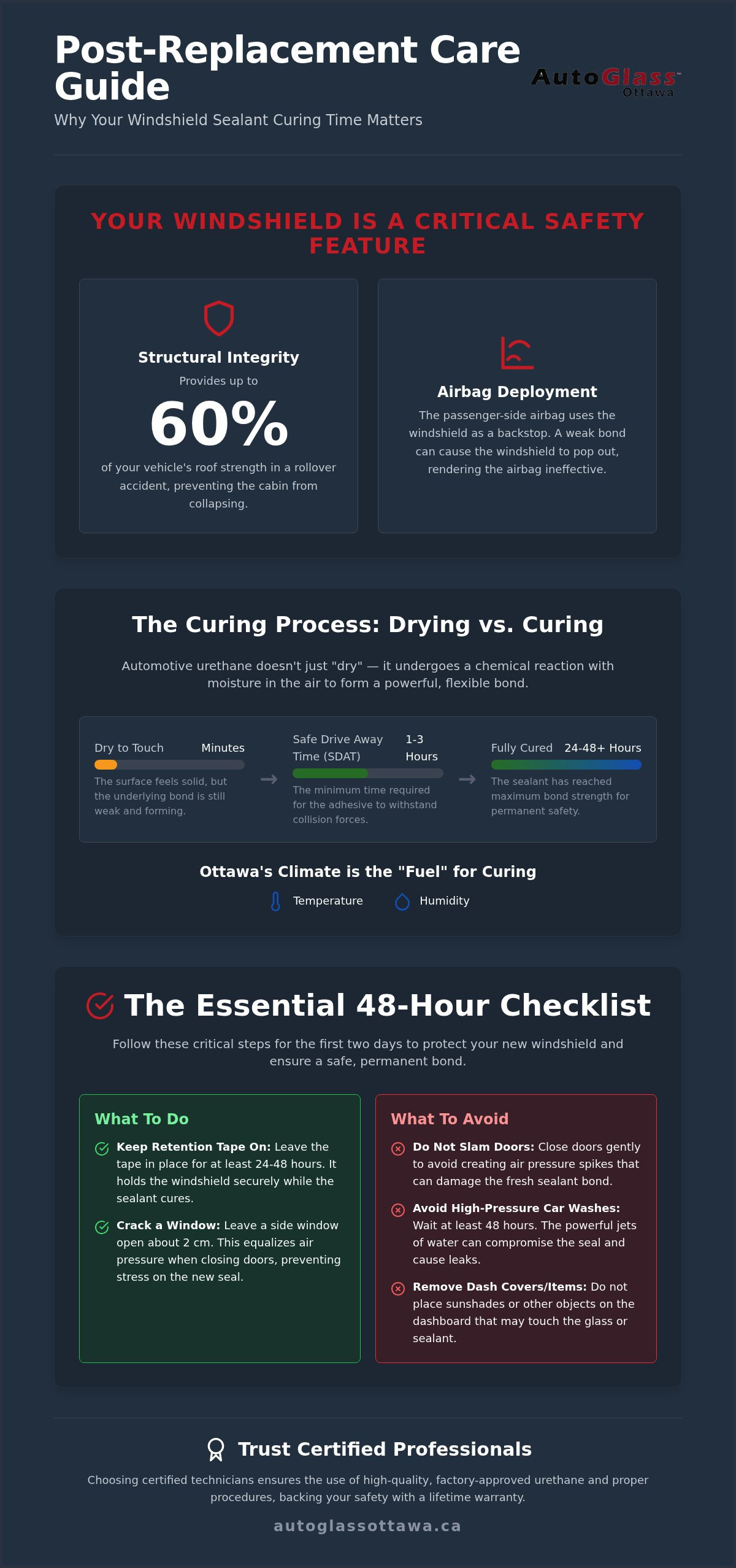
Many drivers view their windshield as a simple window designed to block the wind and rain. In reality, it is a sophisticated structural component that is vital to your vehicle’s safety system. In the event of a rollover accident, the windshield provides up to 60 percent of the roof’s structural integrity. It prevents the cabin from crushing inward, protecting everyone inside. This is why our Post-Replacement Care Guide: Why Sealant Curing Time Matters is so essential; if the bond isn’t perfect, that protection disappears. Understanding Windshield safety features helps you realize that the glass and the sealant work together as a single, life-saving unit.
The process that secures your glass isn’t just “drying” through evaporation like a coat of paint. It is a complex chemical reaction. Automotive urethane reacts with the humidity in the air to transform from a thick paste into a high-strength, flexible rubber. Because this is a chemical bond, it takes time to reach the specific strength required to withstand a collision. Rushing this process doesn’t just risk a leak; it compromises the entire safety cage of your car.
Urethane vs. Silicone: The Structural Difference
While silicone is excellent for sealing a bathtub or a kitchen sink, it has no place in a windshield replacement. Silicone lacks the tensile strength required to hold a heavy piece of glass in place during an impact. Professional technicians use specialized automotive urethane because it’s engineered to meet strict crash-test standards. This material creates a permanent bond between the glass and the vehicle’s metal frame.
- Tensile Strength: Urethane can withstand thousands of kilograms of pressure per square inch.
- Modulus Ratings: Every car has a specific “modulus” requirement, which refers to how much the sealant can stretch or flex. We match the urethane to your vehicle’s original specs to maintain factory safety levels.
- Vibration Dampening: The sealant must be rigid enough for safety but flexible enough to absorb road vibrations without cracking the glass.
The Role of the Sealant in Airbag Deployment
You might be surprised to learn that your passenger-side airbag relies entirely on the windshield to function. When an airbag deploys, it fires upward at incredible speeds and uses the glass as a backstop to bounce toward the passenger. This puts an immense amount of sudden pressure on the sealant. If the adhesive hasn’t had enough time to cure, the force of the airbag can literally pop the windshield out of the frame. If the glass fails, the airbag has nothing to push against, leaving the passenger without protection. Respecting the curing time ensures that your safety systems perform exactly as they were designed to in an emergency.
Understanding Safe Drive Away Time (SDAT) in Canada
Safe Drive Away Time (SDAT) is the minimum amount of time your vehicle must remain stationary after a windshield installation to ensure the adhesive can withstand the force of a collision. It isn’t just a suggestion; it’s a critical safety metric. Many drivers mistakenly believe that if the black sealant looks solid or feels tacky, the car is ready for the road. This is a dangerous misconception. While modern high-viscosity urethanes allow for much faster drive-away times than the adhesives used a decade ago, the bond still needs a specific window to reach its structural peak. Our Post-Replacement Care Guide: Why Sealant Curing Time Matters highlights that driving before this window closes can lead to a catastrophic failure in an accident.
Technicians determine your specific SDAT by evaluating the type of adhesive used and the current environmental conditions. Industry standards, such as those defined for Minimum Drive-Away Time, ensure that the glass will stay in place even if the airbags deploy. Most high-quality urethanes used in professional shops today require between one and three hours of stationary time before the vehicle is considered safe to operate. If you want to ensure your vehicle meets these rigorous standards, you should always choose a certified professional for your replacement.
The Difference Between Drying and Curing
Drying and curing are two entirely different processes. Drying usually refers to the evaporation of a solvent, but automotive urethane is a moisture-cured adhesive. This means it requires humidity from the Ottawa air to trigger a chemical reaction that hardens the material. Within minutes, the sealant will “skin over,” creating a thin outer layer that looks dry. However, the “full-depth” cure happens from the outside in and takes much longer. SDAT is the point where the bond is strong enough to meet federal safety standards, even if the core of the sealant is still technically curing.
Structural Integrity Benchmarks
The first 60 minutes after installation are the most volatile for the new seal. During this time, the glass is essentially floating on a bed of thick paste. If you drive too soon, especially on rough Ottawa roads or over speed bumps, the glass can shift or sag. This slight movement can create microscopic gaps that lead to wind noise or water leaks later. While you can drive after the SDAT window, the seal doesn’t realize its full strength for at least 24 hours. During this initial day, the bond is still maturing, making it vital to avoid unnecessary stress on the glass.
How the Ottawa Climate Impacts Curing Speed
Ottawa’s weather is notoriously unpredictable. From sweltering July afternoons to the bone-chilling depths of January, our local climate plays a massive role in how your new windshield bonds to your car. If you’ve ever wondered why your technician asks about your parking situation or checks the weather forecast, it’s because humidity is the literal “fuel” for the chemical reaction in automotive urethane. Without moisture in the air, the sealant simply won’t harden. This is a key reason why this Post-Replacement Care Guide: Why Sealant Curing Time Matters is so vital for local drivers. Dry air actually slows the process down, while extreme temperatures can change how the adhesive behaves during those first critical hours.
Professional technicians must constantly adjust their approach based on the National Capital Region’s daily conditions. Whether we are performing a replacement in a shop or through our mobile service, we choose specific adhesives that meet the Federal Motor Vehicle Safety Standard for your specific environment. Accountable mobile technicians will even check for incoming rain or extreme temperature shifts before starting a job, as these factors directly dictate when your car will be safe to drive again.
Curing in Ottawa’s Humid Summers
During a typical Ottawa summer, humidity levels often soar above 80 percent. While this moisture accelerates the initial “skinning” of the sealant, it can be a double-edged sword. High heat can cause the air trapped near the sealant to expand, leading to “outgassing” or small bubbles that compromise the seal’s integrity. To avoid this, don’t park your car in direct sunlight immediately after service. Finding a shaded spot or a ventilated garage allows the temperature to remain stable while the humidity does its work. This prevents the outer layer from drying too fast while the inner core remains soft.
Winter Replacement: The Cold Weather Challenge
Winter presents the opposite problem. Freezing temperatures can cause the chemical reaction in standard urethanes to stall or stop entirely. To combat this, we use specialized “high-viscosity” or all-weather sealants designed to cure in temperatures as low as -18°C. One common mistake owners make is turning their defrost to maximum heat as soon as they get in the car. The extreme temperature difference between the freezing exterior and the scorching interior air can stress the uncured bond. It’s better to warm the cabin gradually to keep the pressure even and protect the new seal.
Our mobile service is specifically designed to handle these environmental variables. By performing the replacement at your home or office, we ensure the car stays in its final parking spot throughout the entire curing window. This eliminates the risk of driving on bumpy roads while the adhesive is still vulnerable. If you’re concerned about how today’s weather might affect your repair, you can book a mobile service to ensure your car cures in the safest possible environment.
The 48-Hour Checklist: Essential Post-Replacement Care
The first 48 hours are the most critical for your new windshield. While your car is safe to drive after the initial Safe Drive Away Time (SDAT) we discussed earlier, the adhesive is still reaching its full structural strength. This Post-Replacement Care Guide: Why Sealant Curing Time Matters outlines the simple steps you must take to ensure the seal remains airtight and secure. Following these rules protects the bond while it’s still vulnerable to physical stress.
One of the most visible parts of this care is the retention tape. This specialized blue tape helps hold the glass in its precise position while the urethane begins to harden. Don’t remove it for at least 24 hours. It might not look perfect, but it prevents the glass from shifting due to gravity or minor road vibrations. It acts as a temporary brace while the chemical bond matures.
The “Pressure Spike” Phenomenon
Closing a car door with all the windows rolled up creates a massive burst of air pressure inside the cabin. In a car with a fresh windshield, this pressure has only one place to go: out through the uncured sealant. This “pressure spike” can actually blow a hole in the wet adhesive, creating a permanent leak or a whistling sound that only appears at highway speeds. It’s a common cause of post-installation issues that are entirely preventable.
The solution is simple. Leave one of your side windows cracked by about an inch for the first 24 hours. This allows the air to escape harmlessly, protecting the integrity of the seal. It’s a small habit that prevents a major headache and ensures the urethane settles perfectly into the frame.
Cleaning and Maintenance Guidelines
Rain is generally not a problem for modern urethanes. In fact, humidity helps the curing process. However, high-pressure car washes are a different story. The concentrated jets of water used in automatic washes can force moisture behind the sealant or even shift the glass before it has fully bonded to the vehicle frame.
- Wait 48 hours before visiting an automatic or high-pressure car wash.
- Avoid chemical cleaners or rain-repellent treatments on the new glass for the first two days.
- Drive gently. Avoid the deep potholes common on some Ottawa streets and try not to slam your doors.
If you notice any unusual wind noise or water droplets inside the cabin during the first week, it could indicate a minor gap in the seal. Because we provide a lifetime warranty on workmanship, you should reach out to us immediately to have a technician inspect the bond. Taking these precautions ensures your vehicle remains safe and structurally sound for years to come.
Choosing the Right Partner for Safe Windshield Replacement
Selecting a reputable service provider is the final, most important step in your windshield replacement journey. While the science of adhesives is complex, your choice of technician should be simple. Certified professionals have the training to select the specific urethane that matches your vehicle’s structural requirements and the current Ottawa weather. This Post-Replacement Care Guide: Why Sealant Curing Time Matters serves as a reminder that the quality of the materials is just as vital as the skill of the person applying them. When you work with experts, you aren’t just getting new glass; you’re restoring the safety cage of your vehicle.
One of the greatest advantages of our mobile service is that it allows your car to cure exactly where it’s parked. By serving the Ottawa and Gatineau regions with 100 percent free mobile service, we eliminate the need for you to drive the vehicle immediately after the glass is set. This removes the risk of hitting a pothole or experiencing a pressure spike before the sealant has reached its initial Safe Drive Away Time. It’s the most convenient way to ensure your car stays stationary during that critical first hour.
The Value of a Lifetime Warranty
A lifetime warranty is more than just a piece of paper; it’s a testament to the quality of the sealant used. When you choose Auto Glass Ottawa, you receive a lifetime warranty on workmanship and leakage. This coverage protects you against stress cracks, wind noise, and water intrusion for as long as you own the vehicle. If a technician is willing to stand behind their work for the life of the car, it’s a clear sign they’ve used high-grade adhesives and followed strict curing protocols. Our team brings over 15 years of experience to every job, ensuring that your safety is never left to chance.
ADAS Recalibration: The Final Step
Modern vehicles are equipped with Advanced Driver-Assistance Systems (ADAS) that rely on cameras mounted directly behind the windshield. These systems control vital safety features like lane-keep assist and automatic emergency braking. If the windshield isn’t installed with precision, or if it shifts during the curing process, these cameras can become misaligned by even a fraction of a millimetre. A camera that is off by a tiny margin can fail to detect an obstacle or steer you out of your lane.
Driving a car with an uncalibrated camera is a significant safety risk. We integrate ADAS camera recalibration into the replacement process to ensure your technology is as secure as your glass. By handling both the structural bond and the technical calibration, we provide a comprehensive solution that returns your car to factory safety standards. This holistic approach is why this Post-Replacement Care Guide: Why Sealant Curing Time Matters emphasizes the need for professional oversight from start to finish. You can trust that your car is truly road-ready before you ever turn the key.
Prioritizing Your Safety with Professional Care
Your windshield is a foundational element of your vehicle’s safety system, and the sealant is the bond that holds that protection together. By following this Post-Replacement Care Guide: Why Sealant Curing Time Matters, you ensure that your car remains structurally sound and that your safety features, like airbags and ADAS cameras, function exactly as intended. Respecting the curing window and managing Ottawa’s unique climate variables are small steps that prevent significant long-term issues like leaks or compromised roof integrity.
We make the entire process seamless by bringing our expertise directly to your home or office. Our 100 percent free mobile service allows your vehicle to cure in its final parking spot, while our certified technicians handle everything from the initial bond to precision ADAS recalibration. Every job is backed by a lifetime warranty on all workmanship and leakage, giving you total peace of mind. If you’re ready for a service that values your safety as much as your time, book your free mobile windshield replacement in Ottawa or Gatineau today! We look forward to getting you back on the road with confidence.
Frequently Asked Questions
How long after a windshield replacement can I drive my car?
You should generally wait between one and three hours before driving your vehicle. This timeframe is known as the Safe Drive Away Time (SDAT) and is determined by the specific high-viscosity urethane our technicians use. While the glass might look secure, the adhesive needs this window to reach the structural strength required to support your roof and airbags in a collision.
Can I wash my car immediately after getting a new windshield?
You must wait at least 48 hours before taking your vehicle through an automatic car wash. The high-pressure jets and heavy mechanical brushes can shift the glass or force water through the uncured sealant. If you need to clean your car sooner, a gentle hand wash is acceptable as long as you avoid spraying water directly at the new seal around the edges of the glass.
Why did the technician leave the side windows slightly open?
Leaving a side window cracked by about an inch prevents a “pressure spike” from damaging your new seal. When you close a car door, the sudden burst of air pressure needs a way to escape. If the windows are fully closed, that pressure can blow a hole right through the fresh, wet sealant. This simple precaution is a key part of our Post-Replacement Care Guide: Why Sealant Curing Time Matters.
What happens if it rains right after my windshield is replaced?
Rain is actually beneficial for the curing process because automotive urethane reacts with moisture to harden. You don’t need to worry if a light shower starts shortly after your replacement is finished. However, you should still avoid driving in heavy storms or through deep puddles during the first few hours to ensure the glass doesn’t shift from the impact of heavy rain or road vibrations.
Is it safe to go through a car wash if I have a new windshield?
It is not safe to use a car wash for the first two days after a replacement. High-pressure water can compromise the bond before it has fully matured. Even touchless car washes use powerful jets that can create leaks in a fresh seal. Stick to the 48-hour rule to protect your lifetime warranty and ensure the structural integrity of your vehicle remains intact.
Why is there tape on the top of my new windshield, and when can I remove it?
The blue retention tape is designed to hold your windshield in its exact position while the adhesive begins to set. You should leave this tape in place for at least 24 hours. Removing it too early can allow the glass to sag or shift due to gravity, which might lead to wind noise or water leaks later on. It’s a temporary brace for long-term safety.
What are the signs that my windshield sealant didn’t cure properly?
Common signs of an improper cure include a whistling sound at highway speeds or water droplets appearing inside the cabin during rain. You might also notice a visible gap between the glass and the frame or a “shifted” appearance where the glass doesn’t look centred. If you experience any of these issues, contact us immediately so a certified technician can inspect the bond.
Does the cold Ottawa weather affect how long I have to wait to drive?
Yes, cold temperatures in Ottawa can significantly slow down the chemical reaction required for the sealant to cure. To manage this, we use specialized all-weather urethanes that are engineered to perform in temperatures as low as -18°C. Our Post-Replacement Care Guide: Why Sealant Curing Time Matters explains that even with these materials, we may recommend a slightly longer stationary period during the winter months to ensure total safety.