
Professional Commercial Van Window Replacement in Ottawa (2026)
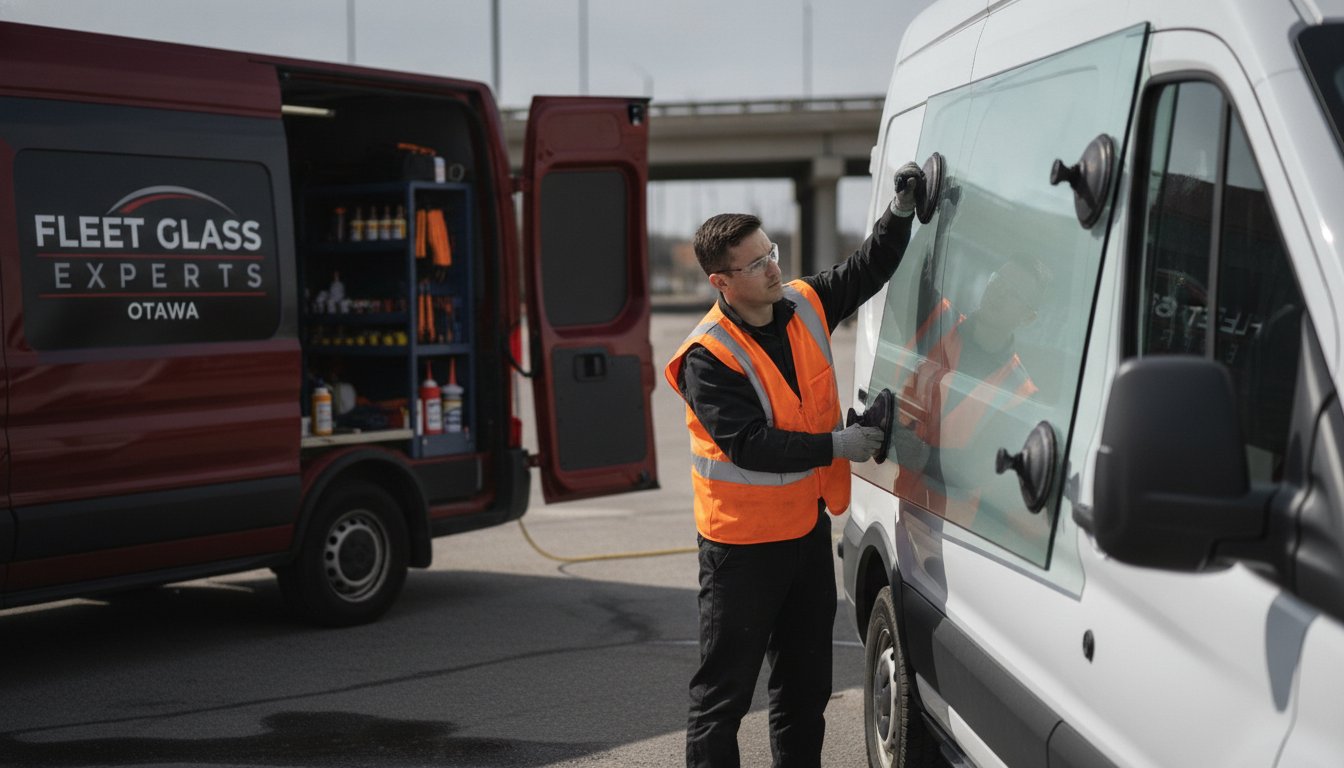
A cracked van window isn’t just an eyesore; it’s a business problem that starts costing you money the moment your driver calls it in. If you’re searching for commercial van window replacement in Ottawa, you already know the real question on your mind isn’t about glass types or adhesive cure times. It’s this: how fast can I get my vehicle back on the road without losing a day of revenue?
That frustration is completely valid. A grounded van means missed deliveries, delayed jobs, and a schedule that unravels quickly. What most fleet operators don’t realise, though, is that commercial van glass is more than a visibility issue. On modern vehicles, it’s a structural component tied directly to driver safety and the ADAS sensors that keep your team protected on Ottawa roads.
This guide walks you through everything you need to know about commercial van glass replacement: how to assess the damage, what ADAS recalibration actually involves, how to handle your commercial insurance claim without the headache, and what to look for in a qualified mobile service provider. The goal is simple: get you informed, get your van fixed, and get your business moving again.
Key Takeaways
- A cracked van window affects more than visibility — modern commercial vans rely on glass as a structural component, and a grounded vehicle can unravel your entire Ottawa delivery or service schedule within hours.
- Professional commercial van window replacement in Ottawa involves ADAS recalibration for many newer fleet vans, a step that is non-negotiable for driver safety and legal compliance on Ontario roads.
- Free mobile replacement service means a certified technician comes directly to your job site, depot, or home — so your van gets fixed without pulling your team off the road to visit a shop.
- Navigating a commercial insurance claim for van glass is more straightforward than most fleet operators expect, especially when your provider handles direct billing and paperwork on your behalf.
- Choosing a provider with a lifetime warranty on workmanship and leakage protects your long-term investment in a high-use commercial vehicle — not just the repair itself.
The Critical Role of Van Glass in Business Operations
Most fleet operators think of a cracked window as a maintenance issue. It’s actually a business continuity issue. The moment that glass is compromised, you’re looking at a cascade of problems: a driver who legally can’t take the vehicle out, a schedule that starts slipping, and clients who notice when your van shows up looking like it’s had a rough week. Understanding what van glass actually does, structurally and operationally, changes how quickly you act on the damage.
Commercial van glass isn’t passive. On modern cargo and passenger vans, the windshield contributes directly to the vehicle’s roof integrity. In a rollover, a properly bonded windshield helps prevent cabin collapse. That’s not a minor technical footnote; it’s the difference between a driver walking away and a serious injury claim. Side and rear glass panels also form part of the sealed structure that protects cargo from weather and theft. When any of that glass is compromised, the entire system is weaker.
Ontario’s visibility requirements add another layer of urgency. Cargo vans and passenger-configured commercial vehicles are subject to different standards under the Highway Traffic Act, and a crack that crosses the driver’s primary sightline isn’t something an MTO inspection will overlook. If your driver is pulled over with obstructed glass, the vehicle can be placed out of service on the spot. That’s a grounded van, a missed run, and a fine, all at once.
Knowing when a chip becomes a replacement-level problem saves you from making a costly call in either direction. As a general guide:
- Chips smaller than a loonie that sit outside the driver’s direct sightline are typically repairable.
- Cracks longer than 15 cm, or any crack that reaches the edge of the glass, require full replacement.
- Damage directly in the driver’s line of vision, even a small chip, warrants replacement because repairs can leave optical distortion.
- Multiple chips or a spider-web pattern indicate structural weakness; repair isn’t sufficient.
Ottawa’s climate makes this assessment more time-sensitive than in milder regions. Temperature swings between a January cold snap and a heated van interior create significant thermal stress. A chip that looks stable on Monday morning can propagate into a full crack by Wednesday afternoon. Waiting to assess the damage is rarely the right call here.
Safety Risks of Damaged Van Windows
A cracked windshield directly affects passenger-side airbag deployment. In most modern vans, the airbag is engineered to use the windshield as a backstop during inflation. If the glass is weakened, it can give way rather than redirect the airbag toward the occupant, reducing its effectiveness precisely when it’s needed most. Beyond airbag function, driving a commercial vehicle in Ontario with a view-obstructing crack is an offence under the Highway Traffic Act, and the liability exposure for a fleet operator after an at-fault accident with damaged glass is substantial. Proper commercial van window replacement in Ottawa isn’t optional when safety standards are at stake.
Protecting Your Cargo and Reputation
Damaged side or rear glass is an open invitation. A compromised window is faster to breach than an intact one, and opportunistic theft from commercial vans is a real risk at Ottawa job sites and overnight parking areas. Beyond security, there’s the straightforward matter of how your vehicle looks when it pulls up to a client’s property. A cracked window signals deferred maintenance, and for clients making decisions about who they trust with their home or business, first impressions carry weight. Professional installation also ensures a proper weatherproof seal, protecting tools, equipment, and materials from Ottawa’s rain and snow. That seal matters as much as the glass itself.
Understanding Commercial Van Glass: More Than Just a Windshield
Commercial vans carry more glass than most fleet operators realise, and each panel serves a distinct purpose. The windshield handles structural integrity and sensor housing. Side and sliding door glass manages daily access and thermal regulation. Rear door glass protects cargo and supports defrosting in Ottawa winters. Partition and vent windows address ventilation and driver separation in specialized configurations. When any of these panels fails, the replacement isn’t a one-size-fits-all job, and treating it like one is where problems start.
Glass type matters as much as fit. Side door and sliding door panels are typically tempered, meaning they’re heat-treated to shatter into small, blunt fragments on impact rather than sharp shards. Some higher-spec commercial configurations use laminated side glass, which holds together on impact the way a windshield does, offering added security against break-ins at job sites. If your fleet operates in areas where opportunistic vehicle theft is a concern, it’s worth confirming which type your van currently uses and whether an upgrade is an option during replacement.
Rear door glass deserves specific attention for Ottawa operations. Integrated defrosting elements are embedded directly in the glass, and if those elements are severed during an improper installation, you’re left with a rear window that fogs over the moment temperatures drop. That’s not a minor inconvenience when your driver is reversing a loaded cargo van in February. Proper commercial van window replacement in Ottawa means preserving or replicating those heating circuits exactly, not just swapping the panel.
Partition glass and vent windows are the most overlooked category. Cargo vans configured for temperature-sensitive deliveries or trades work often rely on vent windows to manage airflow without opening a full door. These panels are frequently custom-cut and aren’t stocked as standard parts, which means lead times can vary. Confirming parts availability before booking a replacement appointment saves a second service visit.
ADAS Recalibration for Modern Fleets
Here’s where the stakes get significantly higher. Modern cargo and passenger vans, particularly those built in the last five years, mount forward-facing cameras directly to the windshield. These cameras power lane-keep assist, automatic emergency braking, and collision avoidance systems. When the windshield is replaced, even a millimetre of misalignment in camera positioning can throw off the system’s field of view enough to trigger false alerts or, more dangerously, delayed responses.
ADAS recalibration after windshield replacement is a precise, equipment-dependent process. It typically involves either a static calibration, where targets are placed in front of the vehicle in a controlled environment, or a dynamic calibration, where the vehicle is driven at specific speeds while the system self-corrects. Which method applies depends on the make, model, and the specific ADAS suite installed. Skipping this step isn’t a shortcut; it’s a liability. As Ottawa business and transportation news has reflected in coverage of road safety trends, ADAS-related incidents are increasingly scrutinised when accident investigations look at vehicle maintenance records.
For fleet operators, the practical takeaway is straightforward: confirm that any provider you use for commercial van window replacement in Ottawa employs certified ADAS recalibration specialists. This is a non-negotiable step on any van equipped with these systems.
Glass Solutions for Popular Van Models
Not all commercial vans present the same replacement challenges. The specifics matter.
- Mercedes Sprinter: High-roof configurations mean larger glass surface areas and, on newer models, windshields that house both a forward camera and a rain/light sensor. Sourcing OEM-equivalent glass with the correct sensor apertures is critical. Aftermarket panels that don’t account for these cutouts will compromise sensor function regardless of how well they’re installed.
- Ford Transit: The Transit’s expansive windshield is one of the largest in its class, which makes it particularly vulnerable to thermal stress propagation in Ottawa’s climate. Heating elements in the windshield, found on some Transit configurations, must be matched in the replacement glass or the feature is lost entirely.
- RAM ProMaster: The ProMaster’s front-wheel-drive architecture gives it a distinctive cab-forward design with a steeply raked windshield. Replacement glass must match the original curvature precisely; even slight deviations affect the seal and can introduce wind noise or water ingress at highway speeds.
- Chevrolet Express: A more traditional body-on-frame design means glass sourcing is generally more straightforward, but older fleet units may have non-standard configurations from upfitters. Always verify the exact panel dimensions before ordering.
If your fleet includes any of these models and you’re unsure about parts availability or recalibration requirements, a quick conversation with a qualified technician before you book will clarify your timeline and avoid surprises. You can start that conversation directly through Auto Glass Ottawa’s commercial service team.

Mobile vs. In-Shop Replacement: Minimizing Fleet Downtime
Driving a damaged van across the city to sit in a shop waiting room is a poor use of anyone’s working day. For Ottawa tradespeople and fleet operators, the calculation is even simpler: every hour that van isn’t on the road is revenue that doesn’t come back. Free mobile service changes that equation entirely. A certified technician comes to your location, whether that’s your depot in Kanata, an active job site in Barrhaven, or your driveway in Orleans, and performs the replacement there. Your driver keeps working. Your schedule doesn’t slip.
The time comparison is stark. A traditional glass shop visit typically involves driving to the location, waiting for intake, the replacement itself, and the drive back. That’s a half-day commitment at minimum, often longer when you factor in Ottawa traffic. Mobile service compresses that to the replacement window alone, with no transit time on either end. For a single van, that’s a meaningful difference. For a fleet of four or five vehicles, it’s the difference between a manageable week and a logistics crisis.
Ottawa winters raise a fair question about mobile service quality. Cold temperatures affect adhesive cure times, and that’s a legitimate technical consideration. Experienced mobile technicians account for this by using cold-weather-rated urethane adhesives formulated for low-temperature application, and by monitoring ambient conditions before beginning work. Replacements aren’t performed in active snowstorms, but overcast winter days and cold temperatures are routine working conditions, not obstacles. If conditions at your site aren’t suitable on a given day, a qualified provider will tell you that upfront rather than proceed with a compromised installation.
The Logistics of On-Site Replacement
Preparing for a mobile technician is straightforward. You’ll need a reasonably level surface with enough clearance to open all doors fully and move around the vehicle. Covered parking is ideal in winter but not always required. The technician handles everything else: glass, adhesive, tools, and cleanup. Safe drive-away time after a windshield replacement is typically one hour under normal conditions, though your technician will confirm this based on the specific adhesive used and the temperature at your site. That’s one hour of paperwork, loading, or site work before your driver is cleared to go.
Managing Multiple Vehicles
Larger operations benefit from coordinating commercial fleet auto glass in Ottawa through a single point of contact. Rather than booking each van separately and managing multiple technician visits, a dedicated fleet account allows you to schedule bulk replacements around your operational calendar. Two vans down on the same day? That can often be handled in sequence at the same location, minimising the disruption to a single morning. A single account contact also means consistent documentation for insurance purposes and a clear service history for each vehicle, which matters when your fleet goes through an MTO audit or an insurance renewal.
For commercial van window replacement in Ottawa, the mobile model isn’t a compromise on quality. It’s a smarter allocation of your team’s time, and for high-use fleet vehicles, that efficiency compounds quickly across a busy season.
Safety Standards and Insurance for Commercial Vehicles
Ontario’s Highway Traffic Act is unambiguous on this point: a commercial vehicle with glass that obstructs the driver’s sightline cannot legally operate on public roads. For fleet operators, that’s not an abstract regulatory concern. It’s a liability trigger that activates the moment a driver pulls out of the depot with a compromised windshield. If that vehicle is involved in an incident, the condition of the glass will appear in the investigation record, and a fleet operator who knew about the damage and dispatched the vehicle anyway faces a significantly harder conversation with their insurer and legal counsel.
Certified installation matters here in a very specific way. When a qualified technician performs commercial van window replacement in Ottawa and documents the work, you have a clear paper trail showing the vehicle was restored to roadworthy condition. That documentation is your protection. An uncertified repair, or a DIY patch job, leaves a gap in that record that no insurer will overlook.
The Insurance Claim Process for Vans
Commercial auto glass claims follow a straightforward sequence once you know the steps.
- Step 1: Assess and report. Document the damage with photos before the vehicle moves again. Contact your commercial insurance provider to open the claim and confirm your glass coverage terms. Many commercial policies include comprehensive coverage that covers glass damage without requiring a fault determination.
- Step 2: Provide vehicle and policy details to your glass specialist. Your technician needs the year, make, model, VIN, and your policy number to source the correct glass and initiate direct billing. Having these details ready saves time on both ends.
- Step 3: Direct billing and deductible assistance. A provider that handles insurance windshield replacement in Ottawa on your behalf contacts your insurer directly, submits the claim documentation, and in many cases can assist with deductible reduction. You don’t chase paperwork. The van gets fixed, and the billing moves between the provider and your insurer without pulling your office staff into the middle of it.
One practical note for fleet accounts: if multiple vehicles are covered under a single commercial policy, confirm with your broker whether each claim is assessed individually or pooled. This affects how deductibles apply across a busy season.
OEM vs. OEE Glass: What Your Business Needs
OEM glass is manufactured by or to the exact specifications of the original vehicle maker. OEE glass meets equivalent safety and fit standards but is produced by a third-party manufacturer. For most standard replacements, OEE glass performs reliably and is accepted by the majority of commercial insurers. The distinction becomes critical on vehicles with integrated heating elements, sensor apertures, or acoustic lamination, where a panel that doesn’t replicate the original specification will compromise those features regardless of how well it’s fitted.
As a working rule: insist on OEM-equivalent specifications for any van equipped with ADAS cameras, heated windshields, or rain sensors. For older fleet units without these features, a quality OEE panel from a reputable supplier balances cost and performance without cutting corners on safety.
If you’re unsure which specification your van requires, speak with Auto Glass Ottawa’s commercial service team before booking. Getting that detail right the first time avoids a costly second replacement.
Why Auto Glass Ottawa is the Trusted Choice for Van Glass
Fifteen years of serving Ottawa and Gatineau businesses isn’t a marketing figure. It’s a track record built one fleet operator at a time, through January cold snaps, construction season crunches, and every glass emergency in between. Auto Glass Ottawa has handled commercial van window replacement in Ottawa across the full range of local industries: trades, delivery, healthcare transport, and beyond. That depth of experience means fewer surprises on your end and faster, more accurate service from ours.
The lifetime warranty on workmanship and leakage is the clearest signal of that confidence. Most glass providers warranty a repair until the vehicle leaves the lot. A lifetime warranty means the installation is backed for the life of your vehicle, protecting your investment in a high-use commercial asset long after the repair date. For fleet operators running vans that log serious kilometres, that distinction matters.
ADAS recalibration is where credentials separate qualified providers from the rest. Auto Glass Ottawa employs certified recalibration specialists who handle both static and dynamic calibration protocols, depending on your van’s specific system requirements. Your modern fleet van doesn’t just need new glass; it needs a verified, functioning safety system after that glass goes in. That’s the standard every replacement is held to here.
A Local Partner You Can Rely On
The mobile fleet covers all of Ottawa and Gatineau, which means the technician comes to your depot, job site, or wherever the van is parked. High-quality urethane adhesives and OEM-equivalent glass materials are used as standard, not as an upgrade. For local businesses managing tight margins, that commitment to proper materials translates directly into fewer repeat repairs and lower long-term maintenance costs across a busy fleet season.
Get Your Van Back on the Road Today
Getting a quote is straightforward. Have your van’s year, make, model, and VIN ready, along with your insurance policy number if you’re filing a claim. Auto Glass Ottawa handles direct billing with your commercial insurer, so your office staff isn’t pulled into paperwork that the service team can manage on your behalf.
If your van is down and your schedule is already slipping, don’t wait for the damage to spread. Contact Auto Glass Ottawa for your commercial van window replacement and get a certified technician dispatched to your location. The van gets fixed. Your business keeps moving.
Get Your Van Back on the Road with Confidence
A cracked window doesn’t have to derail your schedule. The core message of this guide is straightforward: commercial van window replacement in Ottawa is a safety, compliance, and business continuity issue that rewards fast, informed action. Waiting on damage that’s already propagating costs more than the repair itself.
The right provider handles the complexity so you don’t have to. That means certified ADAS recalibration on modern fleet vans, direct insurance billing that keeps your office staff out of the paperwork, and a lifetime warranty on workmanship that protects your investment long after the technician drives away.
Auto Glass Ottawa brings 15+ years of local experience directly to your depot, job site, or driveway at no charge for the mobile visit. Your driver stays productive. Your schedule holds. And the repair is backed for the life of the vehicle.
Don’t let a cracked window become a grounded van. Book your free mobile van glass replacement with Auto Glass Ottawa today and get a certified technician dispatched to your location.
Frequently Asked Questions About Commercial Van Window Replacement in Ottawa
How long does a commercial van window replacement take in Ottawa?
Most commercial van windshield replacements take between 60 and 90 minutes for the physical installation. The safe drive-away time after that is typically one hour, depending on the adhesive used and the ambient temperature at your site. Side and rear glass panels are generally faster, often completed in 30 to 45 minutes. Your technician will confirm the exact timeline when they arrive, based on your van’s configuration and current conditions.
Is mobile glass replacement safe to perform during an Ottawa winter?
Yes, with the right materials and conditions. Mobile technicians use cold-weather-rated urethane adhesives specifically formulated for low-temperature application, so a cold day doesn’t compromise the bond. Work isn’t performed during active snowstorms or freezing rain, but routine winter conditions are standard working territory. If your site isn’t suitable on a given day, a qualified technician will tell you upfront rather than proceed with a substandard installation.
Will my insurance cover the cost of replacing my van’s side or rear glass?
Most commercial auto policies with comprehensive coverage include side and rear glass, not just the windshield. Coverage terms vary by policy, so confirm your deductible and glass limits directly with your broker. Auto Glass Ottawa handles direct billing with your commercial insurer and assists with the claim process, so your office staff isn’t pulled into paperwork. Having your VIN and policy number ready when you call speeds things up considerably.
Do I need to recalibrate my van’s camera after a windshield replacement?
If your van is equipped with a forward-facing ADAS camera mounted to the windshield, recalibration is non-negotiable after a commercial van window replacement in Ottawa. Even a small shift in camera positioning after installation can affect lane-keep assist, automatic emergency braking, and collision avoidance response times. Auto Glass Ottawa employs certified ADAS recalibration specialists who perform either static or dynamic calibration depending on your van’s specific system requirements.
Can you replace glass on a Mercedes Sprinter or Ford Transit at my job site?
Yes. Auto Glass Ottawa’s mobile service covers all of Ottawa and Gatineau, including active job sites. Both the Sprinter and Transit have model-specific considerations: Sprinters often require glass with correct sensor apertures for integrated cameras, and some Transit configurations include heated windshields that must be matched in the replacement panel. Confirming your van’s exact specifications before booking ensures the right glass arrives with the technician and the job gets done in a single visit.
What is the difference between a repair and a full replacement for van glass?
A repair is appropriate for chips smaller than a loonie that sit outside the driver’s direct sightline and haven’t spread to the glass edge. Anything longer than roughly 15 centimetres, any crack reaching the edge, or damage directly in the driver’s line of vision requires full replacement. Repairs can leave minor optical distortion, which isn’t acceptable in a sightline-critical area. Ottawa’s temperature swings also accelerate crack propagation, so a chip that looks repairable today may not be by the end of the week.
Does Auto Glass Ottawa offer a warranty on commercial vehicle services?
Auto Glass Ottawa backs its commercial van window replacement work with a lifetime warranty on workmanship and leakage. For fleet operators running high-kilometre vans, that’s a meaningful distinction from providers who warranty only until the vehicle leaves the lot. The warranty covers the installation itself, protecting your investment in the vehicle long after the repair date. If a leakage issue develops down the road, you’re not starting from scratch with a new claim.
What should I do if my van’s window is smashed and I have cargo inside?
Secure the cargo first. If the van is at a job site or unsecured location, move valuable tools and materials to a locked vehicle or covered area before anything else. Document the damage with photos for your insurance claim, then contact your commercial insurer to open a file. Don’t attempt to drive the van with a fully shattered window; loose glass fragments are a safety hazard and an open window exposes cargo to theft and weather. Call to arrange mobile replacement at your current location so the van doesn’t need to move until it’s roadworthy again.