
Water Leak After Windshield Replacement: Causes and Repair Options
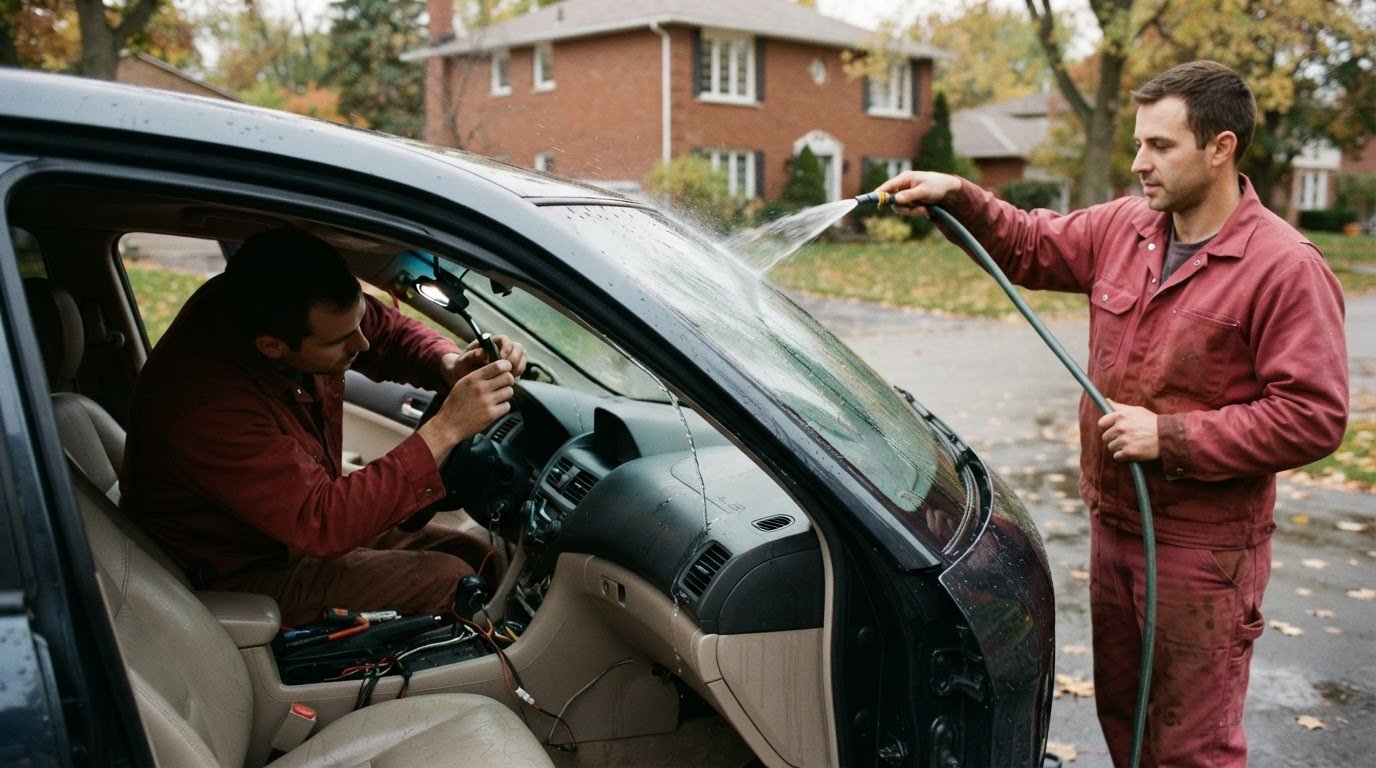
A water leak after windshield replacement is uncommon, but rain entering around the glass can point to an installation issue, such as uneven or insufficient urethane, poor surface preparation, or driving before the adhesive has cured. A blocked drain or another nearby entry point can look like a windshield leak, so identifying where the water comes from is the first step.
Finding moisture inside your vehicle after new glass has been installed is frustrating, especially when it appears only during rain. The right fix depends on whether the problem is a small, localized seal failure or a bond that needs to be redone. This article covers common causes, signs of water damage, when resealing may work instead of removing and reinstalling the windshield, and how to protect your vehicle while the adhesive cures. You’ll also learn why a sound windshield bond matters for visibility and structural support, and what to expect from a professional assessment.
Key Takeaways
- Rainwater near the windshield may point to an uneven seal, but nearby drains or other entry points can mimic the same problem.
- A small, localized seal failure may need a different repair than a weakened bond across the glass.
- Drying wet carpets and protecting interior surfaces can help limit moisture damage while you arrange an assessment.
- Follow the technician’s guidance while the adhesive cures, since driving and washing too soon can affect the bond.
Q: What causes a windshield to leak after replacement?
A leak soon after replacement often points to an installation fault, though blocked drains can mimic one. The water’s entry point matters because moisture near the glass may have another source.
Installation and Pinch-Weld Issues
The pinch-weld is the vehicle-frame surface where technicians bond the windshield with urethane adhesive. If it’s dirty, damaged, or uneven, the adhesive may not form a continuous seal. Gaps can also result from an uneven bead, insufficient urethane, or poor surface preparation. For example, a missed section near a corner can let rainwater inside. These issues can affect both leak prevention and the windshield’s bond to the frame.
Seal Failure After Replacement
A seal can fail if the urethane bond is incomplete or disturbed before it has cured. Driving too soon may affect the adhesive, while water freezing in a small gap can expand and further separate the bond. Old sealant left behind during removal can also interfere with the new application. If the replacement glass shifts or the bead has a gap, water may enter around the edge even when the glass itself is undamaged.
A water leak after windshield replacement can also be mistaken for water from a blocked drain. Debris such as pollen can obstruct drains near the windscreen, while a displaced cabin air-filter cover may let rain into the passenger area. A leak that appears only when the air conditioner runs may instead come from its condensate drain. Wet carpets, dashboard stains, musty odours, or persistent fogging can help describe the problem, but don’t identify the source on their own.
When choosing a windshield replacement shop in Canada, look for certified technicians, quality materials, and work that follows automotive glass safety standards. Clear information about installation and warranty terms also helps you understand how workmanship concerns will be handled.
To test safely, park the vehicle and have someone sit inside while another person gently runs water over the windshield edges with a hose. Test one area at a time for a minute or two, watching for drips inside. Avoid high-pressure spraying, which can force water past seals that would otherwise hold in the rain.
Localized resealing versus full removal and reinstallation
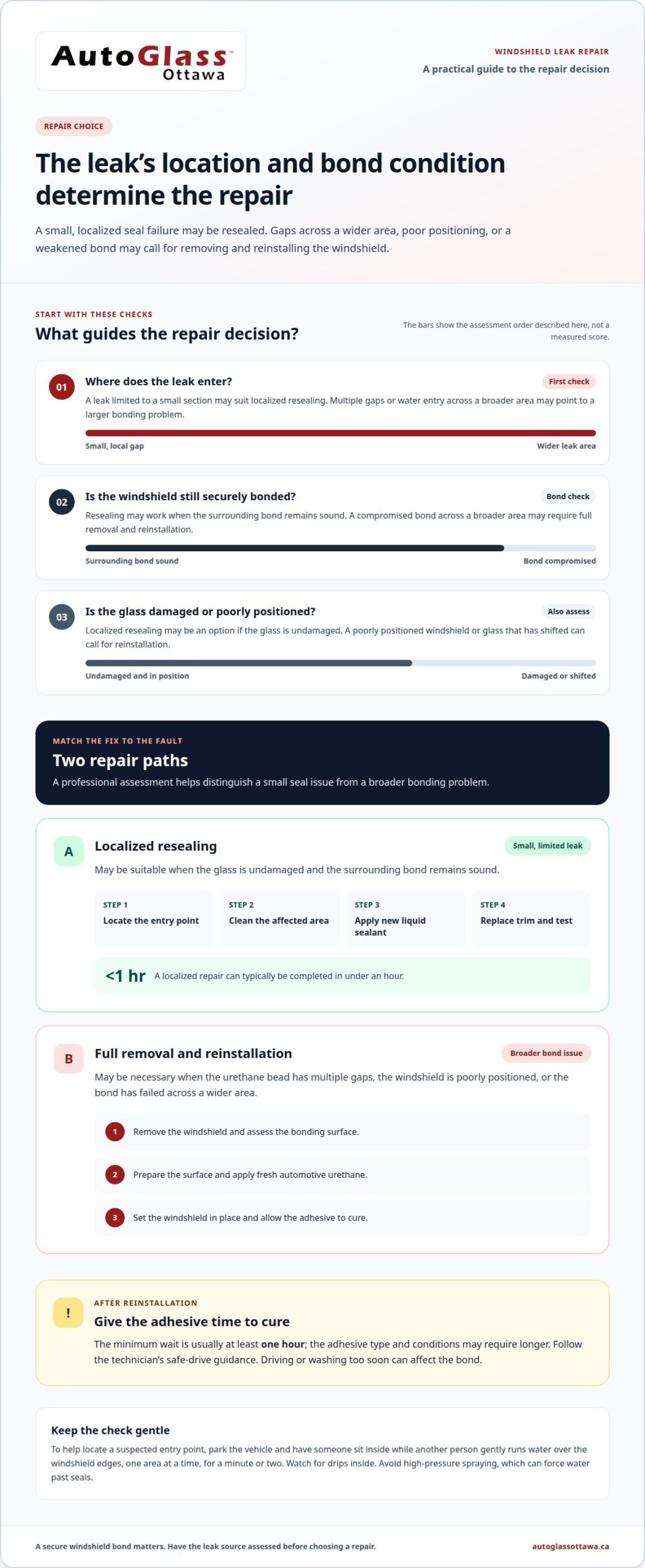
The right repair depends on where the seal has failed and whether the windshield remains securely bonded. If the glass is undamaged and the leak is limited to a small section, a technician may reseal that area without removing the windshield.
When localized resealing may work
For a limited leak, a professional locates the entry point, cleans the area, applies new liquid sealant, and tests the repair. The exterior trim is replaced after the work. A localized repair can typically be completed in under an hour. It may suit a small gap when the surrounding bond remains sound, but it won’t correct a widespread or compromised adhesive bond.
When removal and reinstallation are needed
If the urethane bead has multiple gaps, the windshield is poorly positioned, or the bond has failed across a broader area, full removal and reinstallation may be necessary. The technician removes the glass, assesses and prepares the bonding surface, then applies fresh automotive urethane before setting the windshield in place. Damage or contamination on the pinch-weld can affect how well the new adhesive bonds, so proper surface preparation matters.
After reinstallation, the adhesive needs time to cure before the vehicle is driven. The minimum wait is usually at least one hour, and the adhesive type and conditions may require longer. Follow the technician’s safe-drive guidance, since curing time supports the bond that holds the glass to the frame. Rushing this step can compromise the repair.
A professional assessment helps match the repair to the leak rather than covering a larger bonding problem with surface sealant. For a suspected leak or damaged bond, windshield repair options can help you understand the next step for your vehicle.
Potential water damage to carpets and electronics
Water entering around a windshield can travel beneath carpets, behind the dashboard, and into wiring or HVAC components. Moisture may also remain hidden in the vehicle’s insulation.
Mould, Interior Damage, and Rust
Persistent dampness can lead to musty odours, fogged windows, stained upholstery, mould, and corrosion around the windshield frame. Water beneath the carpet may soak the flooring and insulation, where it can remain unnoticed after the surface dries. Health Canada notes that mould and mildew in damp vehicle interiors can cause respiratory issues, allergic reactions, and asthma complications. Prompt drying matters, especially if dampness returns after rain.
Canadian weather can worsen an existing leak. Water trapped in a seal gap may freeze and expand, putting more strain on the bond. In warmer, sunny conditions, ultraviolet exposure can fade exposed dashboard and upholstery surfaces, while moisture remains hidden underneath. Persistent fogging that the defroster struggles to clear can signal excess cabin humidity, not just a brief change in outdoor temperature.
Temporary Water-Damage Measures
Temporary protection can limit further exposure, but it won’t repair a failed windshield seal. Move damp items out of the cabin, blot standing water, and dry wet carpet and upholstery as thoroughly as possible. Protect electronics from direct water contact, and avoid switching on equipment that has become wet. Waterproof tape or plastic sheeting over the leak can help shield the interior until a professional repair.
Take photos of wet carpets, dashboard stains, and the suspected entry area, and note when the damage appeared. These records can help explain the problem during an insurance discussion. Keep the vehicle sheltered from rain where practical, but don’t treat a cover or tape as a permanent fix. After the leak is addressed, check the carpet and insulation for lingering dampness. A musty smell or recurring fogging may mean moisture remains inside.
Windshield seal repair and adhesive cure times
A lasting repair depends on finding the leak source and choosing a suitable fix. A technician may reseal a small, localized gap, while a failed bond across a wider area may call for windshield removal and reinstallation. Hardware-store silicone and waterproof tape can offer temporary protection, but neither restores the adhesive bond or addresses problems beneath the glass.
After reinstallation, the urethane adhesive needs time to cure before the vehicle is driven. The usual minimum is at least one hour, though adhesive type and conditions may require longer. Follow the technician’s safe-drive instructions for your vehicle. Keep a window slightly open for a day to ease cabin pressure, and avoid automatic car washes for a couple of days while the adhesive sets.
Is a windshield replacement leak covered by the installer’s warranty in Canada? If the leak results from the installer’s workmanship, it should be corrected under the warranty. Review the warranty terms and report when the leak began, where water appears, and whether it happens during rain or washing.
Insurance may cover windshield repairs or replacement resulting from road debris, weather damage, or an accident, depending on your policy. A workmanship-related leak is separate from the original damage that led to replacement. Photos of water stains, wet carpets, or mildew, along with the date you noticed them, can help explain the issue when discussing an insurance claim.
The right repair depends on the glass, the seal, and the bonding surface. For persistent moisture or signs of a loose bond, arrange a professional assessment and request windshield leak repair before water reaches interior electronics.
Auto Glass Ottawa: Windshield Replacement
Auto Glass Ottawa can assess a leaking windshield and determine whether the seal needs attention or the glass requires replacement. Certified technicians use quality materials and follow provincial and industry safety standards, helping protect the windshield’s bond and its role in vehicle structure. Workmanship and leakage are covered by a lifetime warranty.
Mobile service brings windshield repair or replacement to your home or workplace in Ottawa, reducing disruption while the issue is addressed. If the original damage involved an insured event, Insurance Claim Assistance can help with the claim process.
If water is getting inside or the windshield bond appears compromised, contact Auto Glass Ottawa to discuss a professional assessment and repair.
Protect your vehicle with the right next step
A leak that returns after rain deserves attention before hidden moisture affects the cabin or the windshield bond. Note where water appears and whether it follows rain, a car wash, or air-conditioner use. Those details can help narrow down the source and guide the repair decision.
Auto Glass Ottawa offers windshield repair when the glass and seal can be addressed without replacement, and windshield replacement when the existing glass or bond needs a new installation. Mobile windshield repair can bring service to your location, helping reduce disruption to your day. If a water leak after windshield replacement has you concerned, a professional assessment can clarify whether the issue is a small seal failure or needs more involved work.
Take the next step toward a dry, safe vehicle. Contact Auto Glass Ottawa for help and discuss what you’re seeing. With the leak properly assessed, you can move forward with greater confidence.
Frequently Asked Questions
Why is my front windshield leaking when it only rains?
Rain can reveal a leak that goes unnoticed in dry weather. Water may travel behind trim or along the headliner before dripping, so the visible wet spot may not be directly below the entry point. Note whether dampness appears at the same corner, along the dashboard, or near a pillar. That pattern can help a technician trace the water’s route.
What Is a Windshield Seal and What Does It Do?
The windshield seal is the bonded perimeter between the glass and the vehicle frame. It differs from the visible exterior trim, which covers the edge but doesn’t replace the adhesive bond. Intact-looking trim alone doesn’t show that the seal underneath is sound. The bond also connects the windshield to the vehicle structure.
Can I use silicone sealant to stop the leak myself?
Avoid applying household silicone around the windshield. It can cover the suspected entry point without showing where water is actually getting in, and residue may make proper surface preparation harder during a later repair. Don’t pry off trim or push tools into the glass edge to reach the seam. Have the leak source assessed before adding material to the area.
Can a windshield be resealed?
Yes, if an assessment shows the glass can stay in place and the affected area can be properly prepared. The technician needs to identify the leak’s precise path and inspect the surrounding bond, not simply cover the nearest visible gap. If the glass is damaged or the bond is broadly compromised, resealing alone may not address the underlying problem.
How do I temporarily stop a windshield leak?
Keep temporary coverings on the outside of the vehicle and avoid placing adhesive over the driver’s view. Don’t remove mouldings or press sharp objects into the windshield edge, as this can disturb the installation or damage surrounding parts. A temporary cover can limit exposure, but arrange a proper assessment rather than treating a dry cabin as proof that the seal is repaired.
How long after replacement should I wait before driving in rain or a car wash?
Follow the installer’s safe-drive instructions for the specific adhesive and conditions. Rain on the exterior isn’t the same as directing forceful water at a fresh windshield edge. Avoid high-pressure washing until the installer’s stated waiting period has passed, and don’t judge readiness by whether the adhesive feels dry at the surface. The bond cures beneath the glass.