
Can a Long Windshield Crack Be Repaired? What Determines Whether It Can
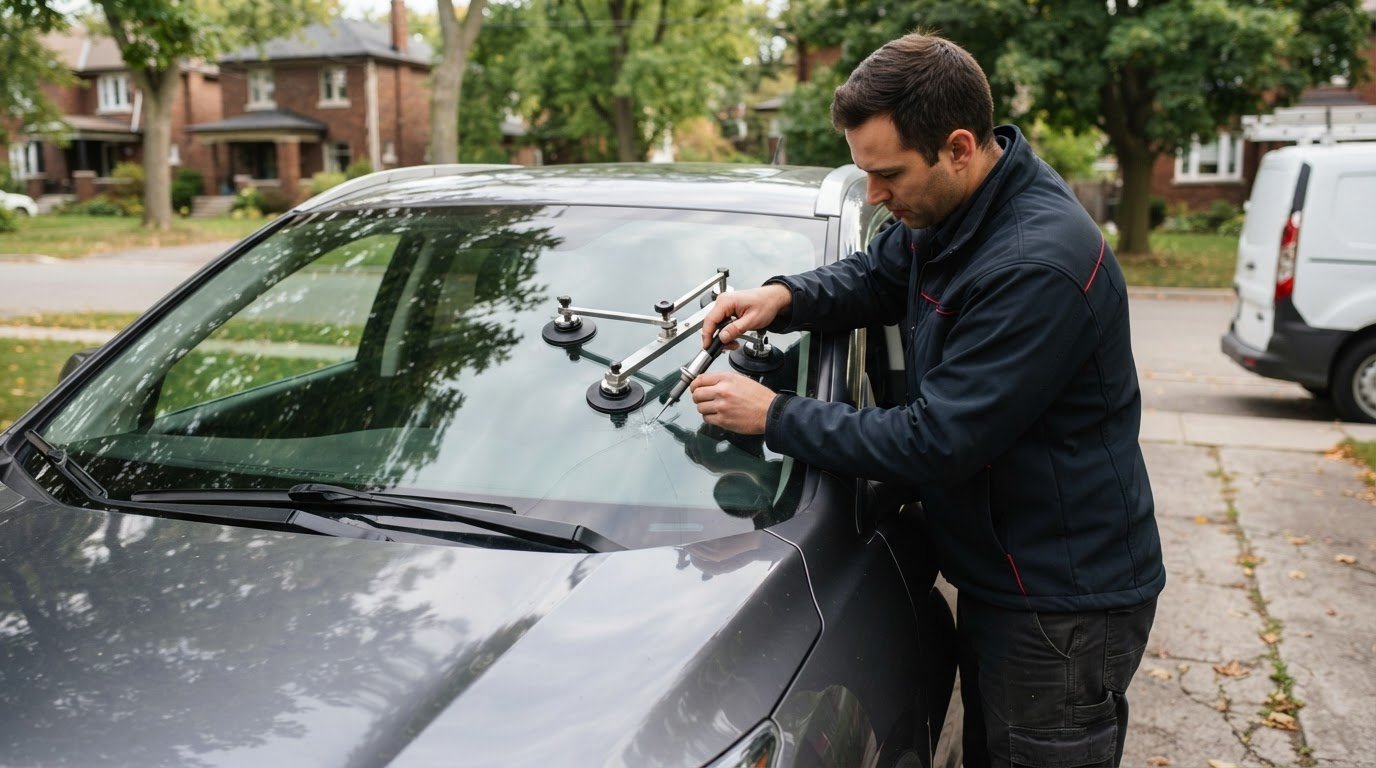
A long crack doesn’t automatically mean your windshield must be replaced. In some cases, a long crack in a windshield can be repaired, and suitable tools and resin can allow repairs on cracks up to 18 inches long. Length is only part of the decision: the crack’s position, condition and effect on the driver’s view also matter.
It’s reasonable to wonder whether a repair will hold and protect your vehicle’s structural integrity. A technician assesses the damage and determines whether it can be stabilized with the appropriate repair method, resin and tools. If the crack compromises safety or cannot be repaired effectively, windshield replacement may be the better option.
Whether a long crack in a windshield can be repaired depends on its location, condition and effect on visibility. This article explains what technicians assess, how professional repairs work and which signs may point to replacement instead, so you can make a more informed decision.
Key Takeaways
- A long crack may be repairable; its location, condition and impact on the driver’s view all help determine the right solution.
- Professional repair depends on using suitable tools and resin, with technician experience guiding the process.
- Damage that affects visibility or the windshield’s structural role may call for replacement rather than repair.
- Insurance coverage varies by policy, so understand your coverage and deductible before deciding how to proceed.
Professional repair process
Most professional windshield repairs take less than an hour, but a long-crack repair still begins with an inspection. A technician traces the crack, locates its impact point, and checks whether it reaches the windshield edge. This assessment helps distinguish repairable damage from glass that needs replacement to protect visibility and structural support.
Before applying resin, the technician prepares the damaged area by removing loose glass and debris, then positioning a repair tool over the crack. Keeping the area clean matters because dirt or moisture can interfere with resin entering the break. If the crack has spread or branched, the technician examines those sections as well.
The repair generally follows these steps:
- Stabilize the glass. The technician secures the repair area to limit further movement while working.
- Apply resin. A repair tool guides resin into the crack, filling the damaged channel rather than simply coating its surface.
- Set the resin. The technician hardens the resin using the repair system, then checks how fully it has filled the break.
- Finish and inspect. The surface is smoothed, and the repaired area is reviewed for remaining gaps and visibility.
Long cracks need careful attention along their full length. For example, resin may fill the centre but not a branch near the edge. The technician checks that area before finishing the repair. The goal is to stabilize the damage, not necessarily make every mark disappear.
After the repair, the technician explains what it has addressed and whether the glass remains suitable for use. A crack may still be visible because resin helps stabilize the damage, but does not return the glass to its original condition. If the windshield cannot be repaired safely, replacement is the appropriate next step.
Repair tools, resin and technician experience
A long-crack repair depends on more than filling a visible line. The tool must hold steady over uneven glass, while the resin must flow through the damaged channel. With suitable tools and resins, professional repairs can address cracks up to 18 inches long. That length is not a promise that every crack of that size is repairable. Its path, depth and position still matter.
Repair systems help technicians control resin placement and reduce trapped air. Resin may move evenly through a straight crack, while a branching crack needs careful attention at each split. It must reach the damaged areas to bond the glass effectively. If it stops short, parts of the crack may remain unsupported. A technician checks coverage rather than judging the repair by its surface alone.
Experience matters because cracks of similar length can behave differently. A line near the windshield edge, for example, may respond differently from one across the centre. The technician assesses the glass, selects a suitable tool and adapts the approach to the crack’s shape, while watching for signs that it is spreading. If the glass becomes unstable or the damage cannot be filled reliably, replacement may better protect visibility and structural support.
Professional judgement also helps avoid treating resin as a cosmetic fix. It can stabilize damage, but the repaired area may remain visible. The aim is to support the glass, not restore it to an untouched appearance. Ask how the technician will assess the crack and explain the result. For damage that appears suitable for repair, professional windshield repair can help determine the appropriate next step.
Windshield damage repairability criteria
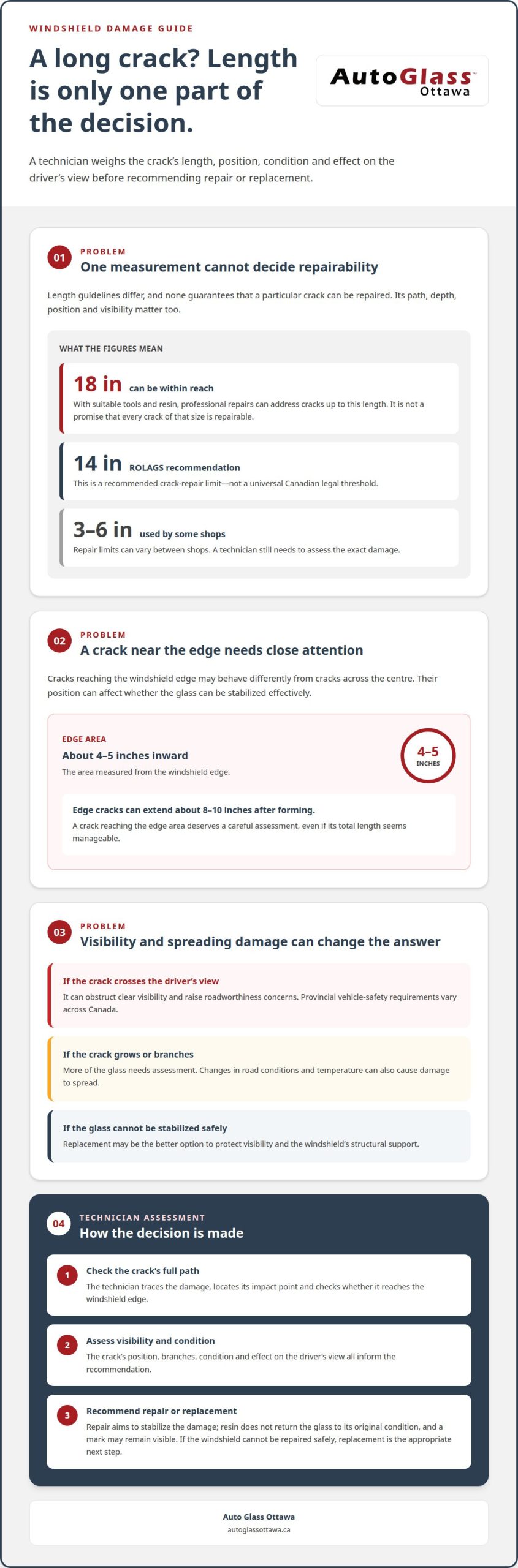
Length is one factor, not a universal pass-or-fail measure. ROLAGS guidance identifies 14 inches as a recommended crack-repair limit, while some shops repair cracks measuring 3 to 6 inches. These are repair guidelines, not one Canadian legal threshold. A technician also considers where the crack sits, how it branches, and whether it affects your view.
Position can change the assessment. The edge area extends about 4 to 5 inches inward from the windshield edge. Edge cracks can extend about 8 to 10 inches after forming, so a crack reaching that area deserves close attention. A long line across the centre may be assessed differently from one that reaches the edge or crosses the driver’s sightline.
Provincial vehicle-safety requirements vary across Canada. A crack that interferes with the driver’s clear view can raise roadworthiness concerns, and length alone does not determine whether driving is permitted. Don’t treat a repair guideline as a provincial rule; location and visibility matter.
A long crack can obstruct clear visibility, especially if it crosses the driver’s field of view or catches the light. Changes in road conditions and temperature can also cause damage to spread. If the crack grows or branches, more of the glass needs assessment, and repair may become less suitable.
A professional assessment helps weigh these factors together. For example, a crack within the 14-inch ROLAGS recommendation may still be unsuitable if it obstructs the driver’s view or reaches the windshield edge. Conversely, length alone doesn’t explain whether the glass can be repaired. The technician evaluates the damage pattern, location and condition before recommending repair or replacement.
Industry testing has found certain long windshield cracks safe and viable to repair when properly evaluated. When you consult with Auto Glass Ottawa, professional repair or replacement is recommended based on the exact nature of the damage for cracks longer than a couple of inches.
Does Canadian auto insurance cover windshield crack repair or replacement?
Coverage depends on your policy, the damage and whether repair or replacement is needed. Auto insurance terms vary by province and insurer, so a crack isn’t automatically covered under every policy. Review your policy for glass coverage, exclusions and your deductible for comprehensive coverage, the amount you pay before that coverage applies.
Start by identifying the damage and asking your insurer how your policy covers it. A small repair and a full windshield replacement may be treated differently. Your policy, for example, may cover one type of work while applying a deductible to another. Auto Glass Ottawa works with major Canadian insurers and assists with insurance claims.
Before making a claim, review these details:
- Coverage: Look for wording about windshield or glass damage, including repair and replacement.
- Deductible: Find the amount you would pay under the relevant coverage.
- Claim process: Ask whether the insurer needs to approve the work or provide instructions first.
- Repair decision: Have the damage assessed so the proposed work matches the windshield’s condition.
Keep your policy information and claim details together. If your insurer requests photos, capture the crack’s full length and its position on the glass. These details help describe the damage, but don’t determine coverage on their own. Your policy wording and insurer’s claim process remain central to the decision.
Don’t delay addressing a crack that affects your view. A professional assessment can clarify whether repair or replacement is the appropriate work, while insurance assistance can help you understand the claim steps. For help with the process, get insurance claim assistance and have your policy information ready.
A DIY windshield repair kit may suit clean, dry damage no larger than a Canadian loonie. Consider this option only if both the size and condition meet those requirements.
Auto Glass Ottawa
Auto Glass Ottawa can assess your windshield and help determine the appropriate next step. If the glass can be repaired safely, a technician can proceed with a repair; if not, replacement may be the better option. Mobile service is available at your home or workplace.
Every repair and replacement is backed by our lifetime workmanship warranty. If anything goes wrong with our work, we fix it – no questions asked.
Contact Auto Glass Ottawa to discuss your windshield damage and next step.
Choose a safe next step
Don’t decide based on the crack’s appearance alone. Whether a long crack in a windshield can be repaired depends on whether the glass can be safely restored for your vehicle. A professional assessment gives you a sound basis for deciding what to do next.
Ask how the recommended work addresses visibility and the windshield’s role in vehicle safety. If you’re unsure about the assessment, ask the technician to explain the reasons for the recommendation before proceeding.
Contact Auto Glass Ottawa to discuss your windshield damage. With clear guidance, you can take the next step with confidence.
Frequently Asked Questions
Can my windshield be repaired?
Yes, some windshield damage can be repaired, but a professional needs to assess the glass first. Tell the technician whether the damage is new, has changed or has an earlier repair nearby. That history helps explain how the crack developed and whether repair remains practical. A visible crack alone doesn’t reveal the glass’s full condition.
Why is it important where on my windshield the impact occurred?
The impact location helps a technician understand which parts of the windshield may be affected and how the damage developed. Mention if it’s close to a camera or other equipment mounted behind the glass. After windshield replacement, ADAS recalibration realigns and checks the vehicle’s driver-assistance camera or sensors to help ensure they function correctly.
How long can a windshield crack be and still be repaired?
There’s no single maximum length that guarantees a repair. When describing the damage, include any branches, not just the main line. For example, a crack with a short side branch affects more glass than its longest visible line suggests. A measurement helps describe the damage but can’t determine repairability by itself.
Can a long windshield crack be repaired safely, or must the windshield be replaced?
Repair is appropriate only when the technician can restore a stable condition without compromising safe use. If the damage changes after an assessment, tell the technician before work begins. A growing branch or new impact can change the assessment, so don’t assume an earlier recommendation still applies if the crack has visibly changed.
What factors determine whether a windshield crack is repairable, such as location, depth, and age?
Along with location and depth, the technician considers whether the crack has branches, contamination or signs of an earlier repair. Note when you first noticed it and whether it changed after a road impact or temperature shift. These details help explain the damage’s condition and provide useful context for the assessment.
How is a long windshield crack repaired, and how long does the repair take?
The technician selects a repair approach after assessing the crack and the access needed to work on it. The time required depends on the damage and preparation, so an estimate is more useful after the assessment. To help the appointment start smoothly, have your vehicle’s make and model ready, describe when the crack appeared and share clear photos if requested.