


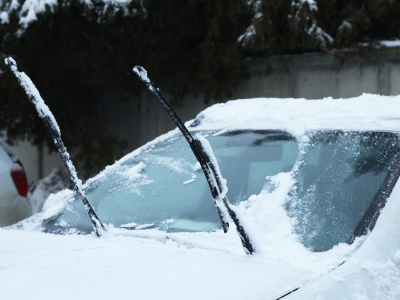

As the chilly mornings of winter or the damp, rainy days of spring roll in, dealing with foggy and frosty car windshields becomes a daily struggle for drivers. Whether you’re facing a thick sheet of Ottawa ice or a stubborn layer of interior mist, impaired visibility is a major safety hazard.
Understanding the physics of your car’s glass is the first step to clearing it. This guide combines expert advice on internal climate control, external de-icing techniques, and preventative measures to ensure you have a clear view of the road ahead.
Why do windshields get foggy and frosty?
Before diving into the solutions, it’s essential to understand the “why” behind the frost.
- Foggy windshields: These occur due to condensation. When the warm, humid air inside your car (caused by your breath and body heat) meets the cold glass, it turns into tiny water droplets.
- Frosty windshields: This is the result of freezing temperatures causing moisture in the air to freeze directly onto the glass surface. This often happens overnight when the glass temperature drops below the dew point.
How to defrost your windshield fast?
Most modern cars are designed with built-in systems to handle these conditions. For the safest results, follow this sequence:
- Start your engine: Turn on the vehicle to begin generating engine heat.
- Use the defrost setting: Activate the defrost feature on your heater. This directs airflow specifically toward the base of the windshield.
- Blast the heat: Adjust the temperature to the maximum setting. Even if the air is initially cold, it will gradually warm as the engine heats up, loosening the ice’s bond to the glass.
- Turn on the air conditioner: It sounds counterintuitive in winter, but the A/C acts as a dehumidifier. It pulls moisture out of the cabin air, clearing interior fog much faster.
- Disable air recirculation: Ensure you are pulling fresh air from the outside. Recirculating air keeps the humidity from your breath trapped inside, which only adds to the fog.
How to handle exterior ice without heat?
If you are in a rush and cannot wait for the engine to warm up, you can use external aids to break down the ice.
1. The DIY de-icing spray
Chemistry is your best friend on a frozen morning. You can create a highly effective de-icer using household items:
- The alcohol mix: Combine 2 parts Isopropyl (rubbing) alcohol with 1 part water in a spray bottle. Because alcohol has a freezing point of −89°C (−128°F), it melts ice almost instantly.
- The vinegar solution: A mixture of 3 parts vinegar to 1 part water can also help dissolve frost, though it is slightly less potent than alcohol.
2. Manual scraping
For stubborn buildup, use a dedicated plastic windshield scraper. If you don’t have one, a plastic credit card can work in a pinch.
Warning: Never use metal objects like screwdrivers or spatulas, as these will leave permanent scratches on the glass.
Dealing with rain: How to defog when it’s damp?
Fogging isn’t just a winter problem; it’s a common issue during heavy spring rains. When it’s raining:
- Increase air circulation: Open your side windows slightly. This allows the humid air inside to be replaced by the (usually) drier air from outside.
- Check your wipers: Activate your wipers to clear external droplets. If they leave streaks, it’s time for a replacement.
- Clean the interior: Dust and oil on the inside of the glass give moisture more surface area to cling to. Keeping your windows clean on the inside prevents fog from forming in the first place.
Winter safety pro-tips
- Clear the roof: Never drive with a “snow cap” on your car. As the car warms up, that snow can slide down and block your windshield, or fly off and hit the driver behind you.
- Lift your wipers: If you know a storm is coming, pull your wiper arms away from the glass. This prevents the rubber blades from freezing to the windshield and saves your wiper motor from burning out.
- Check your fluid: Ensure your washer fluid is rated for −40°C temperatures so it doesn’t freeze in the lines.
Summary checklist
| Step | Action | Why? |
|---|---|---|
| 1 | Start engine / Max defrost | Warms the glass safely. |
| 2 | A/C on / Recirculate off | Removes humidity from the cabin. |
| 3 | Apply de-icing spray | Chemically melts exterior ice. |
| 4 | Scrape remaining slush | Clears the view for driving. |
By using these professional techniques, you’ll spend less time shivering in your driveway and more time driving safely.
Prevention and maintenance
The easiest way to defrost a car is to never let it freeze. If you do not have a garage, we suggest covering your windshield with a specialized blanket or a large piece of cardboard. In the morning, you simply peel the cover off and you are ready to go.
While you are clearing away the ice, keep an eye out for small chips. Cold temperatures put a lot of stress on your glass, and a tiny chip can quickly turn into a massive crack that spans the whole windshield. Most small chips can be repaired quickly without needing to replace the entire piece of glass.
Get your glass fixed today
Do not let a frosted or damaged windshield slow you down this season. Whether you need advice on maintenance or a full windshield repair Ottawa, we are the team to call. Our experts are standing by to ensure your vehicle is safe, clear, and ready for whatever the weather throws at it.
Contact Auto Glass Ottawa for expert service
If you have a crack, chip, or visibility issue, do not wait for it to get worse. Call us today at 613-234-9111 or book your appointment. We provide fast, reliable, and professional glass services to keep you moving safely.